Oliver’s Cloud Recipe – A Story About Curiosity, Clouds, and the Water Cycle

All Ages

Oliver loves baking, but one fluffy cloud outside his window makes him curious about how clouds are made. In his cozy Kitchen Corner, he creates a tiny “cloud recipe” using water, steam, flour, and a cold lid — discovering evaporation, condensation, and rain.

Curiosity Water Cycle Simple Science Everyday Wonder
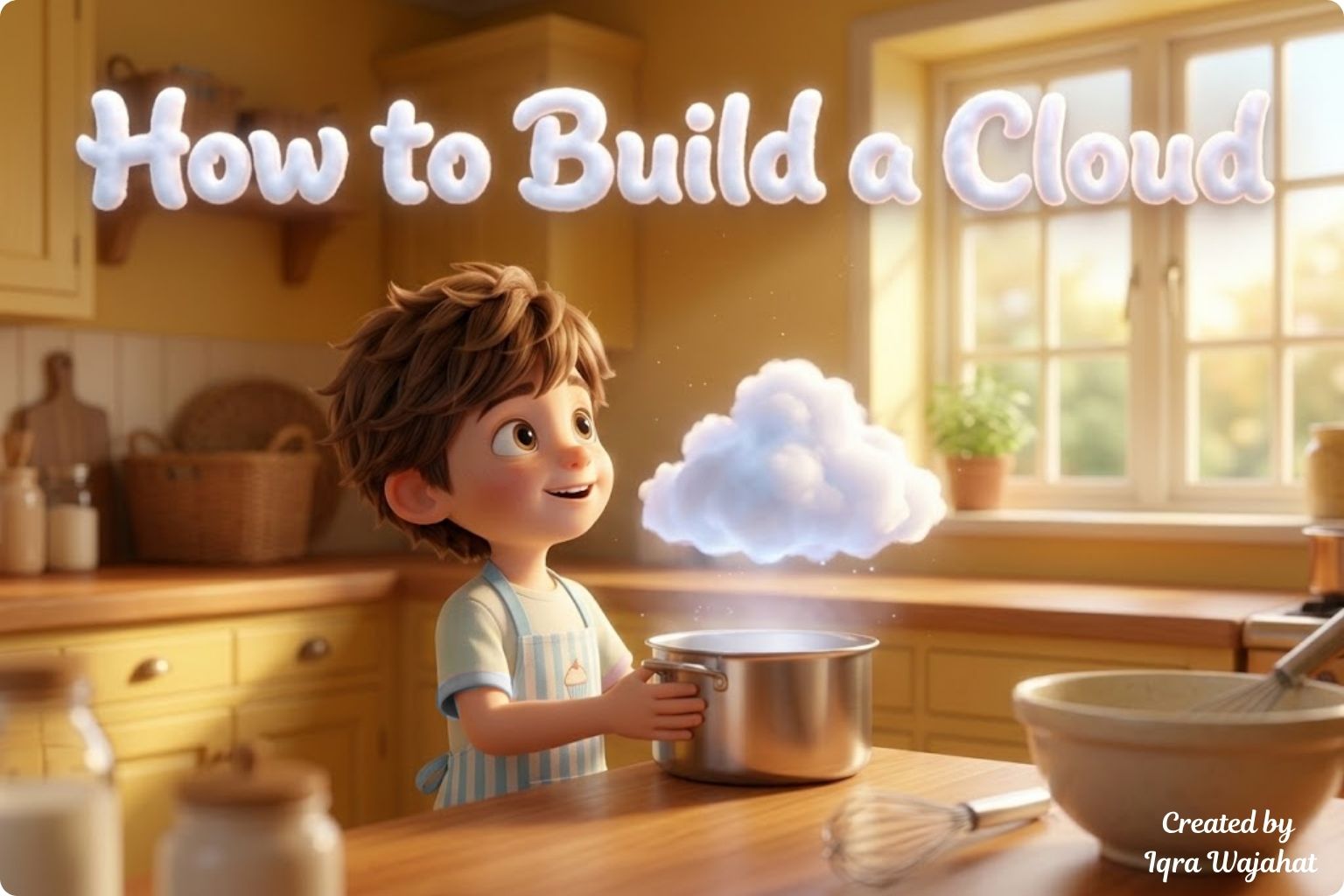
Oliver watching steam turn into tiny drops under a cold lid in his Kitchen Corner, showing clouds, rain, curiosity, simple science, and the water cycle.

Oliver watching steam turn into tiny drops under a cold lid in his Kitchen Corner, showing clouds, rain, curiosity, simple science, and the water cycle.

Theme:

Curiosity, simple science discovery, the water cycle, and finding wonder in everyday places like the kitchen, garden, and sky.

Lesson Learned:

Science is not only found in big laboratories. It is all around us — in boiling water, clouds, rain, plants, and the sky. When children stay curious and ask how things are made, the whole world becomes a place full of learning and wonder.

Story Length:

(3–4 mins)

Oliver watching steam turn into tiny drops under a cold lid in his Kitchen Corner, showing clouds, rain, curiosity, simple science, and the water cycle.

In a cozy yellow cottage at the edge of the hills lived Oliver, a boy who loved to bake. 'It looks so fluffy,' Oliver said, looking out the window at a big, white cumulus cloud floating by.

Oliver watching steam turn into tiny drops under a cold lid in his Kitchen Corner, showing clouds, rain, curiosity, simple science, and the water cycle.

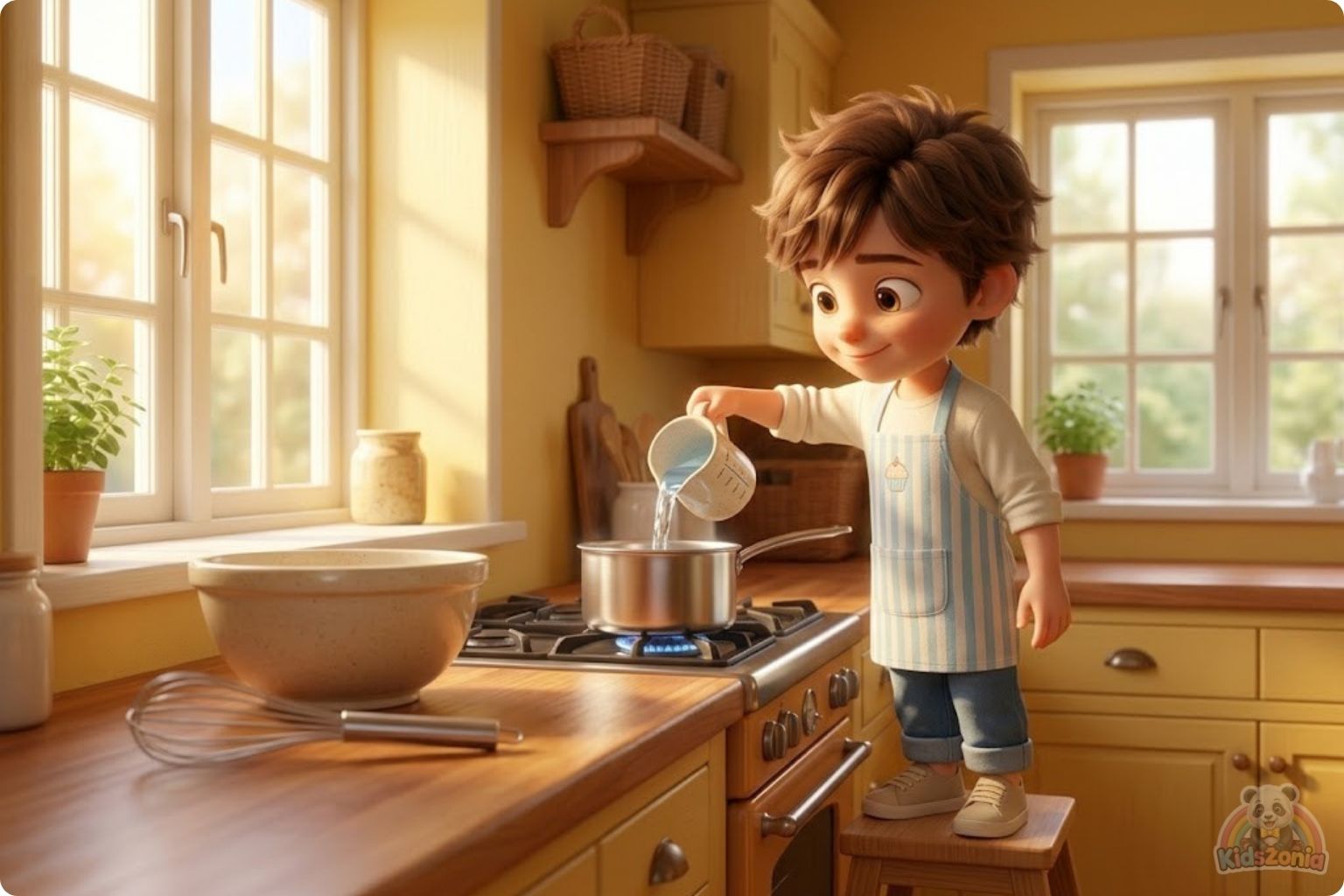
Oliver put on his apron and went to his Kitchen Corner. 'Ingredient number one: Water!' Oliver poured a cup of water into a pot on the stove. This represents Evaporation.

Oliver watching steam turn into tiny drops under a cold lid in his Kitchen Corner, showing clouds, rain, curiosity, simple science, and the water cycle.

As the water got hot, it didn't just stay in the pot. It turned into invisible 'Water Gas' called Vapor.

Oliver watching steam turn into tiny drops under a cold lid in his Kitchen Corner, showing clouds, rain, curiosity, simple science, and the water cycle.

Ingredient number two: Cloud Seeds!' Oliver puffed a tiny bit of flour into the air over the steaming pot.

Oliver watching steam turn into tiny drops under a cold lid in his Kitchen Corner, showing clouds, rain, curiosity, simple science, and the water cycle.

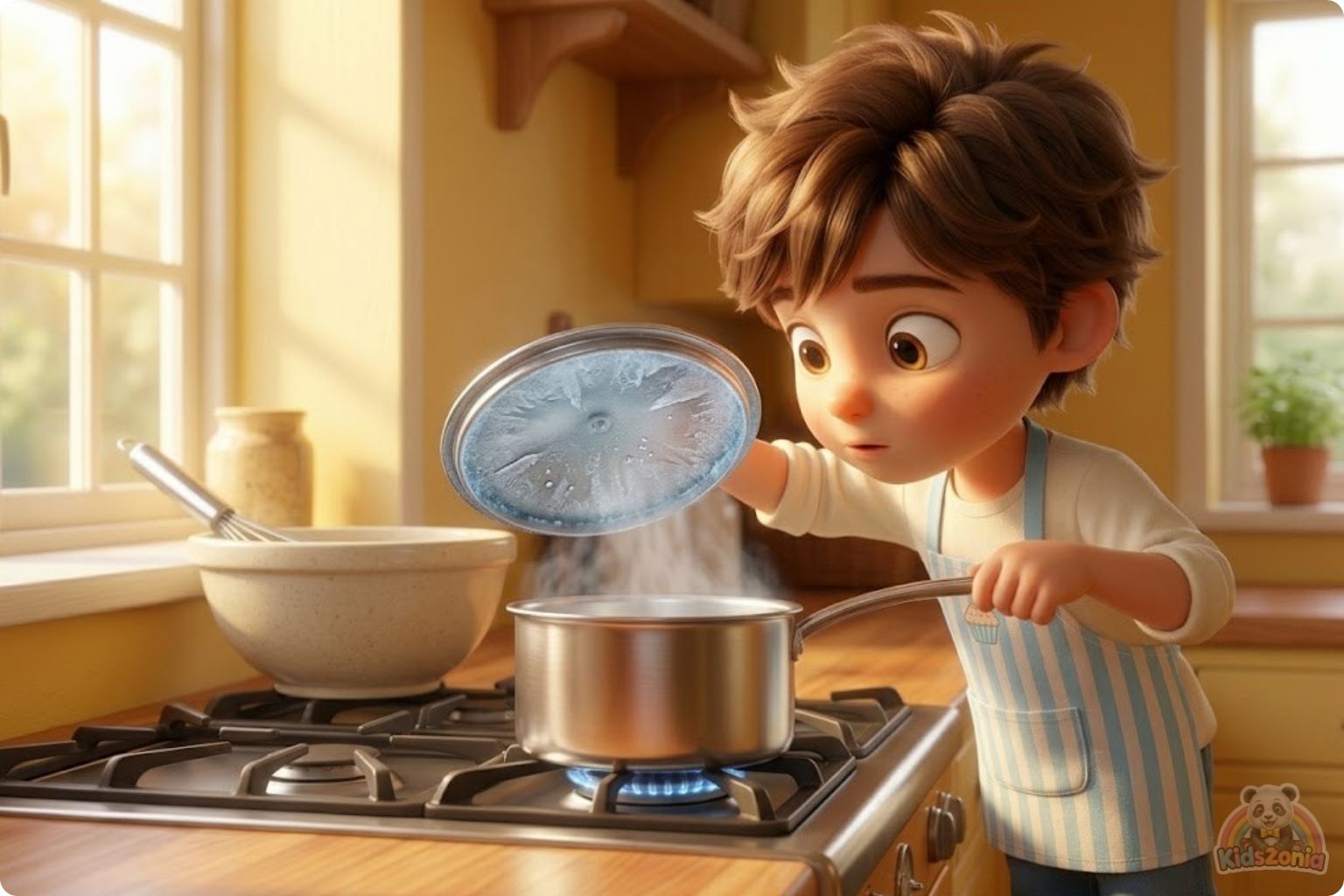
Now, for the most important part: Condensation. 'Clouds are cold,' Oliver thought. He took a metal lid that had been sitting in the freezer and held it over the rising steam.

Oliver watching steam turn into tiny drops under a cold lid in his Kitchen Corner, showing clouds, rain, curiosity, simple science, and the water cycle.

As the warm vapor hit the cold lid, a magical thing happened. The invisible gas turned back into tiny, shimmering liquid drops. A misty, white fog began to swirl under the lid.

Oliver watching steam turn into tiny drops under a cold lid in his Kitchen Corner, showing clouds, rain, curiosity, simple science, and the water cycle.

But Oliver realized his cloud was getting very heavy. The tiny drops were joining together to make bigger, fatter drops.

Oliver watching steam turn into tiny drops under a cold lid in his Kitchen Corner, showing clouds, rain, curiosity, simple science, and the water cycle.

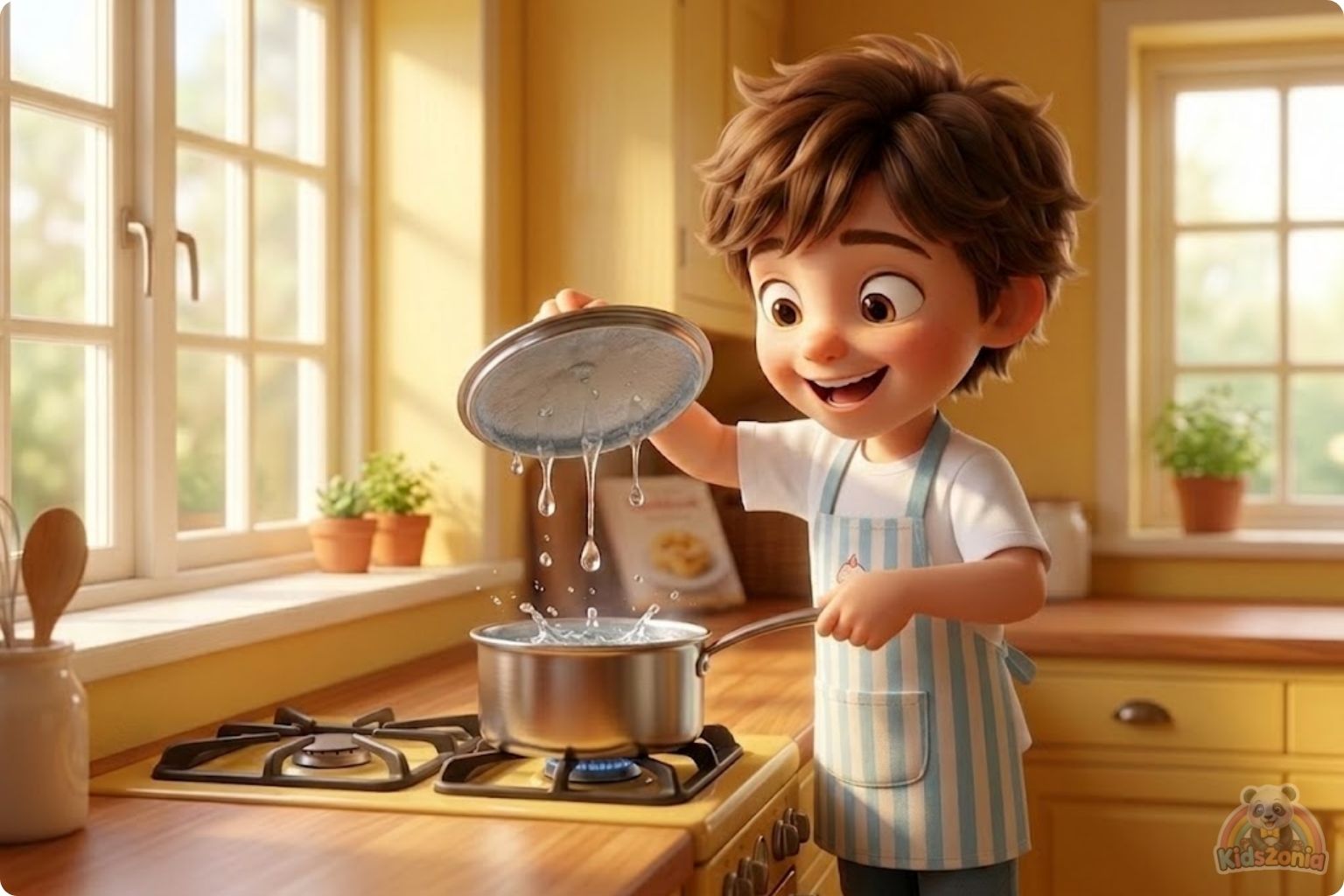
This was Precipitation. Drip. Drop. Splat. 'Oh no! My cloud is leaking!' Oliver laughed as tiny 'kitchen rain' fell back into his pot.

Oliver watching steam turn into tiny drops under a cold lid in his Kitchen Corner, showing clouds, rain, curiosity, simple science, and the water cycle.

Oliver’s grandfather walked into the kitchen and smiled. 'You’ve done it, Oliver! You’ve discovered the Great Sky Recipe.

Oliver watching steam turn into tiny drops under a cold lid in his Kitchen Corner, showing clouds, rain, curiosity, simple science, and the water cycle.

Oliver looked at his pot of water and then at the big sky outside. The Earth was already the biggest, best kitchen in the universe, constantly 'baking' clouds and rain to keep the trees and flowers happy.

Oliver watching steam turn into tiny drops under a cold lid in his Kitchen Corner, showing clouds, rain, curiosity, simple science, and the water cycle.

Oliver decided to celebrate. He didn't have a cloud to eat, but he did have some leftover marshmallows. And as he sat in his Kitchen Corner, he watched a new cloud forming over the hills.

Oliver watching steam turn into tiny drops under a cold lid in his Kitchen Corner, showing clouds, rain, curiosity, simple science, and the water cycle.

Moral of the Story Science isn't just in big labs; it’s in your kitchen, your garden, and the sky above you. When we stay curious about how things are 'made,' the whole world becomes a place of wonder.

THE END

What is this story about?

This story is about Oliver, a curious boy who wants to understand how fluffy clouds form. Using a pot of water, steam, a cold lid, and a little imagination, he learns about evaporation, condensation, and precipitation. With help from his grandfather, Oliver realizes that the Earth works like a giant kitchen, constantly creating clouds and rain to help plants, trees, and flowers grow. The story teaches children that asking questions and observing everyday moments can turn the world into a place full of learning and wonder.

What children learn from this story

This story helps children understand simple science concepts like the water cycle, evaporation, condensation, vapor, clouds, and rain in a gentle, child-friendly way. Through Oliver’s kitchen experiment, young readers learn that science can be discovered through curiosity, observation, and asking how things work. The story encourages children to notice the natural world, connect everyday experiences to scientific ideas, and feel excited about learning. It also supports early STEM learning, critical thinking, vocabulary development, environmental awareness, and the belief that wonder can be found in ordinary places like the kitchen, garden, and sky.

Tips for parents and teachers

Parents and teachers can use this story to introduce children to the water cycle through a simple and memorable example. After reading, ask children what happened when the water became steam, why the cold lid made tiny drops appear, and how the “kitchen rain” is like real rain from clouds. Encourage children to look outside and notice clouds, puddles, plants, and weather changes. This story is useful for classroom science lessons, weather units, kitchen science activities, STEM discussions, observation practice, and helping children understand that science begins with curiosity and careful noticing.

Story FAQs

Oliver’s Cloud Recipe is a children’s story about a curious boy who uses a simple kitchen experiment to learn how clouds and rain are made. Through water, steam, a cold lid, and observation, Oliver discovers the water cycle.

The story teaches children that science is not only found in big laboratories. It is all around us in boiling water, clouds, rain, plants, gardens, and the sky when we stay curious and ask questions.

Oliver is a curious boy who loves baking and exploring ideas in his Kitchen Corner. He wants to understand how clouds are made and learns through a simple hands-on experiment.

This story explains the water cycle, including evaporation, condensation, and precipitation. It shows how water turns into vapor, forms tiny droplets, and falls again like rain.

Oliver heats water until it becomes steam, then holds a cold lid over the vapor. When the warm vapor touches the cold lid, it turns back into tiny liquid drops that fall like kitchen rain.

This story supports science learning by using a simple, familiar setting to explain weather and the water cycle. It encourages children to observe, ask questions, compare ideas, and connect everyday moments with scientific discovery.

Yes, Oliver’s Cloud Recipe is helpful for classroom learning. Teachers can use it for lessons about clouds, rain, weather, evaporation, condensation, precipitation, kitchen science, and curiosity-based STEM activities.

Oliver’s Cloud Recipe is suitable for preschool, kindergarten, and elementary-aged children. It is especially useful for introducing simple science, weather, the water cycle, and everyday curiosity.