Toby and the Pocket Robot – A Story About Technology Balance, Creativity, and Real-World Exploration

All Ages

A bored boy named Toby discovers a tiny pocket robot that only powers up through real-world actions—not screens. As Toby waters a plant, builds with blocks, draws, and explores nature, he learns that technology can inspire curiosity, but the greatest adventures happen when we unplug and experience the world around us.

balance robot nature technology
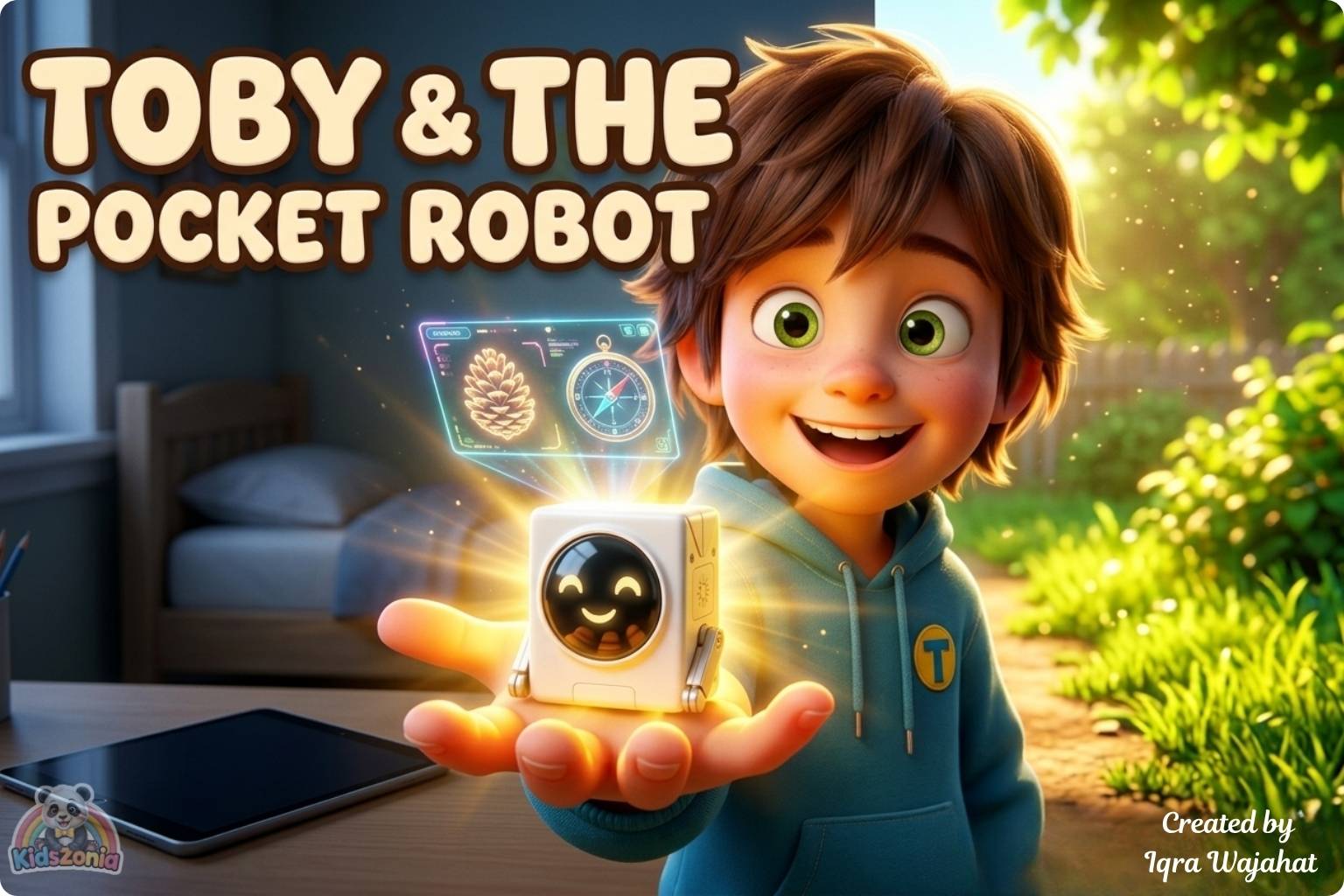
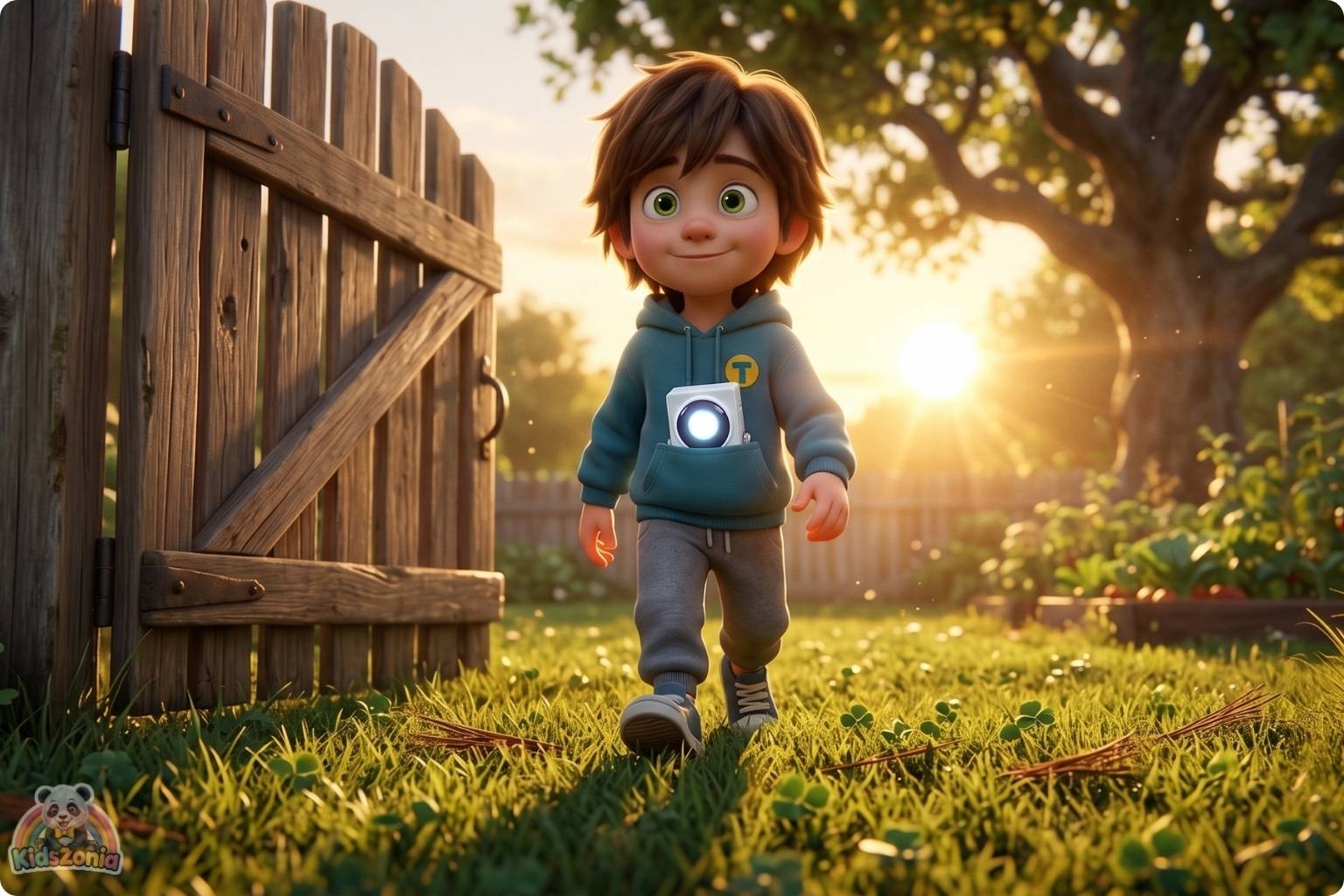
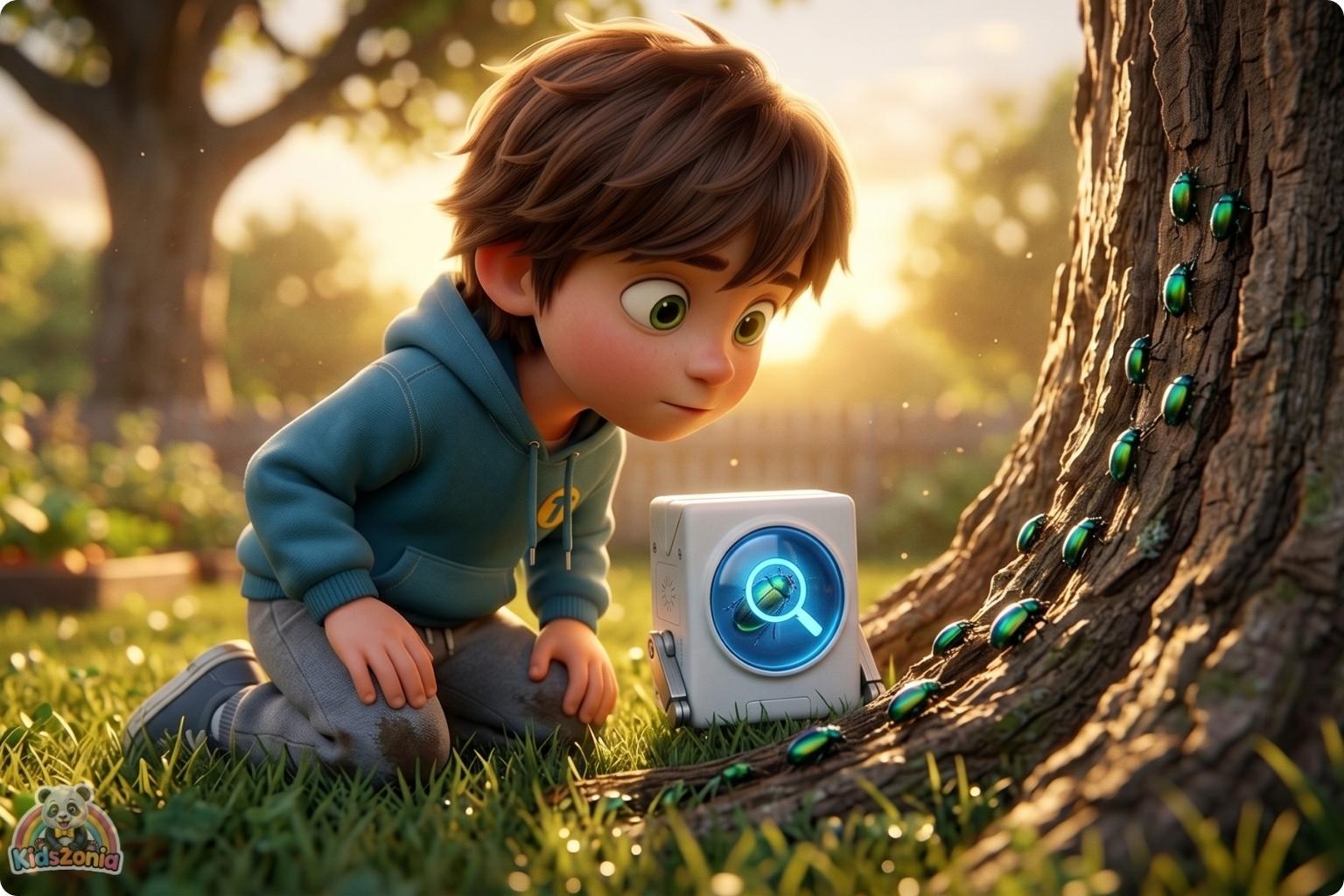
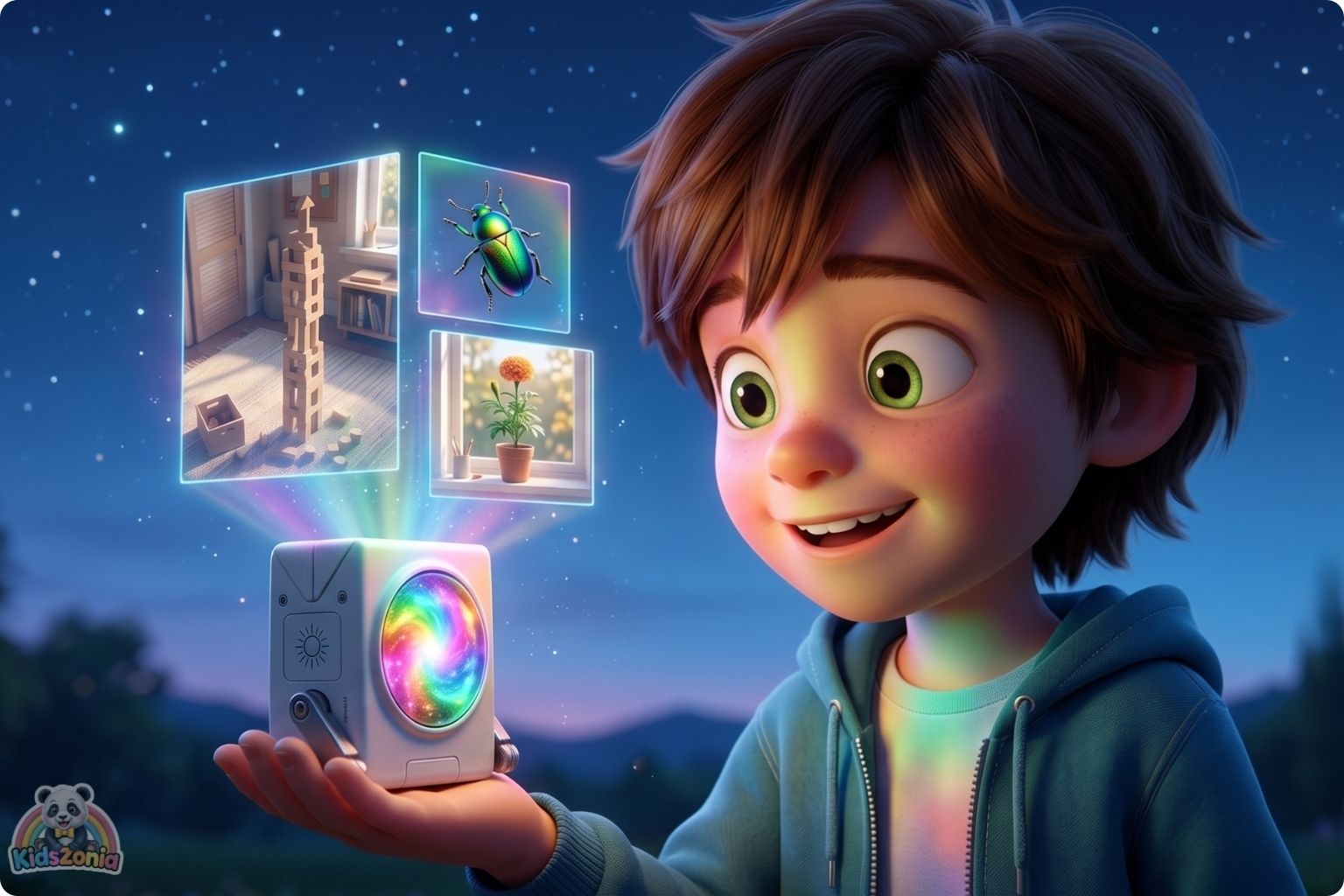
Toby holding a glowing pocket robot in the backyard while exploring nature, blocks, plants, and beetles, showing screen-time balance, creativity, and real-world adventure.

Toby holding a glowing pocket robot in the backyard while exploring nature, blocks, plants, and beetles, showing screen-time balance, creativity, and real-world adventure.

Theme:

Balancing technology with real-world exploration.

Lesson Learned:

Screens can be fun, but creativity, nature, and hands-on activities help us discover real joy and connection.

Story Length:

(3–4 mins)

Toby holding a glowing pocket robot in the backyard while exploring nature, blocks, plants, and beetles, showing screen-time balance, creativity, and real-world adventure.

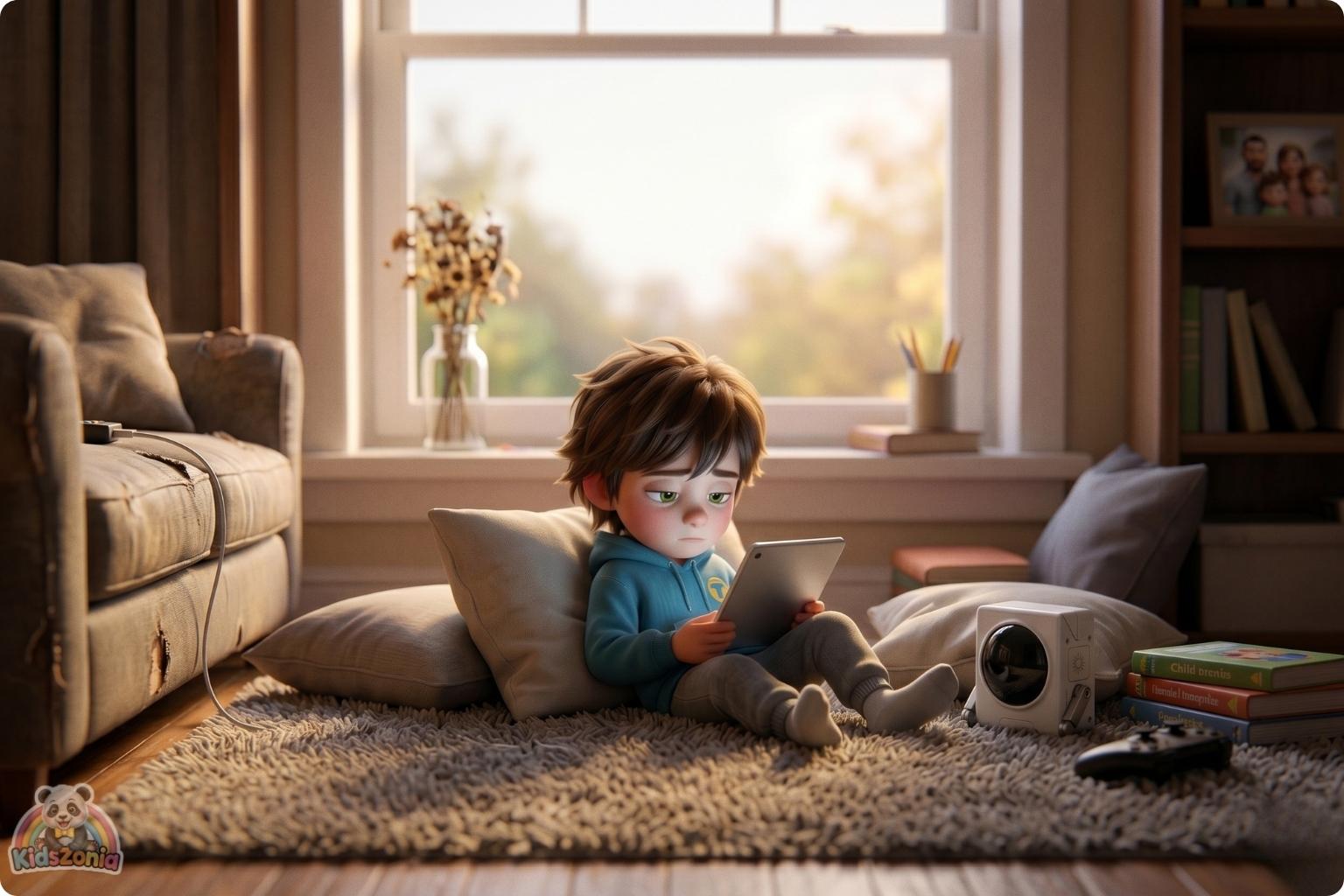
Toby’s fingers were practically glued to his tablet. His favorite game, *Mega-Block-Builder*, had just updated, and he was currently trying to construct a virtual skyscraper. "Toby, time to unplug for a bit," his mom said from the kitchen, her voice carrying that familiar, gentle-but-firm "screen-time fatigue" tone. "Your eyes need a break, and the real world misses you." Toby groaned, pressing the power button. The screen went black, reflecting his own pouting face. The living room suddenly felt incredibly quiet, incredibly still, and incredibly *boring*.

Toby holding a glowing pocket robot in the backyard while exploring nature, blocks, plants, and beetles, showing screen-time balance, creativity, and real-world adventure.

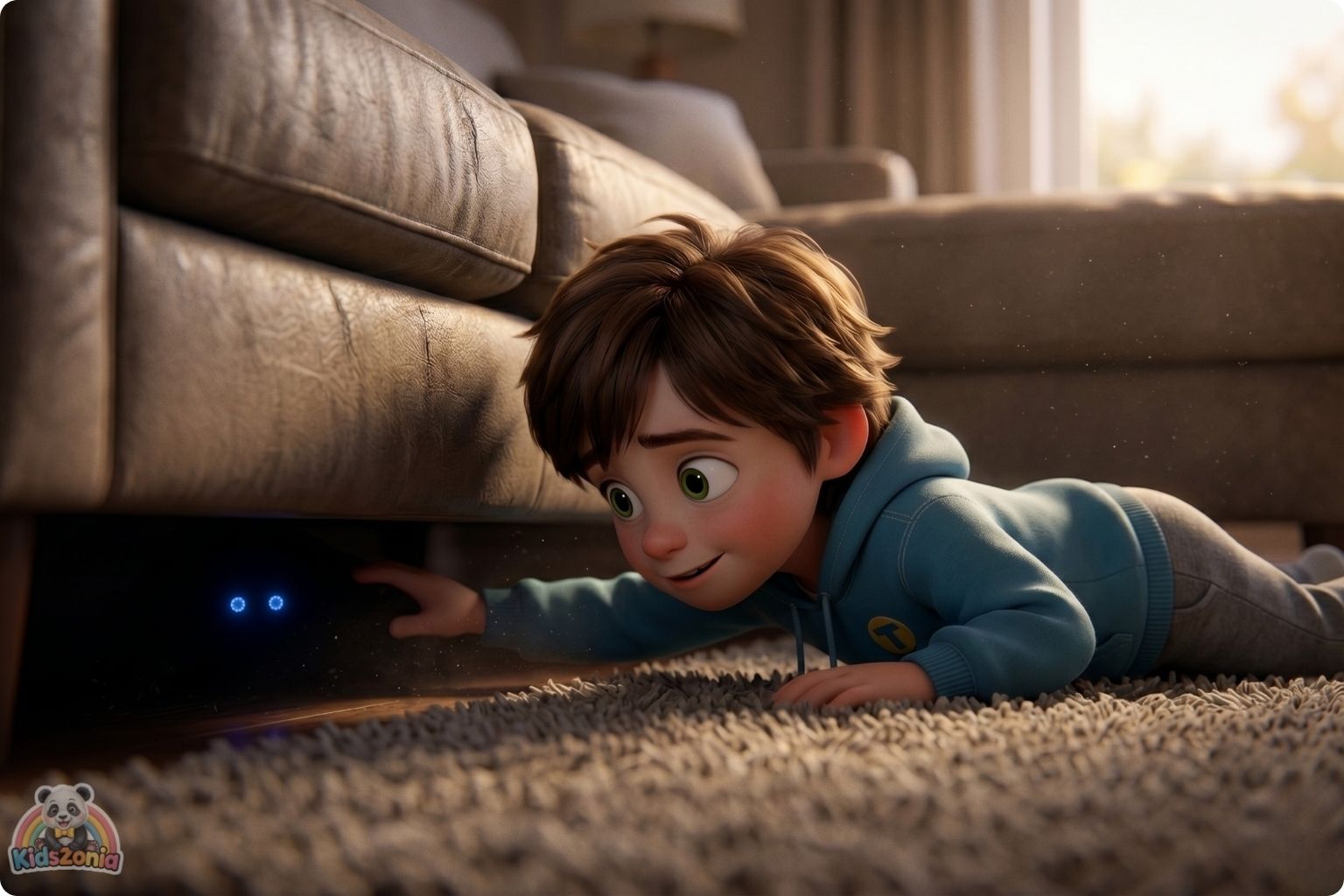
He slumped onto the rug, sighing like a deflated balloon. To pass the time, he began mindlessly kicking his feet under the couch. *Thump. Thump. Clunk.* *Clunk?* That didn't sound like the usual dust bunnies. Toby sat up and peeked into the dark gap beneath the sofa. Two faint, sapphire-blue circles blinked once, twice, and then vanished. Curiosity instantly replacing his boredom, Toby reached deep under the cushions. His fingers brushed against something cold, smooth, and metallic. He pulled his hand back, clutching a tiny gadget no bigger than a juice box.

Toby holding a glowing pocket robot in the backyard while exploring nature, blocks, plants, and beetles, showing screen-time balance, creativity, and real-world adventure.

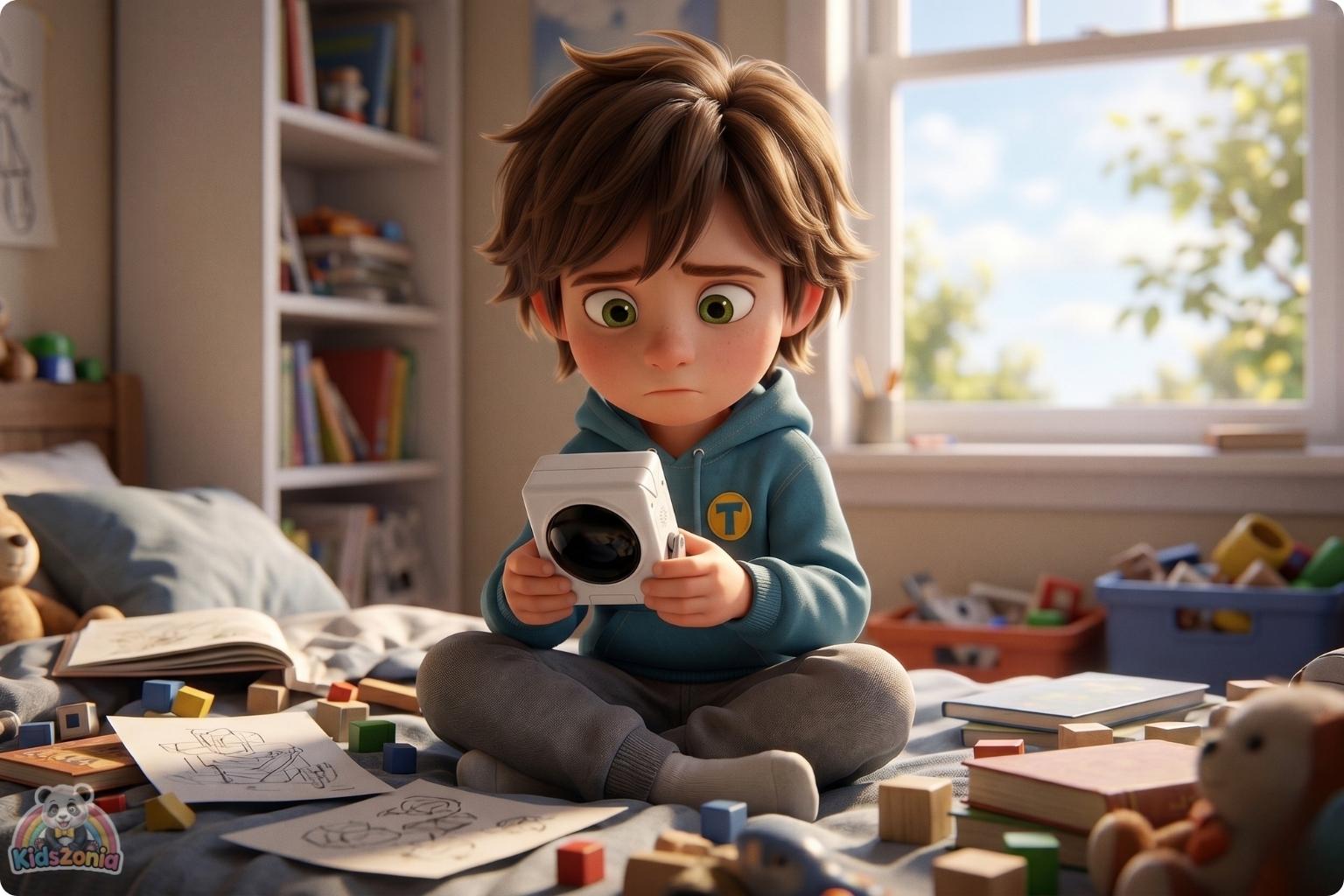
It was a robot. It had a sleek, chrome-white body, two stubby arms, and a round glass screen for a face. But right now, the screen was completely blank. It was totally dormant. Toby tapped its head. Nothing. He searched for a charging port or a power switch. There was a tiny slot on its back that looked like a solar panel, but it wasn't turning on. "Great," Toby muttered. "A broken toy."

Toby holding a glowing pocket robot in the backyard while exploring nature, blocks, plants, and beetles, showing screen-time balance, creativity, and real-world adventure.

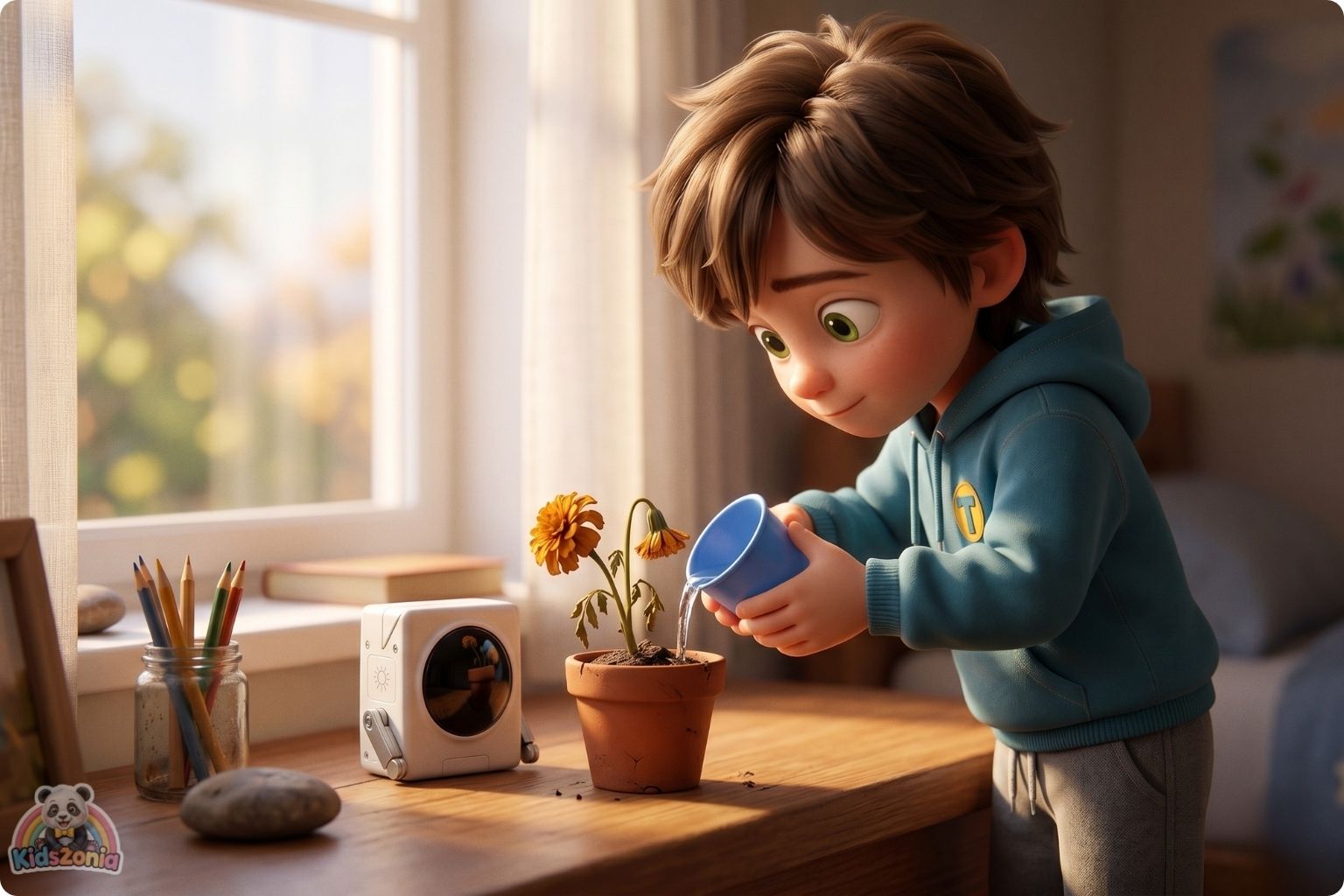
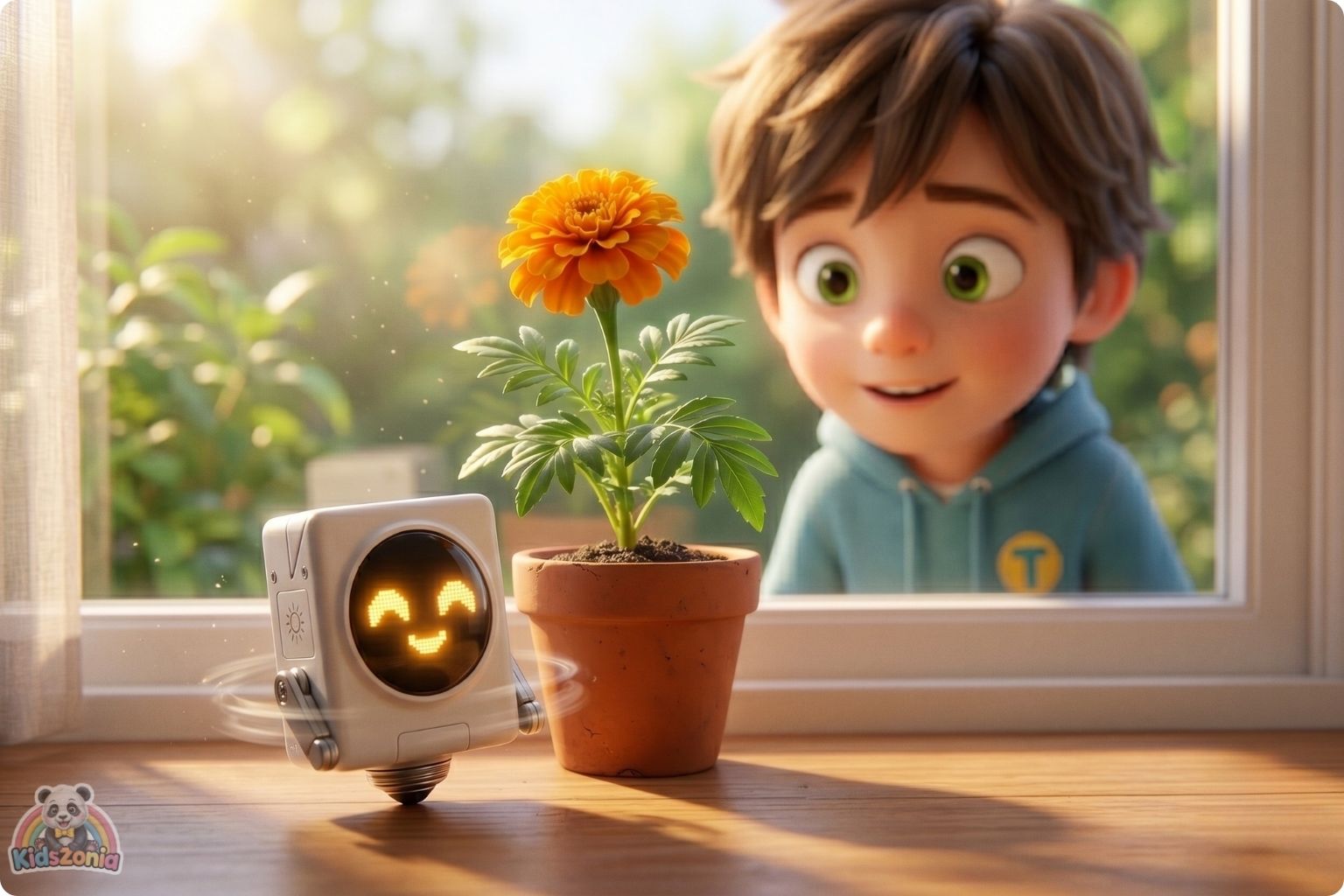
He set the little robot down on his bedroom windowsill next to a sad, drooping terracotta pot. It was a little marigold plant he had planted at school a week ago and completely forgotten to look after. "You look as thirsty as I am bored," Toby said to the plant. He walked to the bathroom, filled a little plastic cup with water, and carefully poured it over the dry, cracked dirt. He watched the soil drink it up, turning a rich, dark brown.

Toby holding a glowing pocket robot in the backyard while exploring nature, blocks, plants, and beetles, showing screen-time balance, creativity, and real-world adventure.

*BZZZZT-POP!* Toby jumped. A bright, warm golden light filled the windowsill. He whipped his head around. The pocket robot’s screen had come alive! Two cheerful, pixelated eyes blinked at him, and its little metallic mouth curved into a digital smile. A soft, humming purr vibrated from its chest. The screen displayed a small text box: `[ SYSTEM STATUS: 5% POWERED ] [ ENERGY SOURCE: REAL-WORLD ACTION ]`. "Whoa," Toby whispered, leaning in close. "Did you... did you turn on because I watered the plant?" The robot did a tiny, joyful spin on the windowsill, its gears clicking happily.

Toby holding a glowing pocket robot in the backyard while exploring nature, blocks, plants, and beetles, showing screen-time balance, creativity, and real-world adventure.

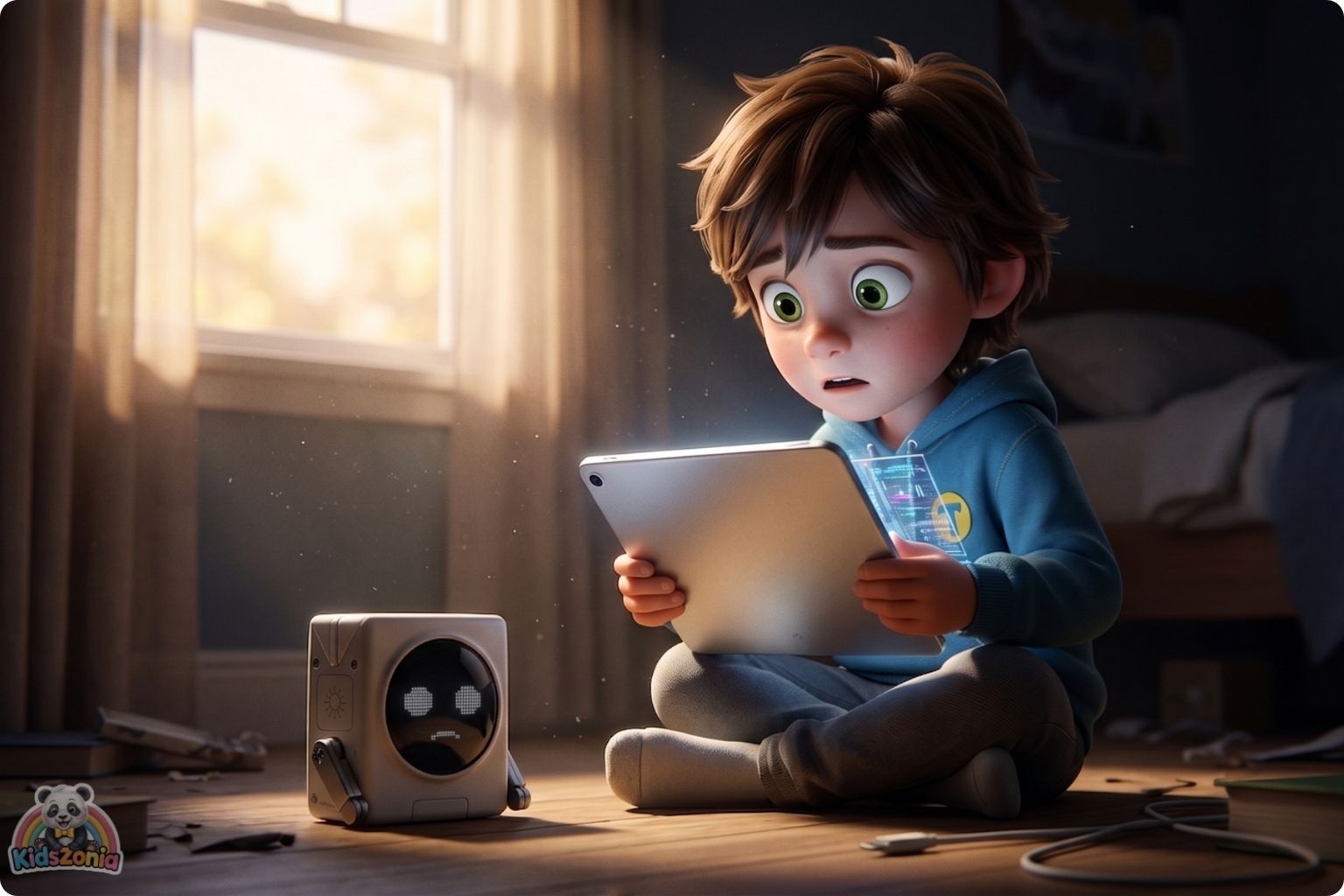
Toby was fascinated. He grabbed his tablet from the charging station, thinking he could look up a manual for the strange device. But the moment the tablet screen lit up in Toby’s hand, the robot’s eyes flickered, dimmed, and completely shut off. It fell silent, becoming just a cold lump of metal again. Toby stared at the tablet, then at the dead robot. A lightbulb went off in his head. "Ah, I get it," Toby said, setting the tablet face-down on his bed. "You don't like screens. You like *doing* things."

Toby holding a glowing pocket robot in the backyard while exploring nature, blocks, plants, and beetles, showing screen-time balance, creativity, and real-world adventure.

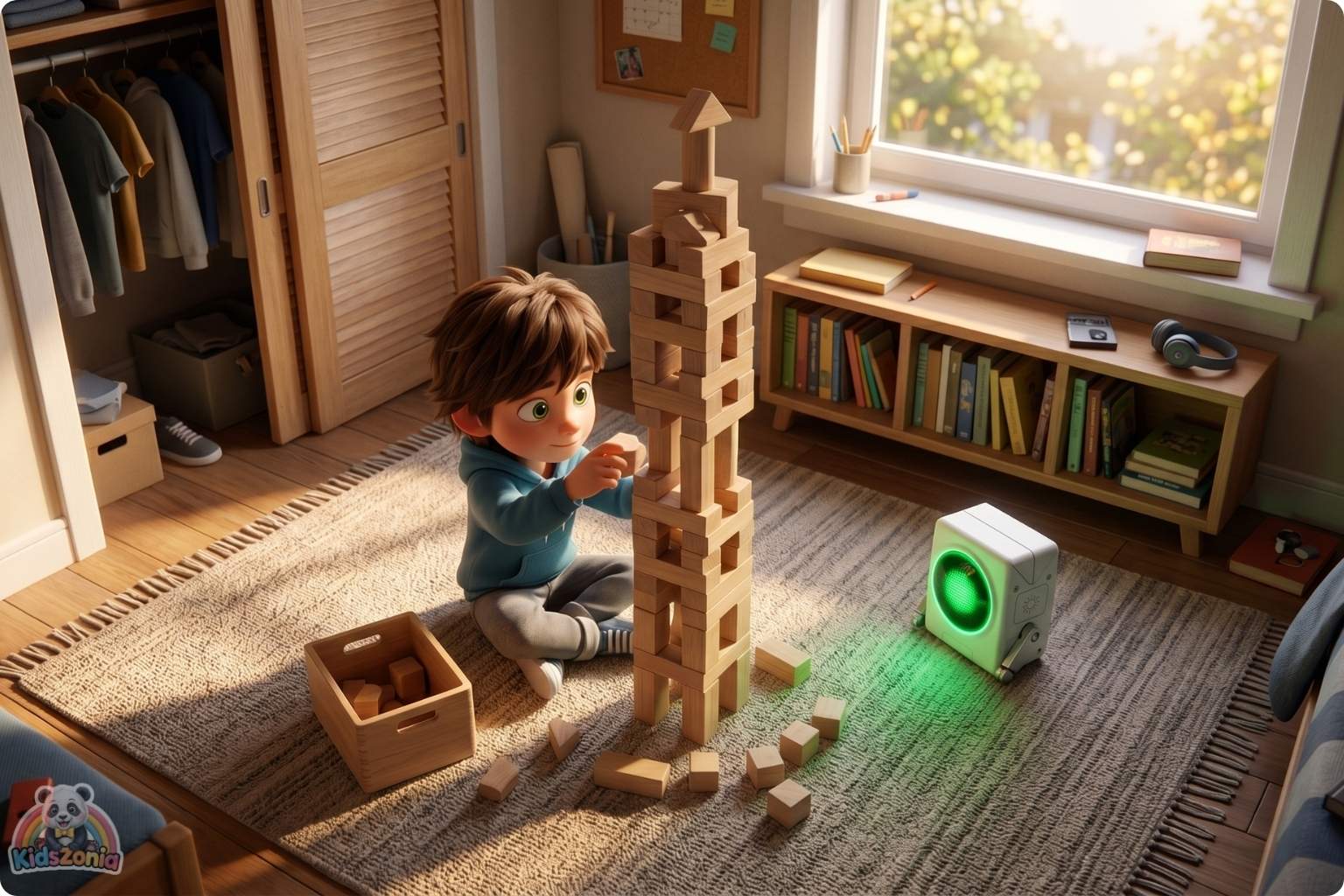
To test his theory, Toby dumped his massive bin of wooden building blocks onto the floor. Usually, he preferred building digitally because it was faster, but right now, he had a puzzle to solve. He began stacking the wooden blocks, carefully balancing a bridge between two tall towers. *Bzzzt!* The robot’s eyes snapped open again, glowing a vibrant shade of green this time. As Toby added more blocks—carefully managing the physics of a real-world tower—the robot began to emit a rhythmic, upbeat techno beat, acting as Toby's personal construction soundtrack. The screen updated: `[ SYSTEM STATUS: 25% POWERED ]`. "Check this out!" Toby laughed, placing the final triangular piece on top. The tower stood tall and proud. The robot clapped its tiny metal hands together with a satisfying *clink-clink-clink*.

Toby holding a glowing pocket robot in the backyard while exploring nature, blocks, plants, and beetles, showing screen-time balance, creativity, and real-world adventure.

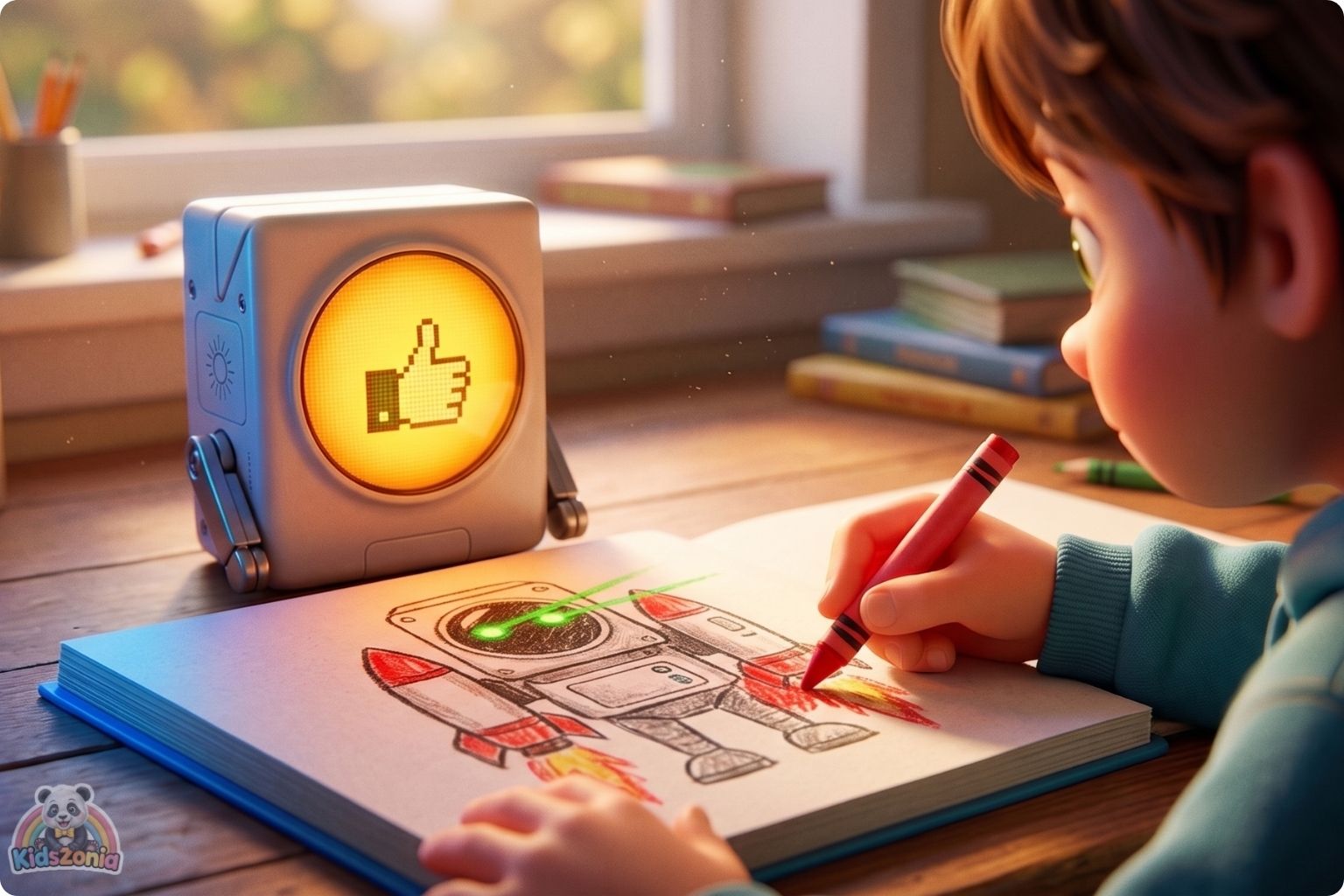
Next, Toby grabbed his sketchbook and a box of crayons. He drew a picture of the robot, giving it rocket boosters and laser eyes. As he colored inside the lines, pressing down hard to make the red crayon pop, the robot’s screen shifted to a beautiful amber hue. The power status climbed: `[ SYSTEM STATUS: 50% POWERED ]`. The little bot waddled over to the edge of the desk, looked down at the drawing, and gave a digital thumbs-up on its screen. Toby realized something amazing: he hadn't thought about his tablet or his video games once in the last hour. He was having too much fun creating things he could actually touch.

Toby holding a glowing pocket robot in the backyard while exploring nature, blocks, plants, and beetles, showing screen-time balance, creativity, and real-world adventure.

Suddenly, the robot’s screen flashed an exclamation point. It let out a series of high-pitched beeps and pointed its stubby arm directly toward the backyard window. "You want to go outside?" Toby asked. The robot nodded its entire head. Toby scooped the little guy up, slipped him safely into his front hoodie pocket—where the robot's glowing eyes peeked out just over the fabric—and laced up his sneakers. The backyard felt wider than usual. The sun was dipping low, casting long, dramatic shadows across the grass. "Alright, partner, what's the mission?" Toby asked. The robot chimed, and a tiny, pixelated compass appeared on its screen, the needle spinning before pointing firmly toward the old oak tree at the back of the yard.

Toby holding a glowing pocket robot in the backyard while exploring nature, blocks, plants, and beetles, showing screen-time balance, creativity, and real-world adventure.

Toby followed the guidance. When he reached the tree, he noticed a trail of shiny, iridescent beetles marching up the bark. The robot’s screen shifted into a magnifying-glass icon. Toby knelt down, getting his knees a little muddy, to watch the insects closely. He noticed how their shells changed color in the sunlight, shifting from green to purple. The robot hummed warmly, recording the memory in its own digital way, its power meter climbing higher: `[ SYSTEM STATUS: 85% POWERED ]`. They spent the next hour exploring. Toby climbed to the first branch of the oak tree (the robot cheered from his pocket). He skipped flat stones across the puddle by the garden hose. He collected three uniquely shaped pinecones. With every real-world interaction, the robot grew brighter, warmer, and more alive. It wasn't distracting Toby from the world; it was acting as his lens, making him notice the details he usually sprinted past.

Toby holding a glowing pocket robot in the backyard while exploring nature, blocks, plants, and beetles, showing screen-time balance, creativity, and real-world adventure.

As the first stars began to twinkle in the evening sky, Toby’s mom called out from the back porch. "Toby! Dinner time!" Toby stood up, feeling a good, healthy tiredness in his legs. He pulled the pocket robot out of his hoodie. The robot’s screen was now a brilliant, pulsing rainbow of colors. It let out a grand, triumphant fanfare melody. `[ SYSTEM STATUS: 100% MAXIMUM POWER ]`. On the screen, a message scrolled by: `THANK YOU, TOBY.` Then, the robot projected a soft, holographic image into the air right above Toby’s palm. It was a digital scrapbook of their afternoon: a 3D model of the wooden block tower, a glowing recreation of the iridescent beetle, and a mini map of the backyard track they had explored. "No, thank *you*," Toby smiled, realizing how much he had missed the smell of the grass and the satisfaction of building something with his own hands. He walked back inside, setting the fully charged, happily humming robot on his nightstand right next to his freshly watered marigold plant. Toby glanced at his tablet lying forgotten on the bed. He didn't feel the urge to turn it on anymore. Tomorrow, he and his pocket robot were going to explore the park down the street—and he couldn't wait to see what else they would discover.

Toby holding a glowing pocket robot in the backyard while exploring nature, blocks, plants, and beetles, showing screen-time balance, creativity, and real-world adventure.

Moral: Technology is a wonderful tool to spark our curiosity, but the real magic, adventure, and connection happen when we step outside and explore the physical world around us.

THE END

What is this story about?

This story is about Toby, a child who feels lost when his tablet time ends. After finding a small pocket robot, he learns that the robot only gains energy when Toby does real-world activities. As Toby waters a marigold, builds a wooden block tower, draws with crayons, explores the backyard, watches beetles, climbs a tree, and collects pinecones, the robot becomes brighter and more alive. By the end of the day, Toby realizes that screens can be fun, but the physical world is full of adventure, creativity, discovery, and connection.

What children learn from this story

This story helps children understand screen-time balance in a positive and encouraging way. Through Toby’s adventure, young readers learn that technology can spark curiosity, but hands-on activities, outdoor exploration, creative play, and time away from screens are important too. The story encourages children to build, draw, observe nature, solve problems, care for plants, and use their imagination in the real world. It also supports social-emotional learning by teaching curiosity, patience, self-awareness, creativity, responsibility, and the joy of connecting with the world around them.

Tips for parents and teachers

Parents and teachers can use this story to talk with children about healthy technology habits without making screens feel “bad.” After reading, ask children why the robot only powered up during real-world activities, what Toby discovered outside, and how his feelings changed when he stopped focusing on his tablet. Encourage kids to create their own “real-world action list” with activities like watering plants, building, drawing, reading, exploring nature, or helping at home. This story is useful for digital wellness lessons, screen-time discussions, outdoor learning, creativity projects, and helping children see unplugged play as exciting and meaningful.

Story FAQs

Toby and the Pocket Robot is a children’s story about a boy who loves his tablet but discovers a tiny robot that only powers up through real-world actions like watering plants, building with blocks, drawing, and exploring outside.

The story teaches children that screens can be fun, but creativity, nature, hands-on activities, and real-world exploration help us discover joy, connection, and adventure.

The pocket robot stops working because it does not power up from screen time. It gains energy when Toby takes part in real-world activities, showing that doing, creating, and exploring can bring things to life.

Toby powers up the robot by watering his marigold plant, building a tower with wooden blocks, drawing in his sketchbook, exploring the backyard, observing beetles, climbing the oak tree, and collecting pinecones.

Children can learn from Toby that boredom can lead to curiosity and creativity. His character shows that stepping away from screens can help kids discover new activities, nature, imagination, and hands-on fun.

This story supports screen-time balance by showing that technology can be enjoyable, but it should not replace real-world play, creativity, outdoor exploration, family connection, and hands-on discovery.

Yes, Toby and the Pocket Robot supports social-emotional learning by teaching self-awareness, curiosity, patience, creativity, responsibility, problem-solving, and healthy digital habits.

Toby and the Pocket Robot is suitable for kindergarten and elementary-aged children. It is especially helpful for lessons about screen-time balance, creativity, outdoor play, technology habits, and real-world exploration.