The Glitch in the Friendship – A Story About Digital Empathy and Online Kindness

Ages 3-5

Arlo and Zane are best friends who love playing together in real life and inside their favorite online game, Nebula Knights. But when Arlo has a bad day, he says hurtful words to Zane through the screen. With help from his sister Maya, Arlo learns that online friends have real feelings too, and he makes a heartfelt apology.

Friendship Cyber Kindness Digital Empathy Online Kindness
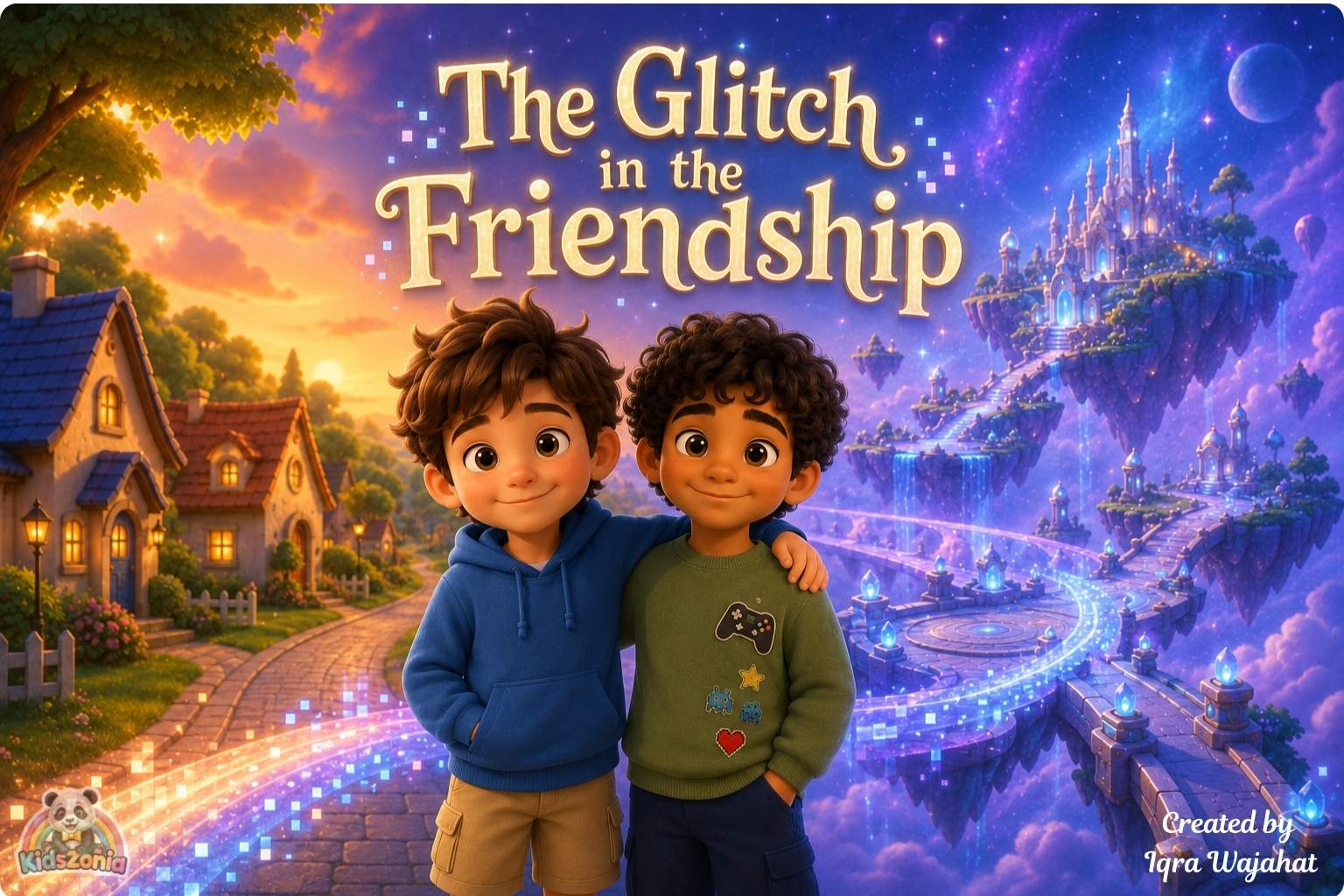
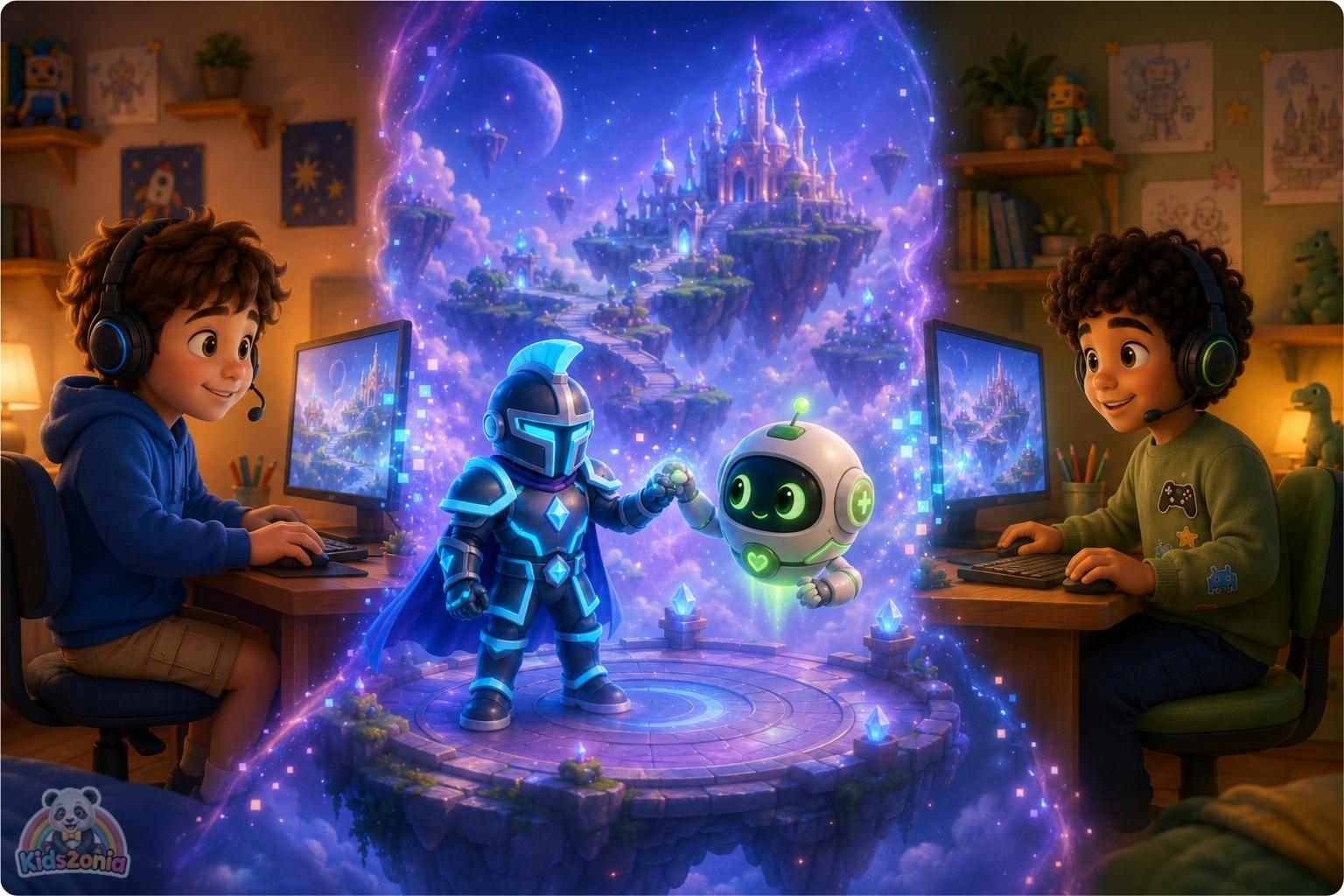
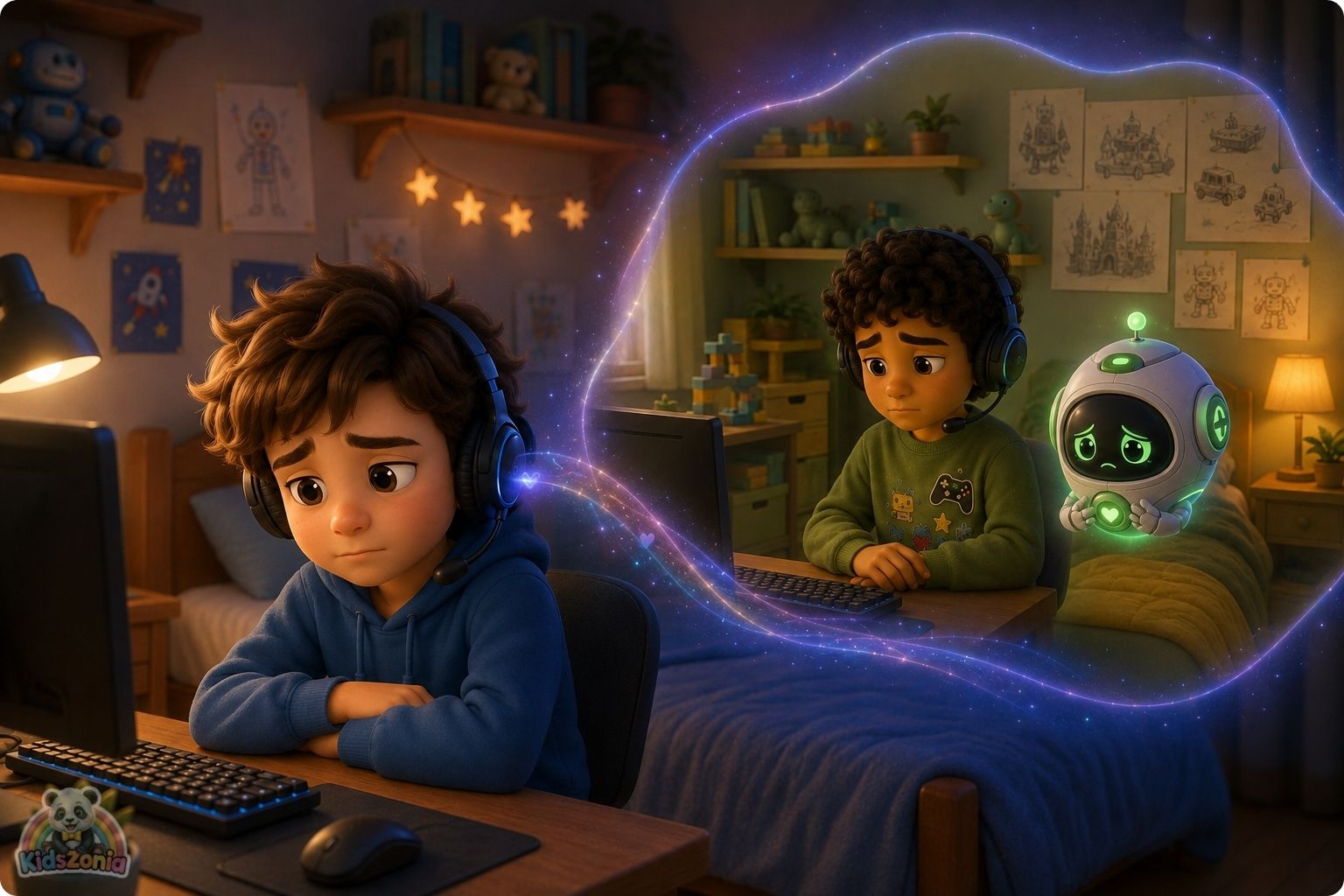
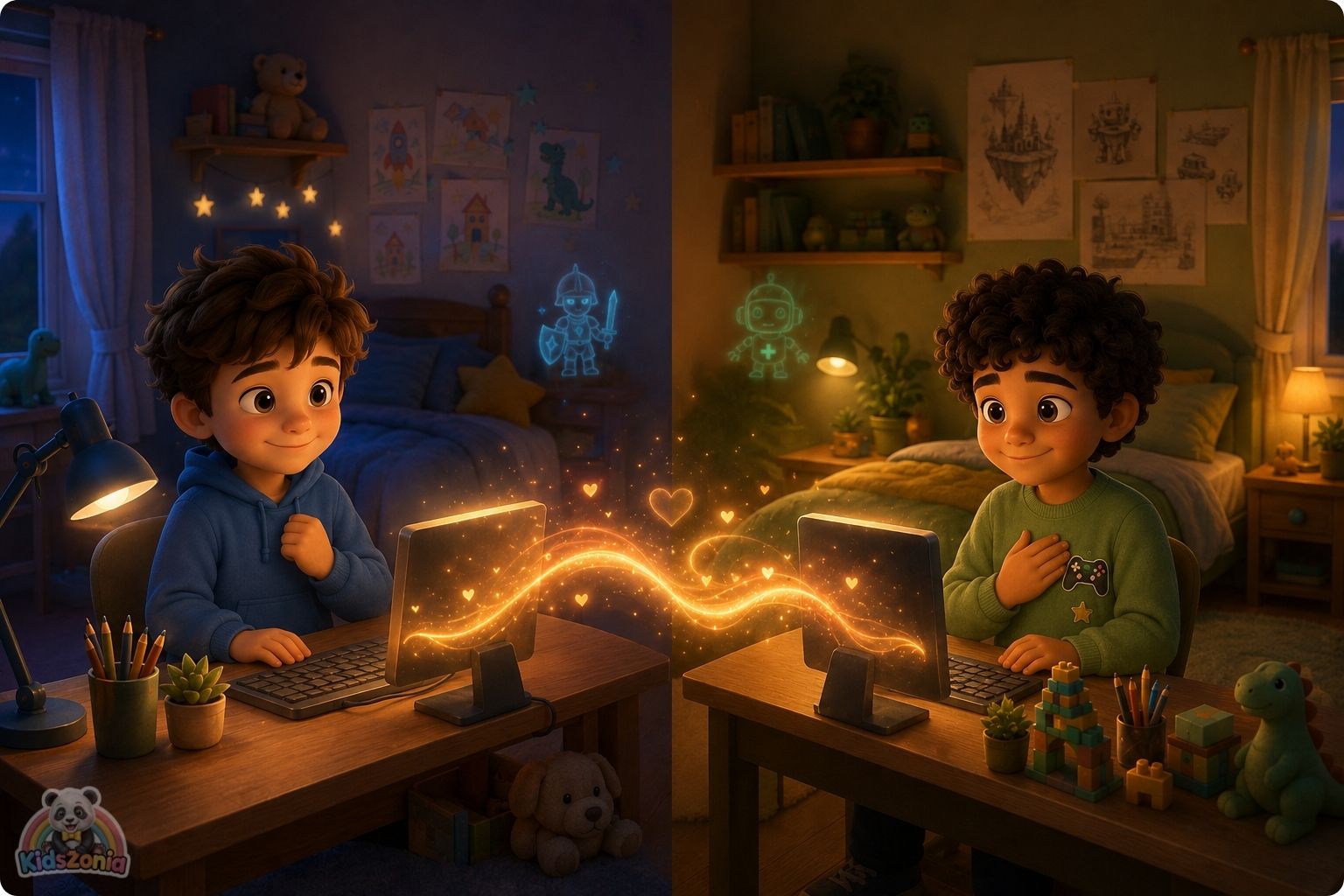
Arlo and Zane playing an online game from their bedrooms, showing digital empathy, online kindness, friendship, and real feelings behind screens.

Arlo and Zane playing an online game from their bedrooms, showing digital empathy, online kindness, friendship, and real feelings behind screens.

Theme:

Digital empathy, online kindness, friendship, and understanding emotions behind screens.

Lesson Learned:

Screens may hide faces, but they should never hide kindness. Every avatar or username belongs to a real person with real feelings, so we should choose our words carefully online.

Story Length:

(3–4 mins)

Arlo and Zane playing an online game from their bedrooms, showing digital empathy, online kindness, friendship, and real feelings behind screens.

In the quiet neighborhood of Pixel Hollow, two best friends named Arlo and Zane did everything together.
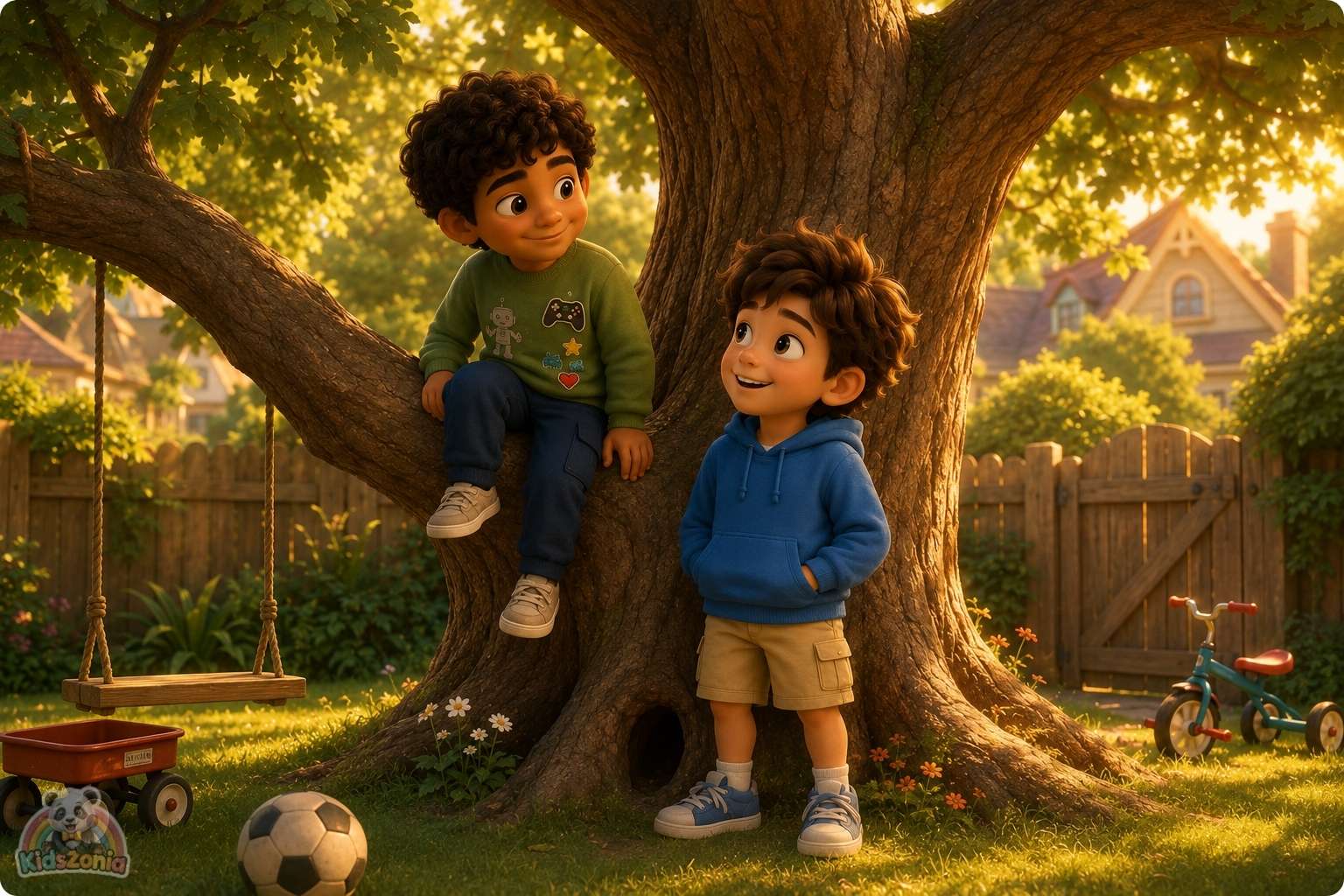
On sunny afternoons, they spent hours in Arlo’s backyard, laughing, exploring, and climbing the great old oak tree that felt like their own secret castle.

Arlo and Zane playing an online game from their bedrooms, showing digital empathy, online kindness, friendship, and real feelings behind screens.

When evening came, their adventures continued in a different way.
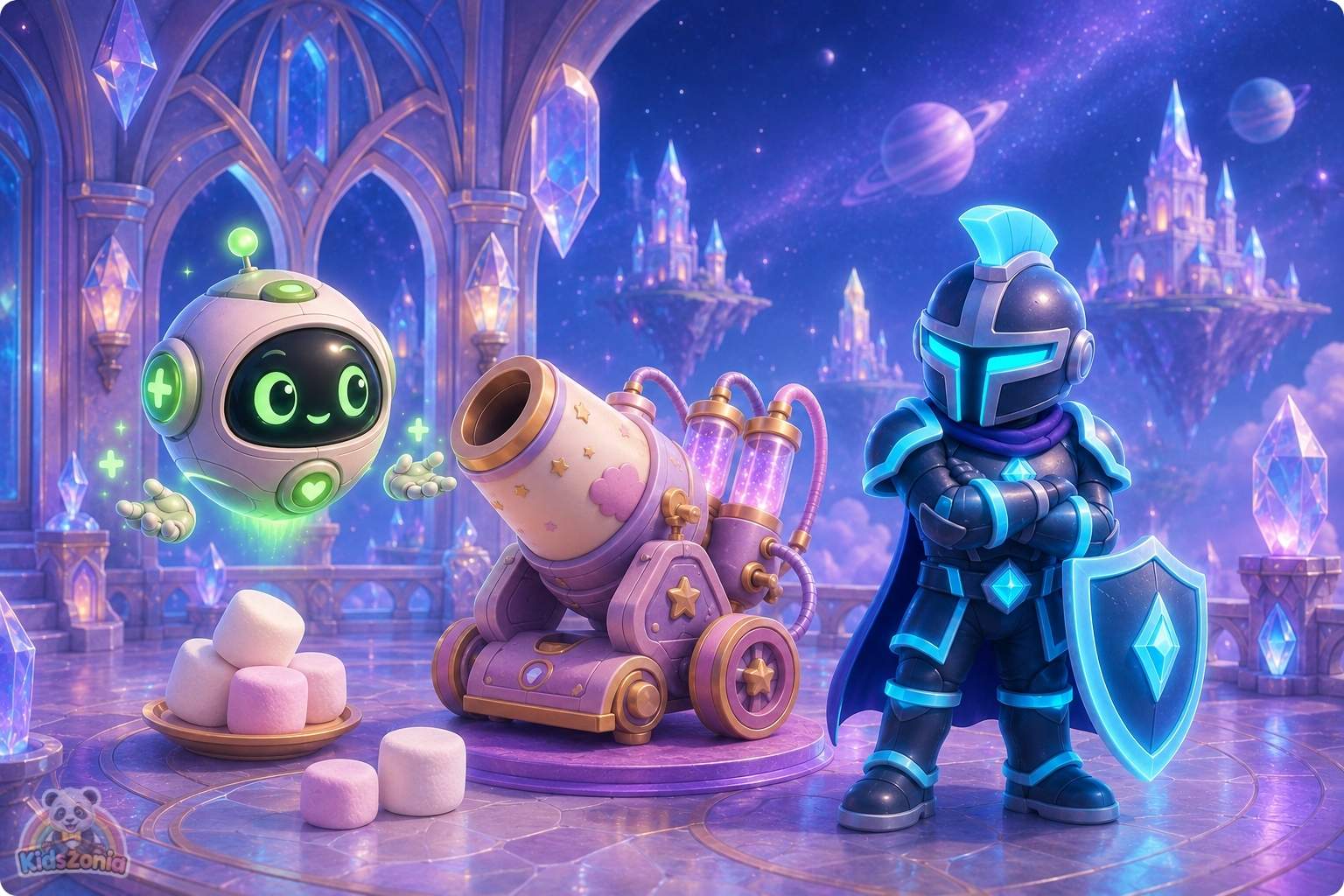
From their own bedrooms, Arlo and Zane put on their headsets and entered their favorite online game, Nebula Knights. There, Arlo became a glowing Neon Knight, and Zane became a floating Robo-Healer, and together they built castles among the stars.

Arlo and Zane playing an online game from their bedrooms, showing digital empathy, online kindness, friendship, and real feelings behind screens.

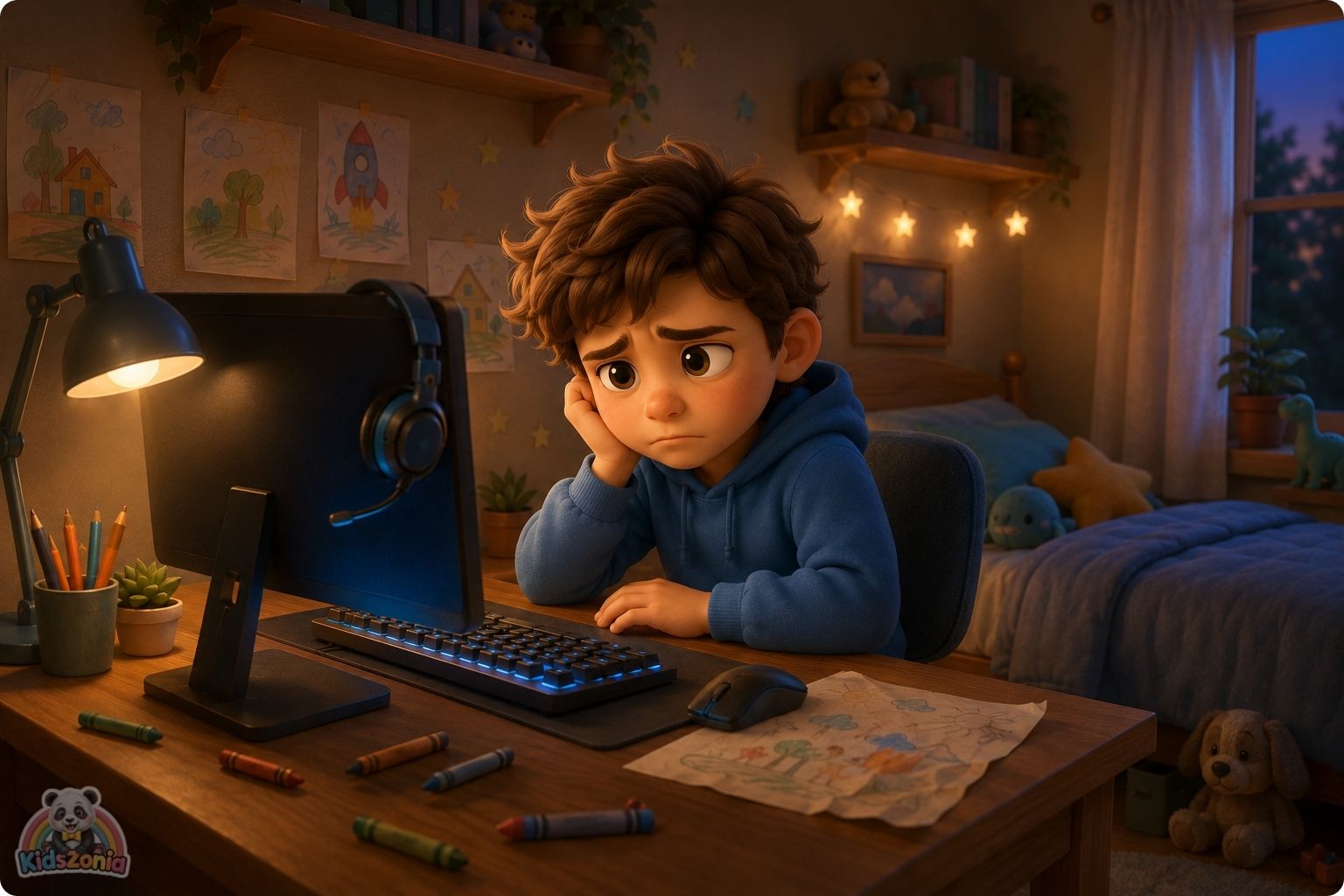
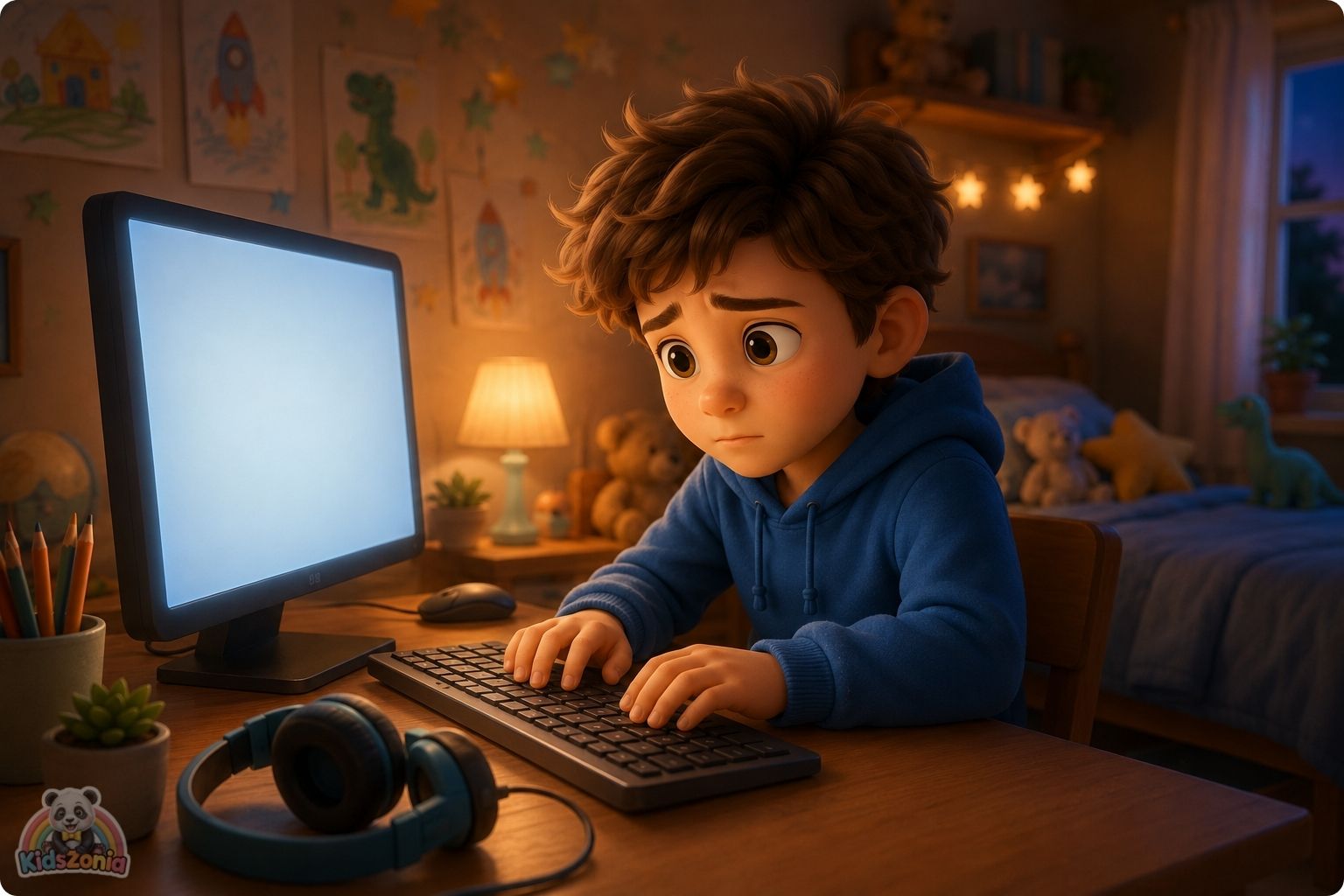
One Tuesday, Arlo had a very bad day. He had tripped in gym class, and his favorite drawing had been smudged by a rain puddle. By the time he sat at his computer, he felt prickly inside — like a cactus made of static.

Arlo and Zane playing an online game from their bedrooms, showing digital empathy, online kindness, friendship, and real feelings behind screens.

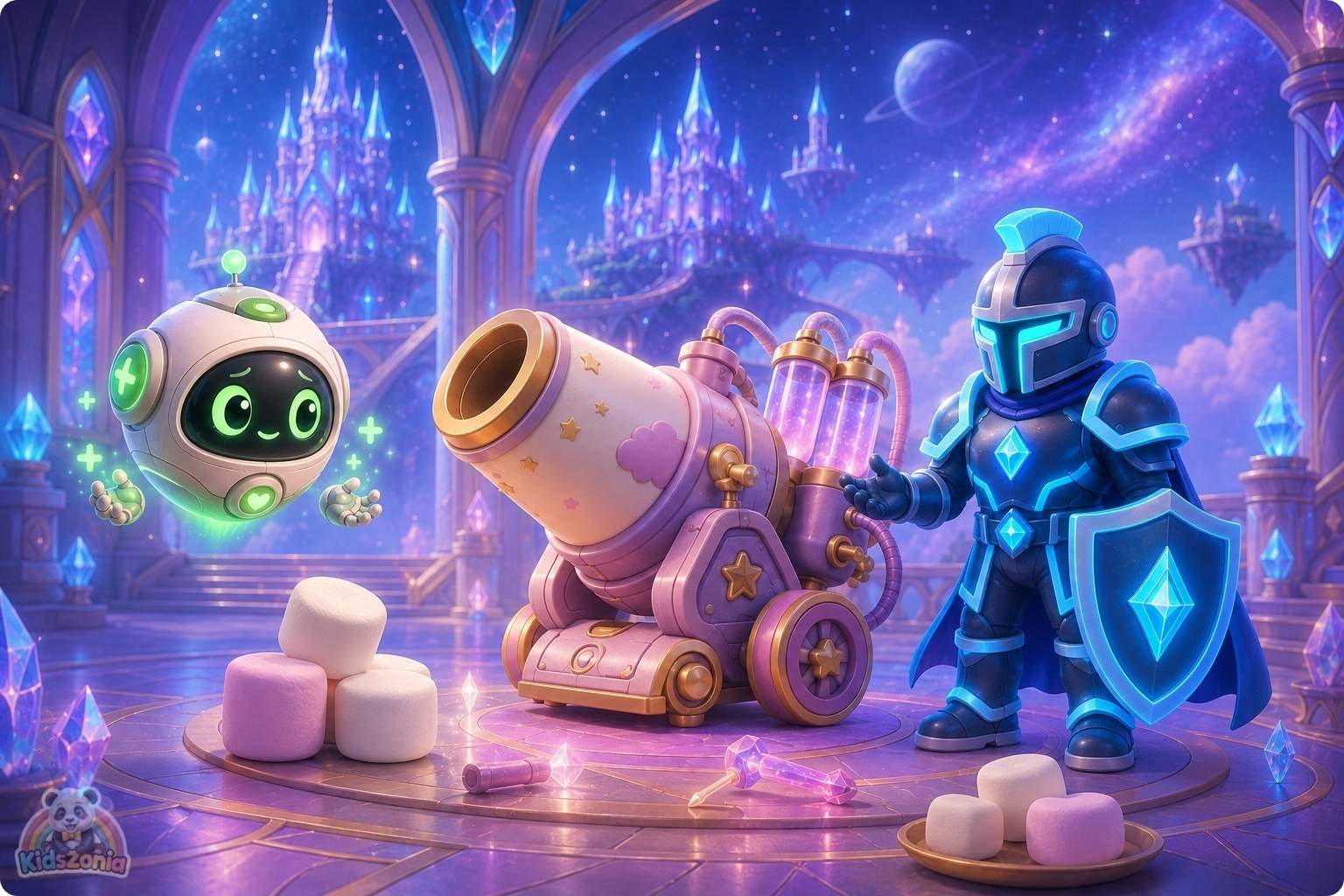
When Zane logged on, he was excited to show Arlo something he had built all afternoon — a giant Marshmallow Cannon to defend their castle. Zane felt proud and hopeful, but Arlo’s grumpy mood made the cannon look silly instead of special.

Arlo and Zane playing an online game from their bedrooms, showing digital empathy, online kindness, friendship, and real feelings behind screens.

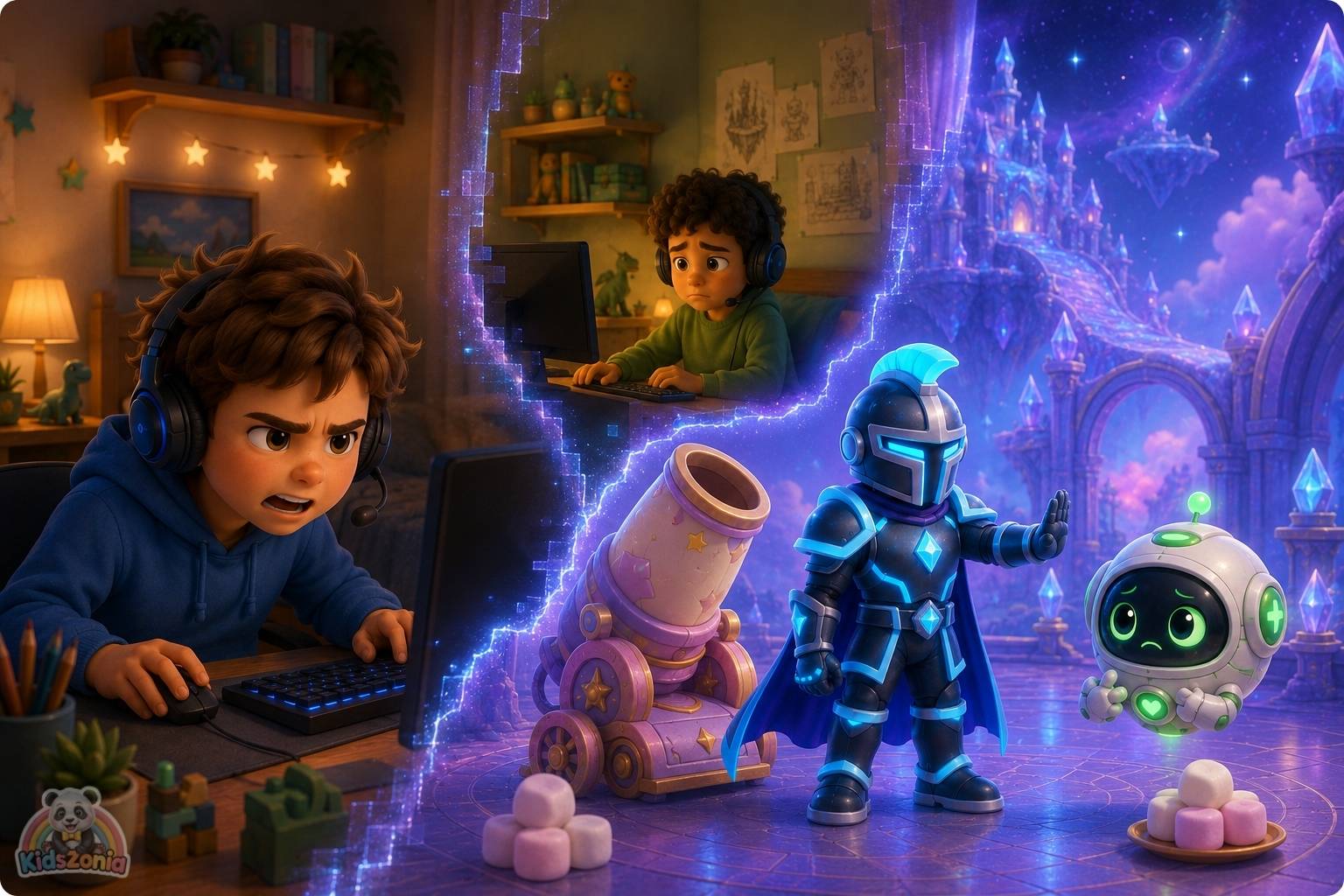
Because Arlo was feeling grumpy, he forgot that Zane had worked hard on the cannon. Through the screen, he only saw pixels — not Zane’s proud smile or excited eyes. So Arlo snapped into the microphone, and his sharp words made the friendship feel suddenly colder.

Arlo and Zane playing an online game from their bedrooms, showing digital empathy, online kindness, friendship, and real feelings behind screens.

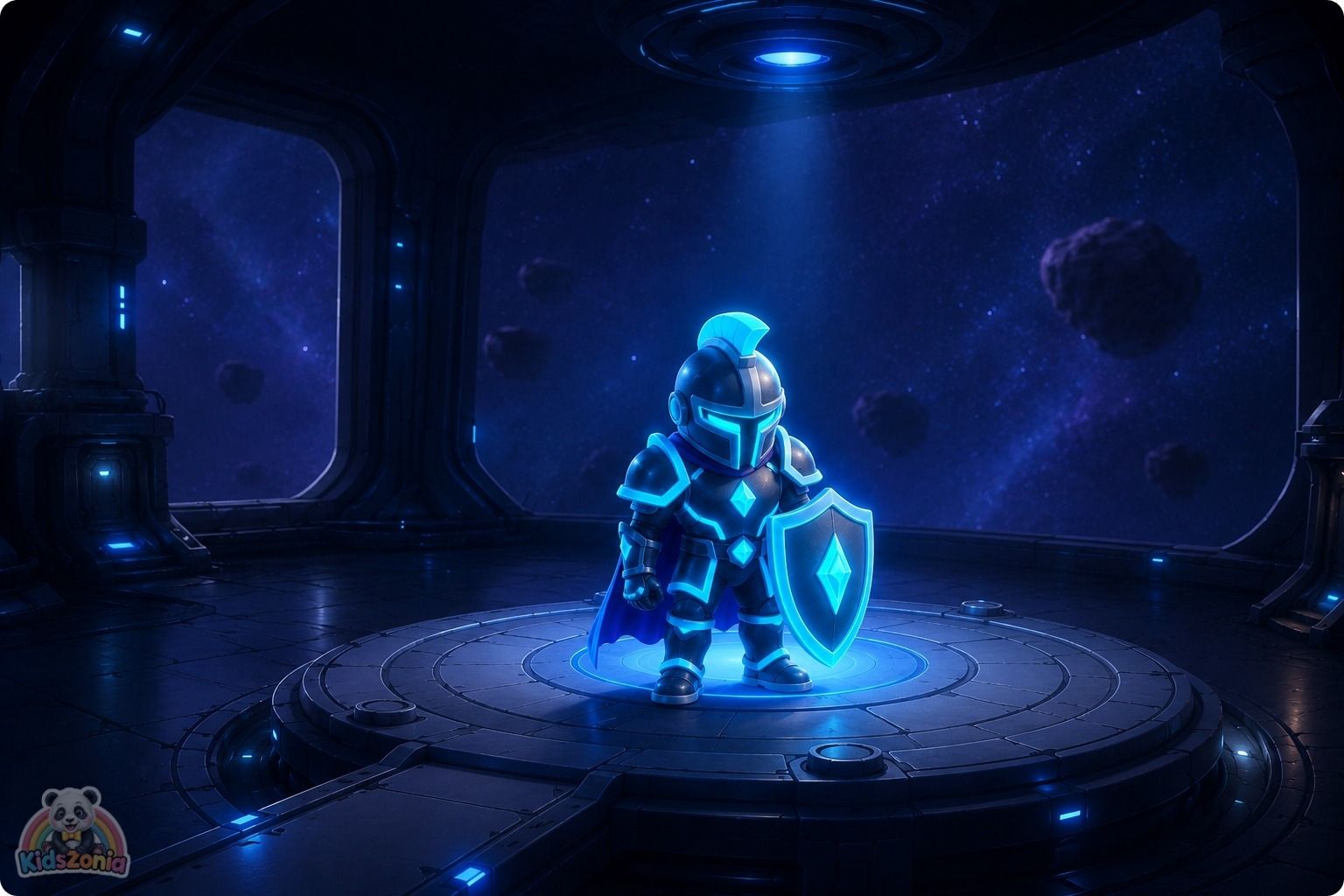
Arlo thought leaving the game would make him feel better, but it didn’t. His screen felt quiet, and his tummy felt heavy, like he had swallowed cold stones. In the empty space station, the Neon Knight stood alone without the Robo-Healer by his side.

Arlo and Zane playing an online game from their bedrooms, showing digital empathy, online kindness, friendship, and real feelings behind screens.

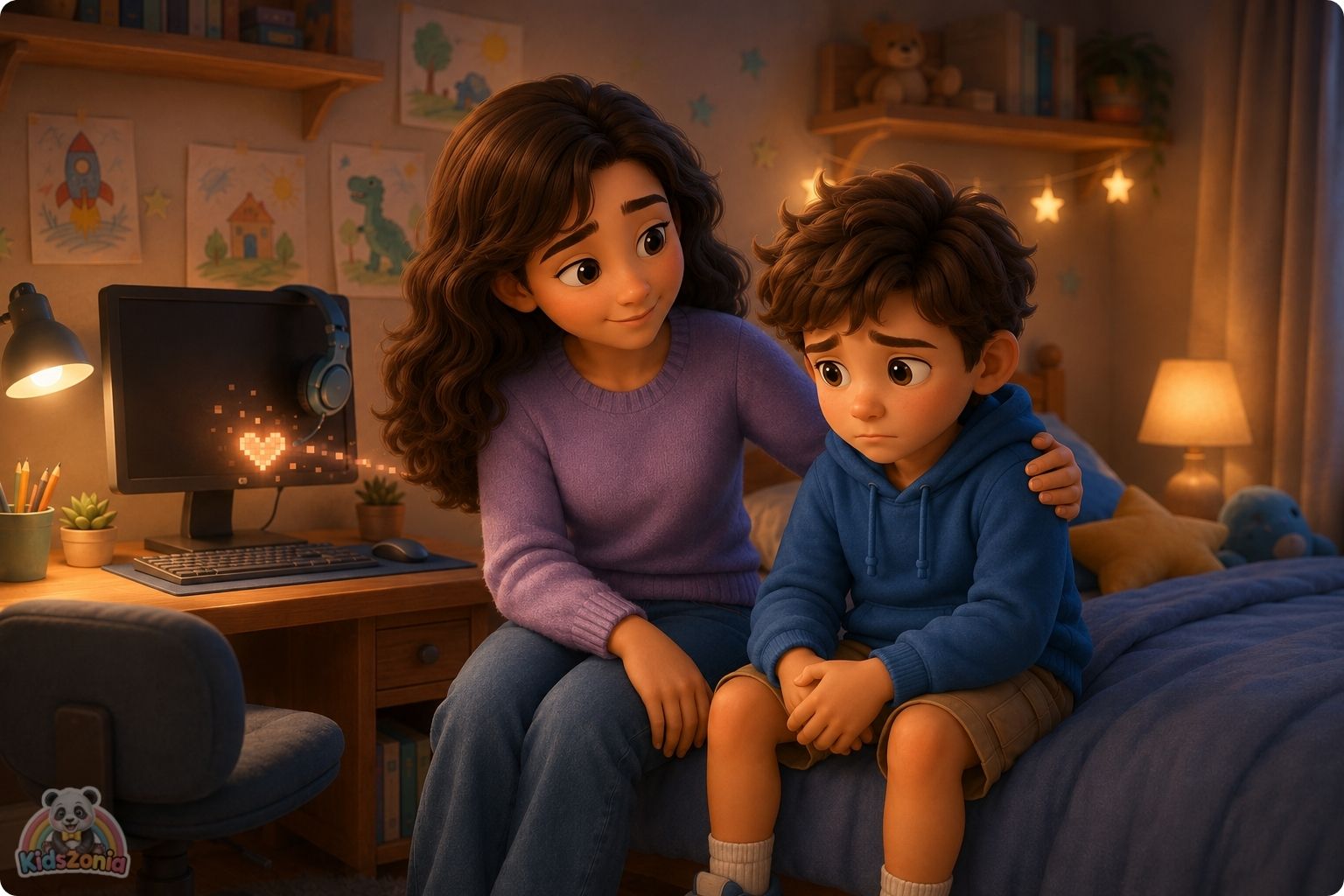
Just then, Arlo’s older sister Maya noticed his frowny face. She sat beside him and gently explained that when we are face-to-face, we can see when someone feels hurt. But online, feelings can become harder to notice — like a little glitch in empathy.

Arlo and Zane playing an online game from their bedrooms, showing digital empathy, online kindness, friendship, and real feelings behind screens.

Arlo looked at his headset and thought about Zane sitting in his own room. Behind the floating Robo-Healer was his best friend — the same Zane who shared his juice box, laughed with him, and helped him climb the old oak tree.

Arlo and Zane playing an online game from their bedrooms, showing digital empathy, online kindness, friendship, and real feelings behind screens.

Arlo put his headset back on. His hands shook a little as he typed to Zane. He didn’t want to send a tiny “sorry” and move on — he wanted to fix what he had broken.

Arlo and Zane playing an online game from their bedrooms, showing digital empathy, online kindness, friendship, and real feelings behind screens.

Zane answered quietly. He was about to delete the cannon, but Arlo asked him to stop. This time, Arlo remembered there was a real friend behind the Robo-Healer. Together, they decided to keep the cannon and make it even better.

Arlo and Zane playing an online game from their bedrooms, showing digital empathy, online kindness, friendship, and real feelings behind screens.

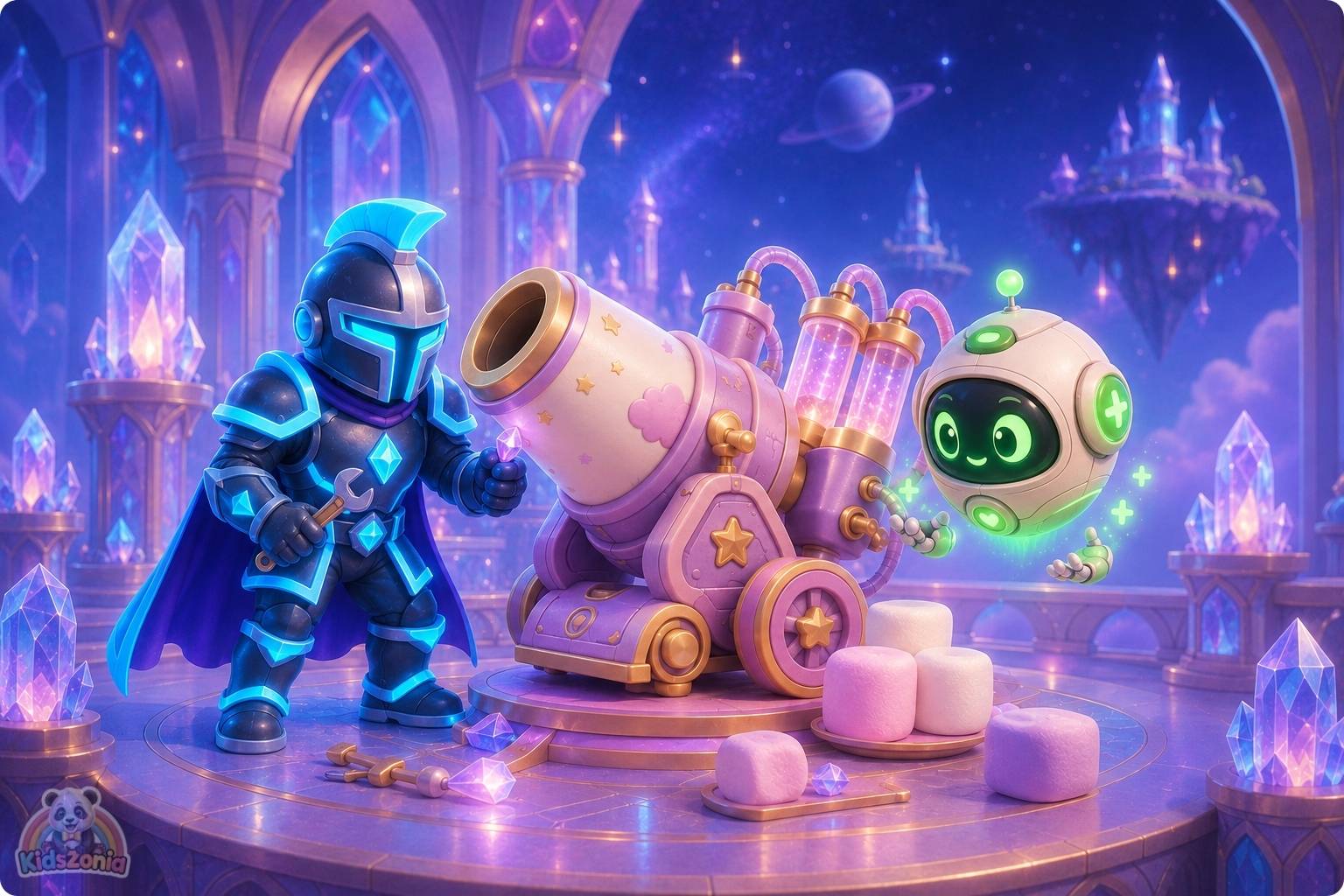
Arlo and Zane played again, but this time everything felt different. Arlo used kind words, Zane smiled again, and together they upgraded the Marshmallow Cannon with giant marshmallows and sugar-fuel. Their teamwork felt warm, bright, and fun again.

Arlo and Zane playing an online game from their bedrooms, showing digital empathy, online kindness, friendship, and real feelings behind screens.

Arlo learned that screens can hide faces, but they should never hide kindness. Behind every avatar, character, or username is a real person with real feelings and a real heart.

THE END

What is this story about?

This story is about Arlo and Zane, best friends who enjoy playing their favorite online game, Nebula Knights. One day, Arlo feels upset after a difficult day and speaks sharply to Zane during the game. Because they are online, Arlo forgets to notice Zane’s feelings behind the screen. After his sister Maya explains the idea of an “empathy glitch,” Arlo realizes that his friend was hurt. He returns to the game, apologizes sincerely, and works with Zane to rebuild their friendship with kindness and care.

What children learn from this story

This story helps children understand digital empathy, online kindness, emotional awareness, and responsible communication. Through Arlo and Zane’s friendship, young readers learn that screens may hide facial expressions, but they do not hide feelings. The story encourages kids to pause before speaking online, remember that every avatar belongs to a real person, and use kind words even when they feel upset. It also supports social-emotional learning by teaching empathy, friendship repair, self-control, apology, teamwork, and healthy digital citizenship in a child-friendly way.

Tips for parents and teachers

Parents and teachers can use this story to start helpful conversations about online behavior, friendship, and digital responsibility. After reading, ask children why Arlo’s words hurt Zane, how screens can make feelings harder to notice, and what Arlo did to repair the friendship. Encourage children to think before they type or speak online and to ask themselves, “Would I say this kindly face-to-face?” This story is useful for classroom lessons about digital citizenship, online manners, cyber kindness, empathy, gaming friendships, and understanding emotions behind screens.

Story FAQs

The Glitch in the Friendship is a children’s story about two best friends, Arlo and Zane, who play an online game together. When Arlo uses sharp words after a bad day, he learns that online actions can still hurt real feelings.

The story teaches children that screens may hide faces, but they should never hide kindness. Every avatar, username, or game character belongs to a real person with real feelings.

Arlo hurts Zane’s feelings because he is having a bad day and speaks sharply through the game microphone. He forgets that behind Zane’s online character is his real best friend.

Maya helps Arlo understand that online feelings can be harder to notice because people cannot always see faces, expressions, or body language through a screen. She explains that this can create a small glitch in empathy.

Arlo repairs his friendship by returning to the game, apologizing sincerely, and choosing kinder words. He also shows Zane that his Marshmallow Cannon matters by helping improve it instead of making fun of it.

Children can learn that online friendships need kindness, patience, and care just like face-to-face friendships. Arlo and Zane show that mistakes can be repaired when we apologize, listen, and choose better words.

Yes, The Glitch in the Friendship is helpful for digital citizenship lessons. It teaches online kindness, empathy, respectful communication, friendship repair, and remembering that real people are behind screens.

The Glitch in the Friendship is suitable for kindergarten and elementary-aged children. It is especially useful for lessons about online behavior, gaming friendships, digital empathy, and choosing kind words.