The Perfect Morning – A Story About Dreams, Reality, and True Happiness

All Ages

After making a wish, Lila wakes up to find her family suddenly happy and whole again. Everything feels perfect, but as days pass, she begins to sense that some things may be too perfect to be real.

family magic emotions mystery

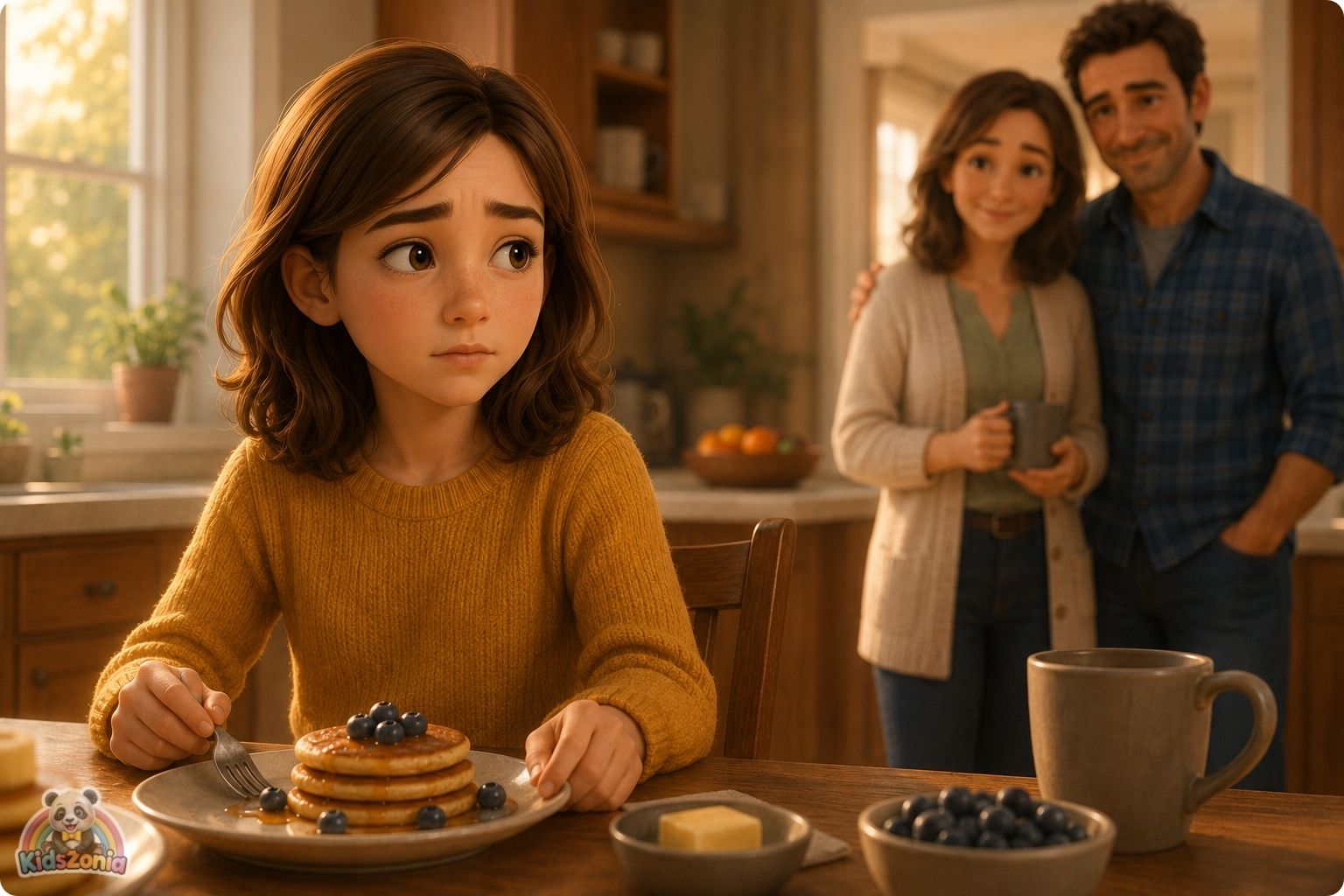
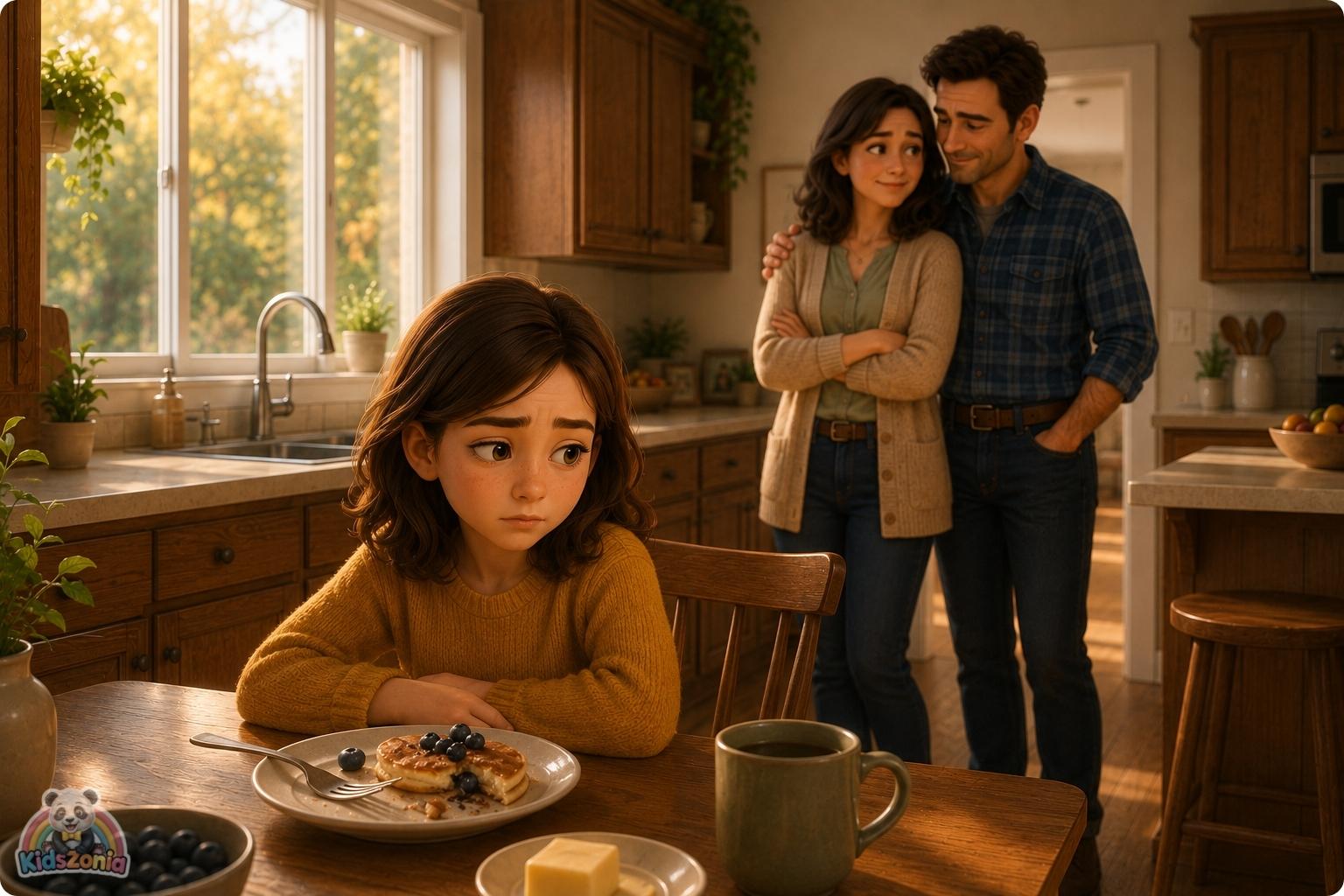
Lila sitting at a sunny kitchen table with blueberry pancakes while her parents smile nearby, showing the difference between perfect dreams and real happiness.

Lila sitting at a sunny kitchen table with blueberry pancakes while her parents smile nearby, showing the difference between perfect dreams and real happiness.

Theme:

The difference between dreams and reality, and understanding that true happiness cannot be created through perfect illusions.

Lesson Learned:

Real life is not perfect, but genuine love and happiness come from accepting reality rather than escaping into an ideal version of it.

Story Length:

(3–4 mins)

Lila sitting at a sunny kitchen table with blueberry pancakes while her parents smile nearby, showing the difference between perfect dreams and real happiness.

Lila woke to the smell of pancakes.

Not just any pancakes — Dad’s pancakes. The thick, blueberry kind he used to make before everything changed. For a moment, Lila lay still, unsure if she was awake or still dreaming

Lila sitting at a sunny kitchen table with blueberry pancakes while her parents smile nearby, showing the difference between perfect dreams and real happiness.

Lila jumped out of bed.

The smell was real. The morning light was real. And somewhere downstairs, the house sounded warmer than it had in months. With her heart beating fast, Lila ran toward the kitchen.

Lila sitting at a sunny kitchen table with blueberry pancakes while her parents smile nearby, showing the difference between perfect dreams and real happiness.

Lila reached the kitchen doorway and froze.

The room was full of morning light, the table was being set, and the smell of blueberry pancakes filled the air. For one breath, Lila could not move. Something about the house felt impossible — and strangely familiar.

Lila sitting at a sunny kitchen table with blueberry pancakes while her parents smile nearby, showing the difference between perfect dreams and real happiness.

Dad was at the stove.

He was flipping pancakes like nothing had ever changed. Mom was setting the table, smiling softly as sunlight filled the kitchen. They were together. They were calm. They were happy. And Lila could hardly believe what she was seeing.

Lila sitting at a sunny kitchen table with blueberry pancakes while her parents smile nearby, showing the difference between perfect dreams and real happiness.

Dad smiled and placed the pancakes in front of her.

“Extra blueberries,” he said, just like he used to. Lila stared at the plate, then at him. Everything looked right. Everything sounded right. But her heart was beating like it knew this morning should not exist.

Lila sitting at a sunny kitchen table with blueberry pancakes while her parents smile nearby, showing the difference between perfect dreams and real happiness.

The pancakes tasted exactly right.

Mom laughed at something Dad said, and Dad smiled like the old days had never ended. Lila wanted to feel happy. She wanted to believe it was real. But somewhere inside her, a small quiet doubt began to wake up.

Lila sitting at a sunny kitchen table with blueberry pancakes while her parents smile nearby, showing the difference between perfect dreams and real happiness.

Then Mom smiled and said they could go to the beach.

Like old times. Like the photo on Lila’s nightstand. Like the summer before everything changed. Lila wanted to believe it so badly that her chest hurt.


Lila sitting at a sunny kitchen table with blueberry pancakes while her parents smile nearby, showing the difference between perfect dreams and real happiness.

They tasted exactly right. The blueberries burst the way they always had. Mom and Dad laughed together, and everything looked perfect. But deep inside, Lila felt like she was watching someone else’s life.


Lila sitting at a sunny kitchen table with blueberry pancakes while her parents smile nearby, showing the difference between perfect dreams and real happiness.

Lila sat at the table, but her hands would not stay still.

The pancakes were real. Mom and Dad were real — or at least they looked real. Somewhere upstairs, the jar waited in her room, and Lila suddenly wanted to know if it was empty, full, broken, or changed.

Lila sitting at a sunny kitchen table with blueberry pancakes while her parents smile nearby, showing the difference between perfect dreams and real happiness.

Everything was perfect.

Too perfect.

Mom smiled. Dad laughed. The kitchen glowed like a memory Lila had wanted back for so long. But instead of feeling safe, Lila felt strangely far away — as if she had stepped into a movie of someone else’s life.

Lila sitting at a sunny kitchen table with blueberry pancakes while her parents smile nearby, showing the difference between perfect dreams and real happiness.

Everything was fixed.

Mom and Dad were together. The pancakes were perfect. The morning was warm and golden and full of all the things Lila had missed.

So why did it feel like she was sitting inside someone else’s happy ending?

Lila sitting at a sunny kitchen table with blueberry pancakes while her parents smile nearby, showing the difference between perfect dreams and real happiness.

For three days, everything stayed perfect.

Family dinners. Board games. Smiles that never slipped. But on the fourth day, Lila noticed something she had not seen before — a tiny crack in the jar.

Small. Silent. Waiting

THE END

What is this story about?

This story is about Lila waking up to what seems like a perfect morning from the past. Her parents are together, the house feels warm, and everything looks exactly the way she once wished it could be. At first, Lila wants to believe that the perfect morning is real, but deep inside, she feels a quiet doubt. As the days stay strangely perfect, she notices a tiny crack in the magical jar, showing that perfect illusions cannot truly fix real feelings. The story teaches children that real life may not be perfect, but genuine love and happiness are stronger when they are honest.

What children learn from this story

This story helps children understand the difference between wishes, dreams, and real life in a gentle and age-appropriate way. Through Lila’s experience, young readers learn that wanting things to be perfect is natural, especially during family changes or emotional moments, but true happiness cannot come from pretending difficult things never happened. The story supports emotional awareness, self-understanding, resilience, and acceptance by showing that real love does not have to look perfect to matter. It also encourages children to trust their feelings, notice when something does not feel right, and understand that healing begins when we face reality with honesty and courage.

Tips for parents and teachers

Parents and teachers can use this story to talk with children about wishes, family changes, sadness, and the difference between what we hope for and what is real. After reading, ask children why Lila wanted the morning to be real, why everything felt “too perfect,” and what the tiny crack in the jar might mean. Encourage children to share a time when they wished something could go back to the way it was, while reminding them that feelings like sadness, confusion, and hope are normal. This story can support social-emotional learning discussions about acceptance, emotional honesty, coping with change, and finding comfort in real love rather than perfect pretend versions of life.

Story FAQs

The Perfect Morning is a children’s story about Lila waking up to a family morning that seems perfect, with her parents together and her dad making blueberry pancakes. As the perfect days continue, Lila begins to realize that something about this happiness may not be real.

The story teaches children that real life is not always perfect, but true happiness comes from accepting reality instead of escaping into an ideal version of it. It gently shows that love and healing must be honest to feel real.

Lila feels unsure because everything looks exactly the way she wished it could be, but deep inside she senses that the perfect morning should not exist. Her heart knows that something about the moment feels too perfect to be real.

The tiny crack in the jar suggests that the perfect illusion is beginning to break. It shows that pretending life is perfect cannot truly hide real feelings or change reality forever.

Children can learn from Lila that it is normal to wish for things to feel happy and whole again. Her story shows that confusing feelings are important and that accepting reality can be part of healing.

Yes, The Perfect Morning supports social-emotional learning by helping children explore emotions, family change, grief, hope, acceptance, and the difference between dreams and reality.

Parents and teachers can ask children why Lila wanted the perfect morning to be real, why it started to feel strange, and what the crack in the jar might symbolize. These questions can help children talk about wishes, change, and honest feelings.

The Perfect Morning is suitable for kindergarten and elementary-aged children, especially when guided by a parent or teacher. It is helpful for gentle conversations about family change, emotions, wishes, and accepting reality.