The Curious Case of the Missing Endings – A Mystery Story About Observation and Problem-Solving
All Ages
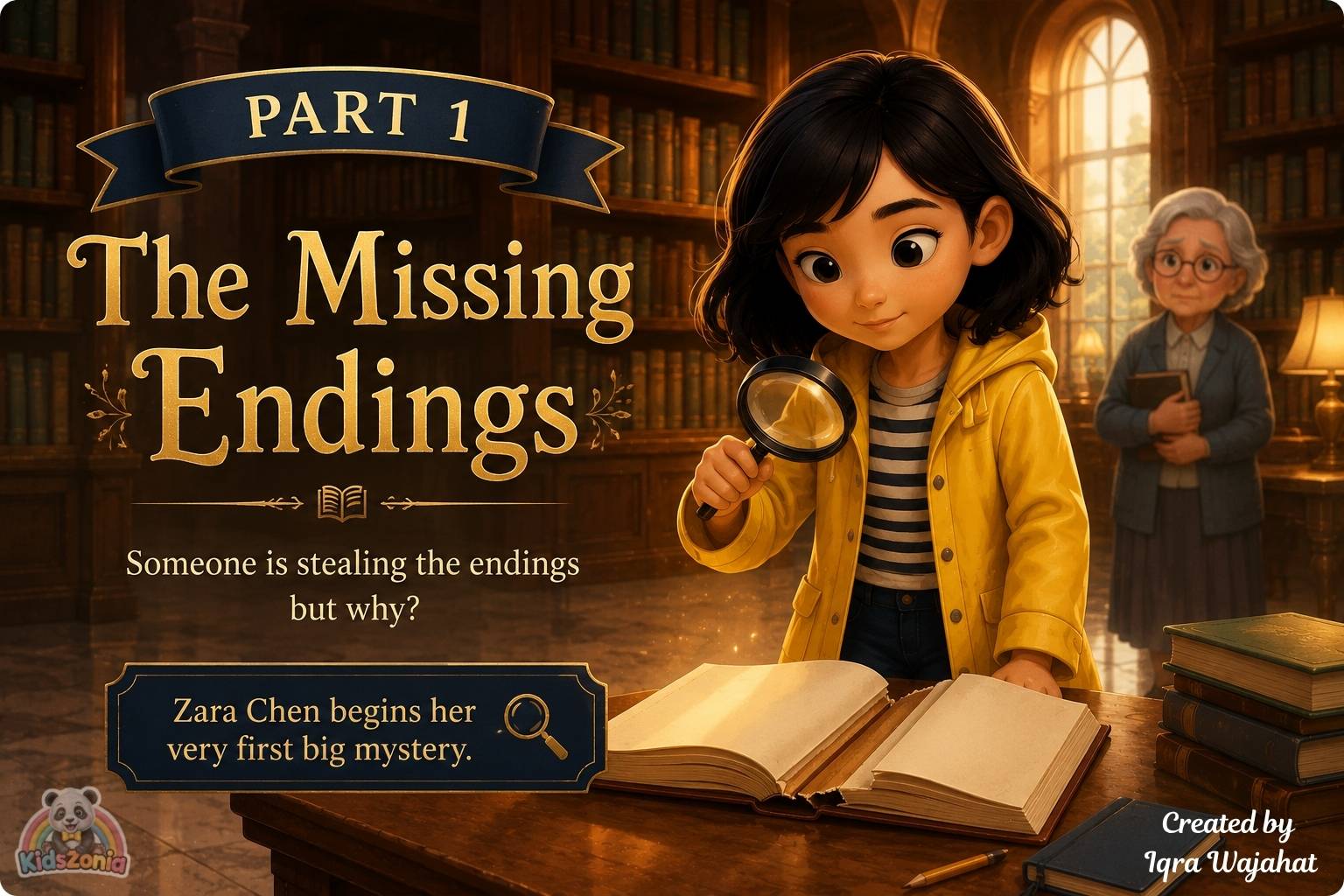
Zara Chen investigates a strange mystery at Willowbrook Public Library, where the endings of beloved stories are disappearing one by one.
detective kids
library adventure
mystery story
problem solving

What is this story about?
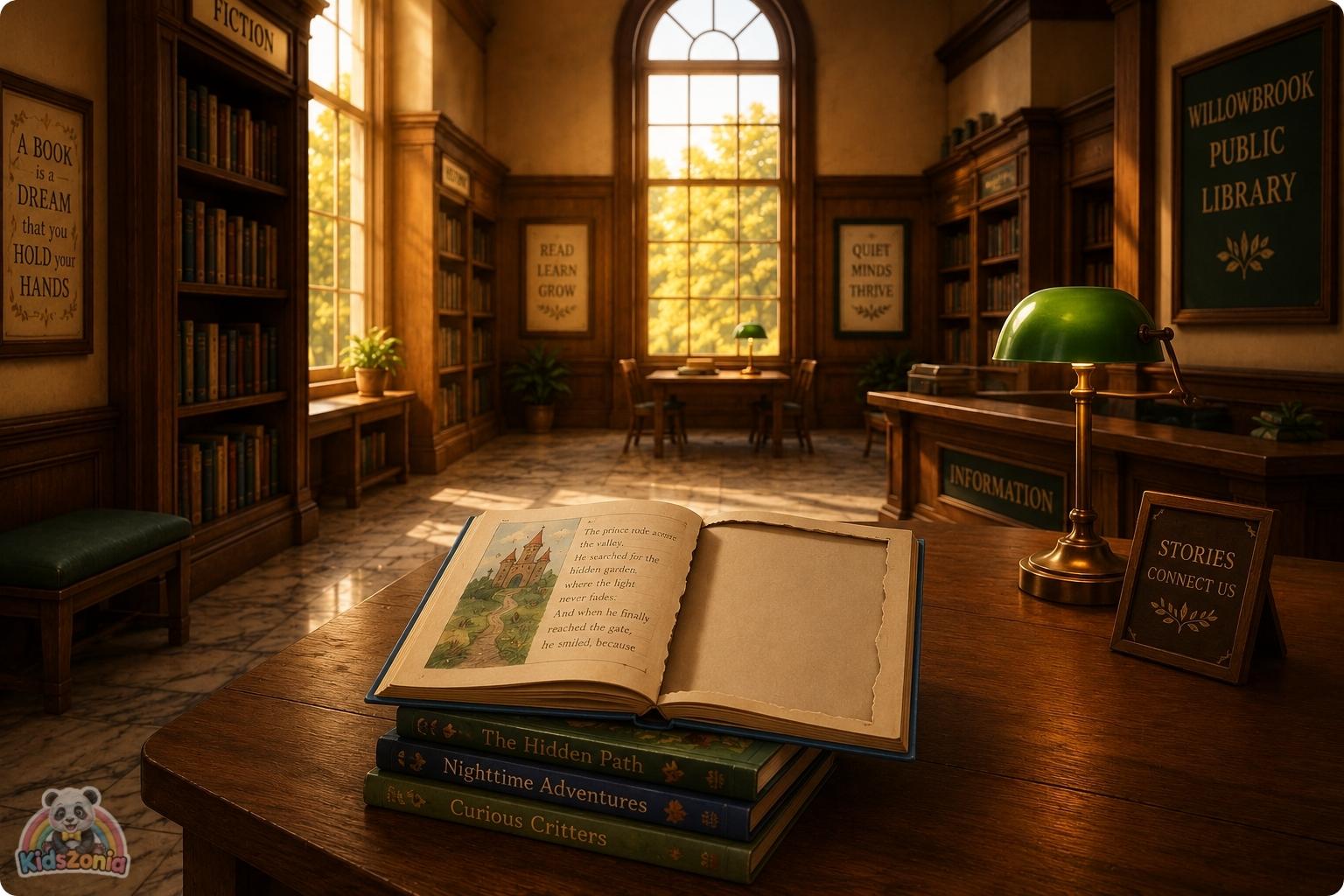
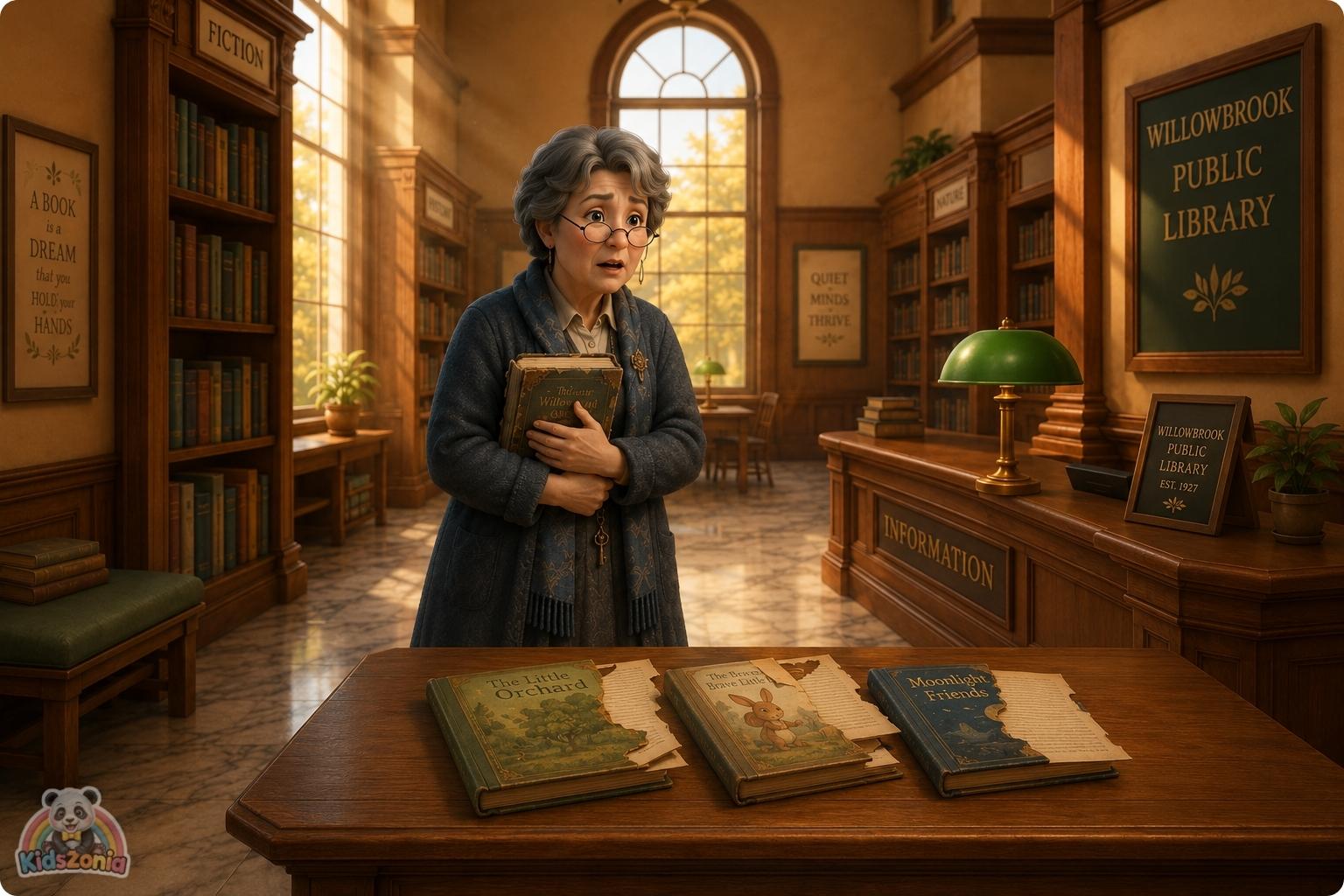
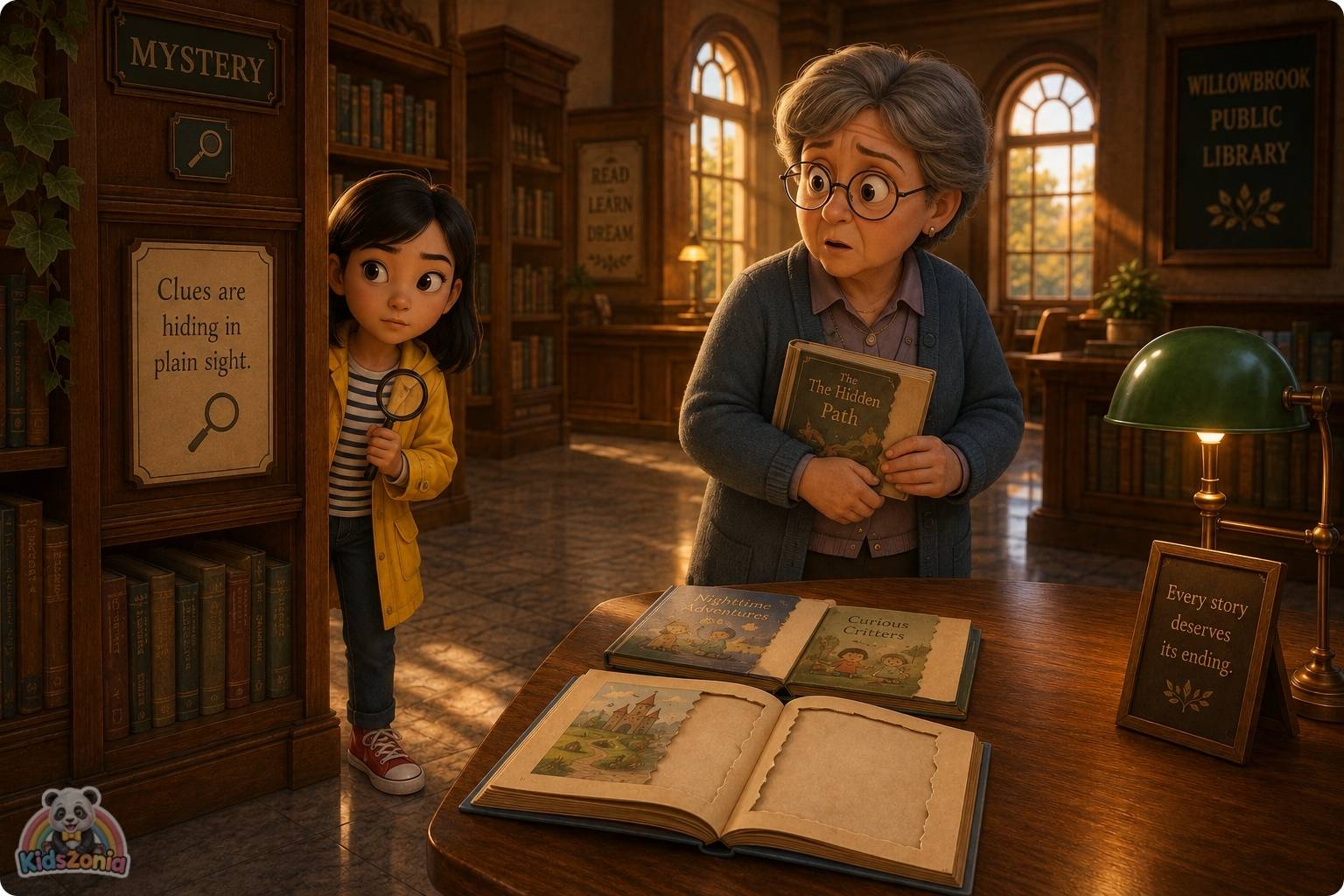
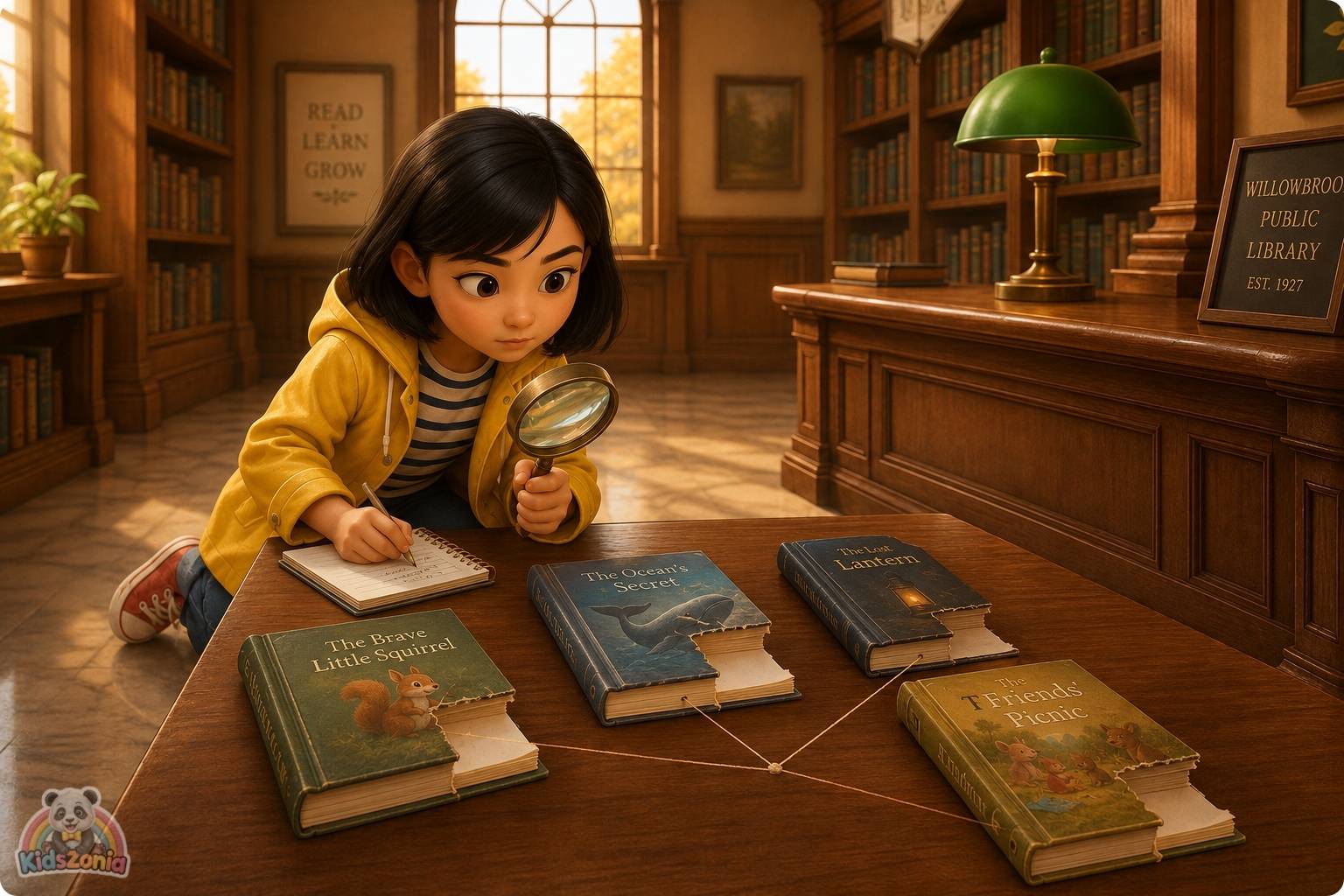
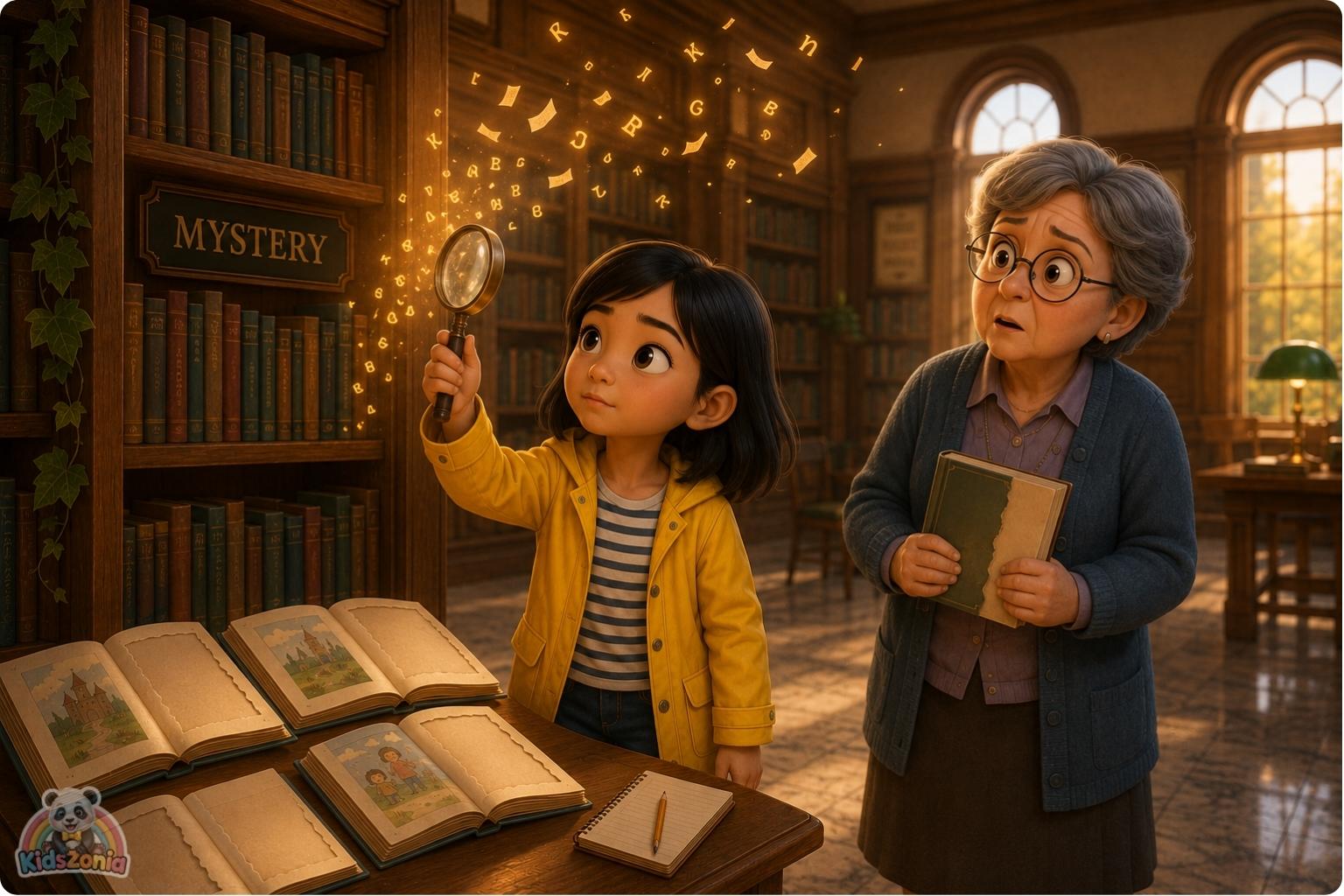
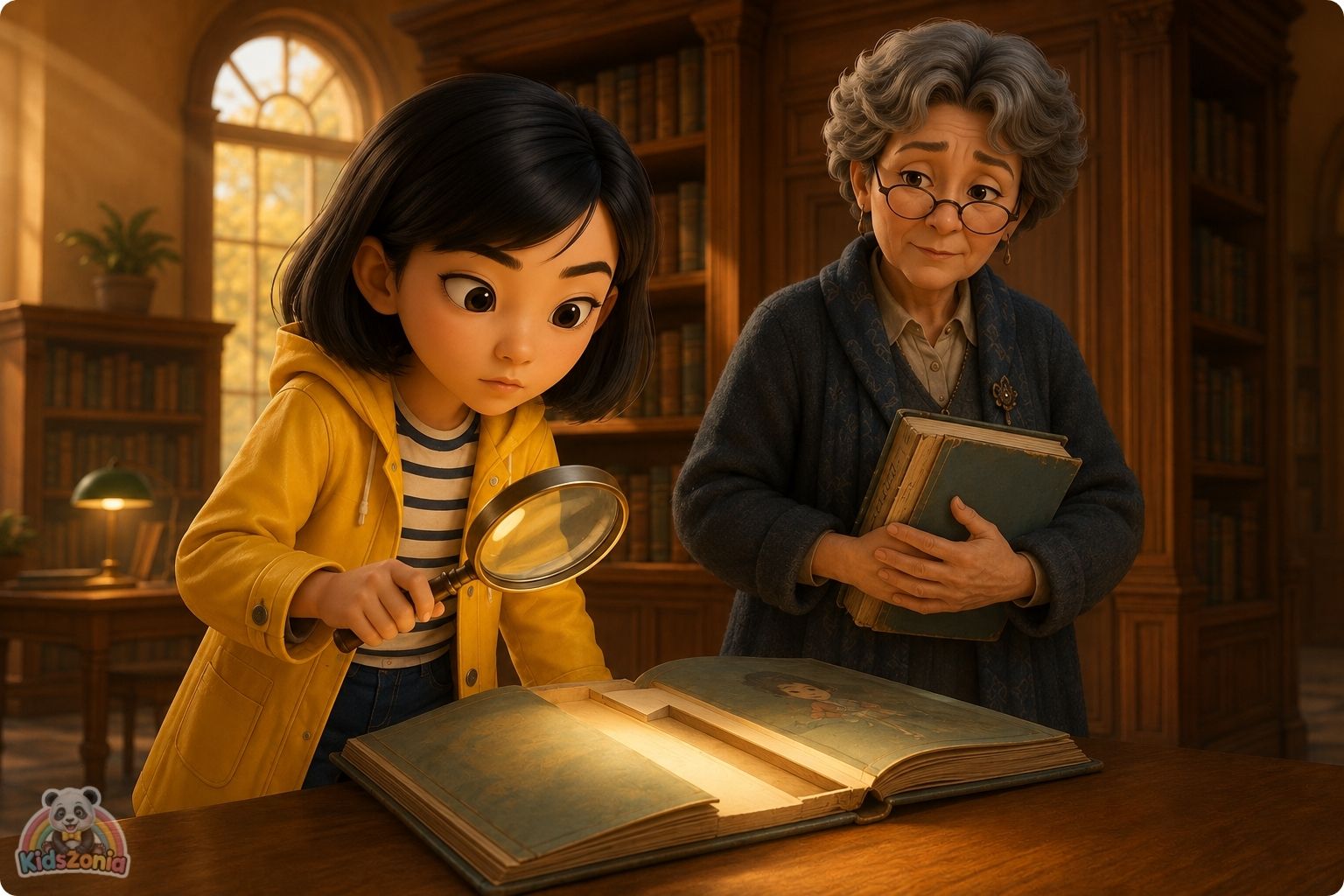
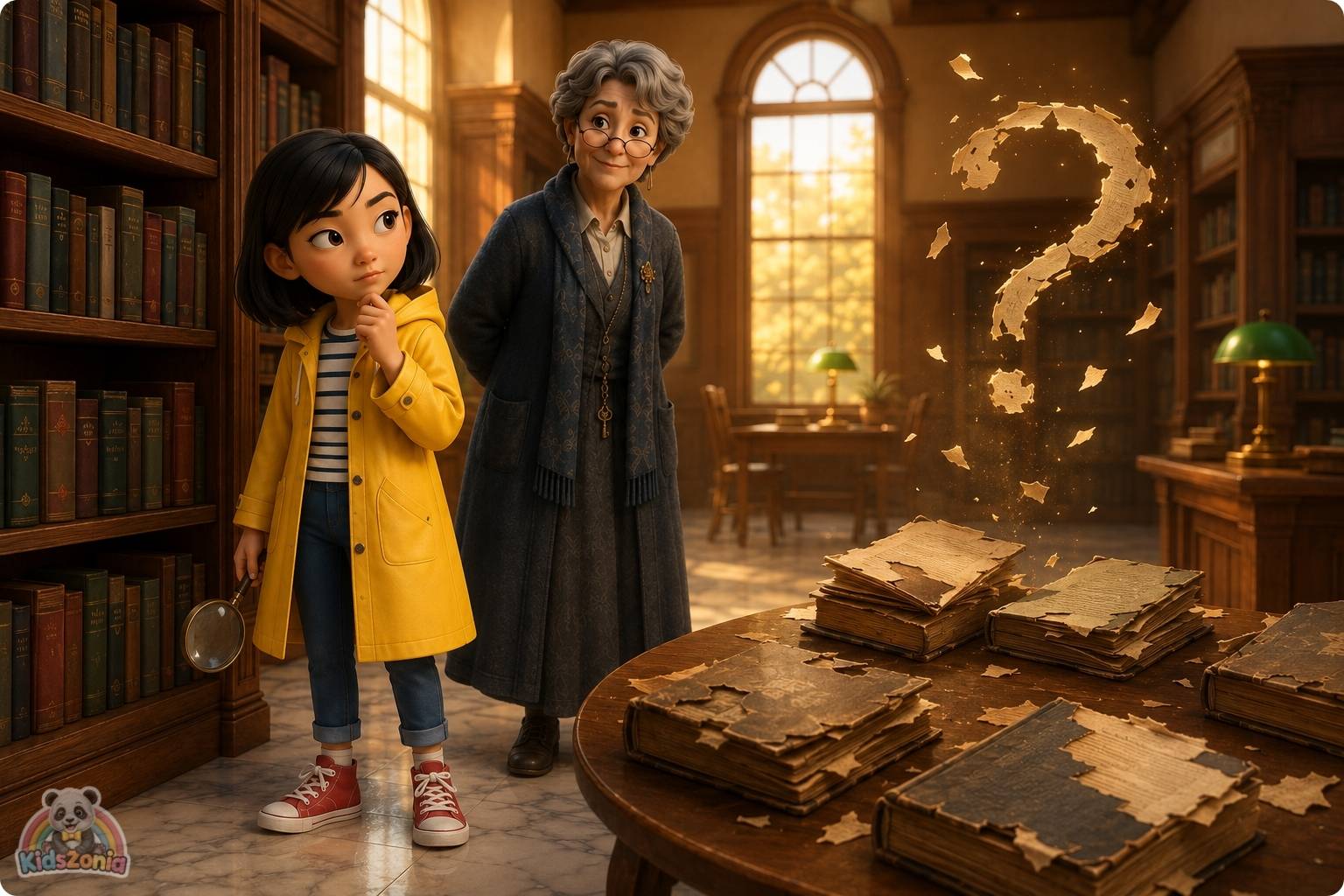
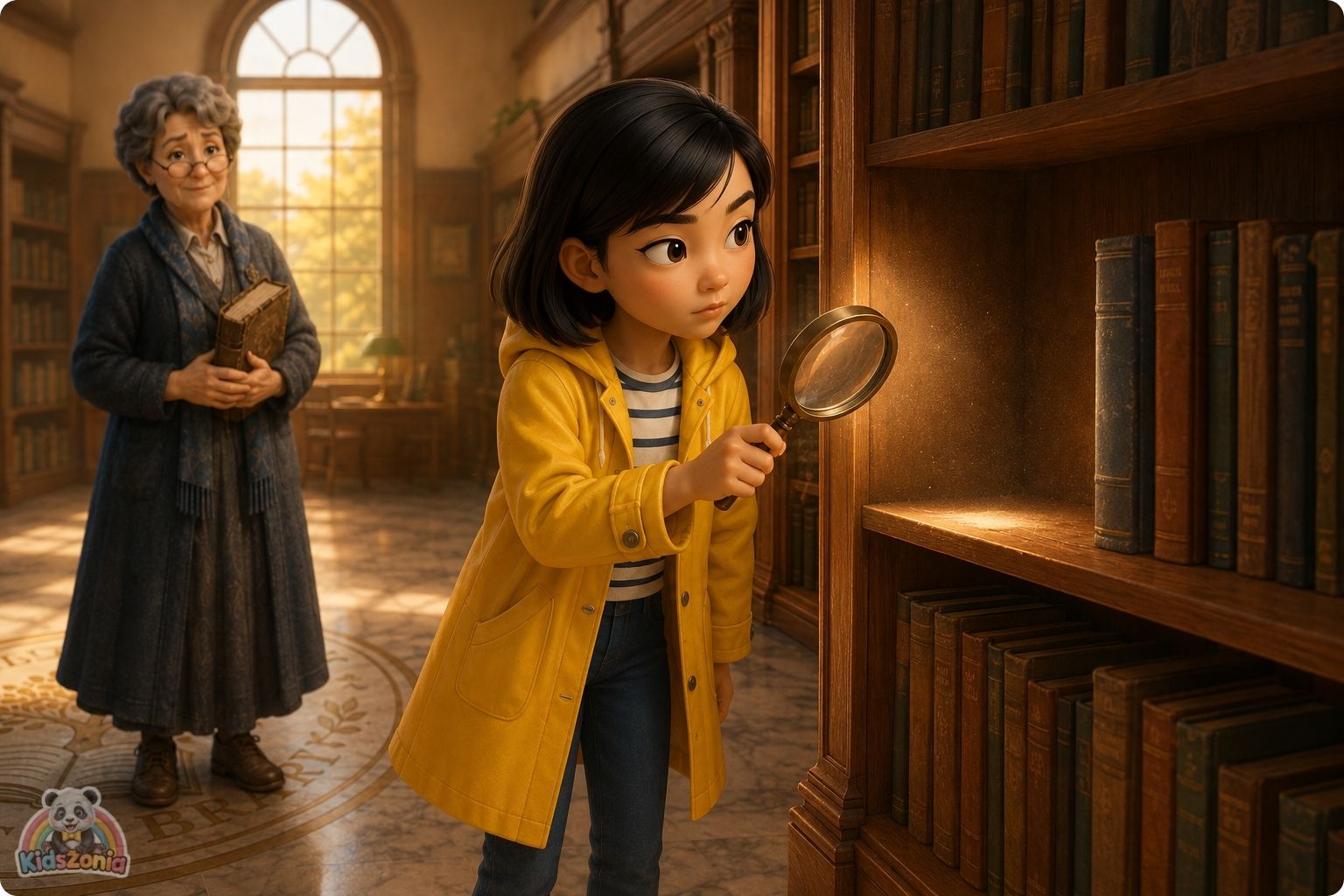
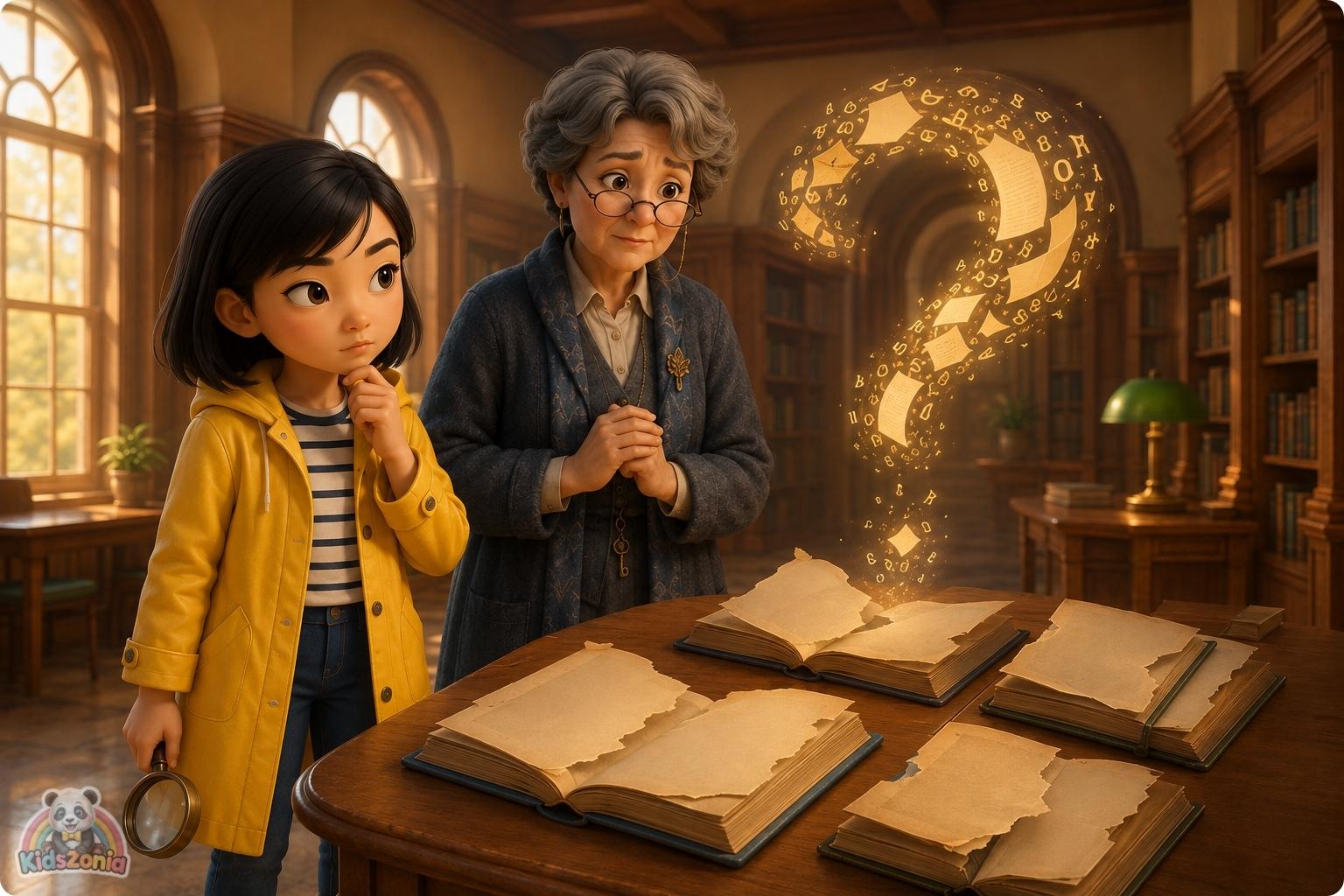
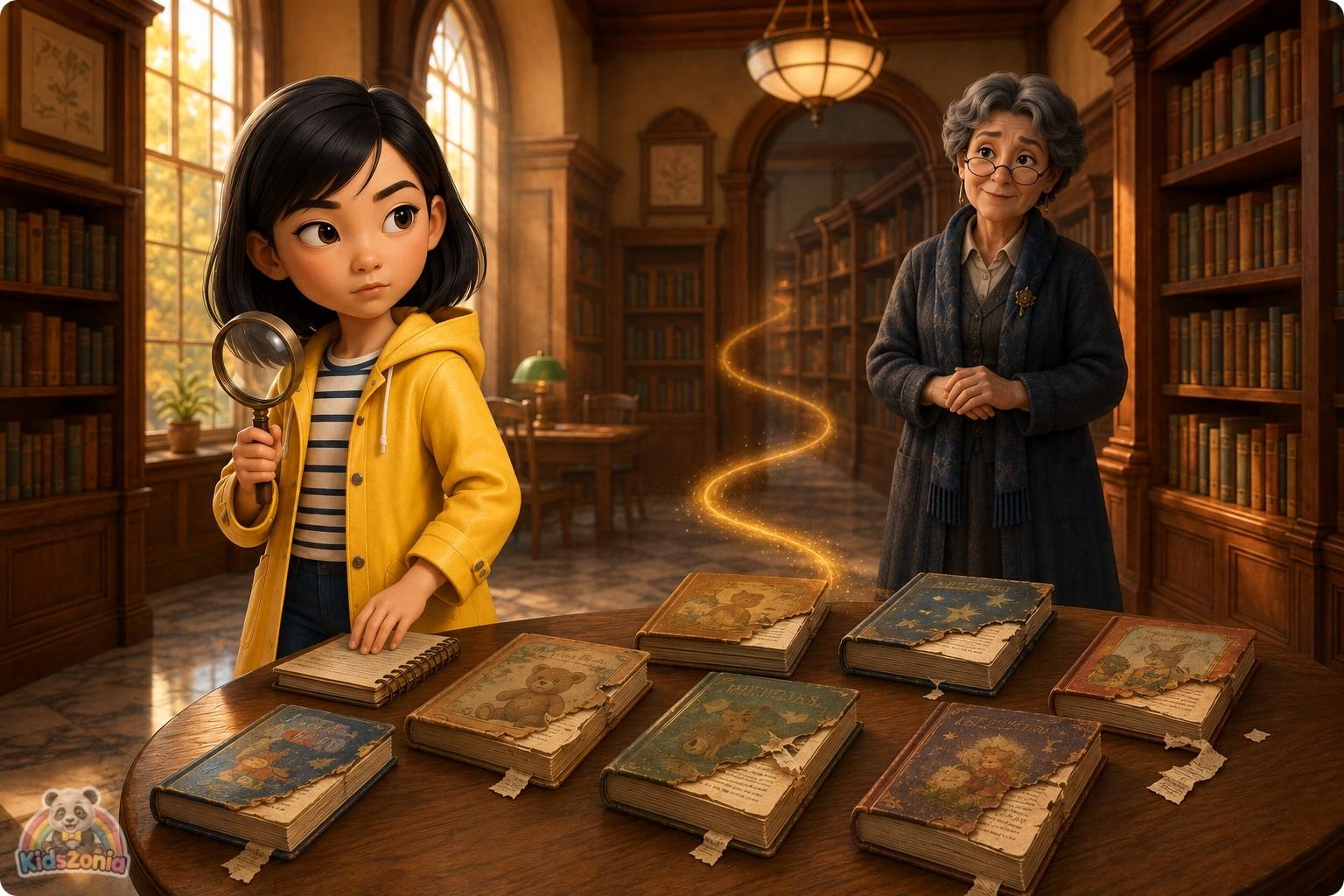
This story is about strange events happening inside Willowbrook Public Library, where the final pages and endings of beloved books begin to disappear. Mrs. Peabody feels upset when she finds more damaged books, but Zara Chen sees something more than a problem — she sees a pattern. Instead of guessing quickly, Zara studies the books, notices the careful cuts, and asks why someone would take only the endings. Through curiosity and observation, Zara begins to understand that small details can lead to big answers.
What children learn from this story
This story helps children develop curiosity, observation skills, critical thinking, and problem-solving abilities. Through Zara’s careful approach, young readers learn that confusing situations should not be solved by quick guesses alone. The story encourages children to slow down, notice patterns, ask meaningful questions, and look for evidence before deciding what happened. It also supports early detective-style thinking by teaching kids that details matter, patience is helpful, and thoughtful questions can lead to better understanding. This makes the story useful for building focus, reasoning, reading comprehension, and confidence in problem-solving.
Tips for parents and teachers
Parents and teachers can use this story to help children practice careful observation, patience, and thoughtful questioning. After reading, ask children what clues Zara noticed, why the missing endings seemed like a pattern, and how Zara’s thinking was different from simply guessing. Encourage kids to look around their own classroom, home, or library and describe small details they might normally miss. This story can also support reading comprehension activities, mystery-themed lessons, critical thinking discussions, and classroom conversations about solving problems calmly by observing first, asking questions, and looking for evidence.
Story FAQs
The Curious Case of the Missing Endings is a children’s mystery story about Zara Chen, a curious young detective who investigates why the endings of books are disappearing from Willowbrook Public Library.
The story teaches children to slow down, observe carefully, notice patterns, and ask thoughtful questions before making guesses. It shows that careful thinking can help solve confusing problems.
The main character is Zara Chen. She is focused, observant, curious, and ready to solve the mystery by looking closely at the clues others might miss.
The missing pages are important because they are not random. Zara notices that the endings of stories are being carefully removed, which means there is a pattern and a deeper mystery to solve.
Children can learn from Zara Chen that good problem-solving starts with observation. Instead of guessing quickly, Zara studies details, asks questions, and looks for evidence.
This story supports critical thinking by encouraging children to identify patterns, compare clues, think about cause and effect, and ask why something happened before deciding on an answer.
Yes, this story is useful for classroom learning. Teachers can use it for mystery-themed reading lessons, observation activities, comprehension questions, problem-solving discussions, and critical thinking practice.
The Curious Case of the Missing Endings is suitable for preschool, kindergarten, and elementary-aged children, especially those who enjoy gentle mystery stories, library stories, clues, and problem-solving.