The Boy Who Painted His Feelings – A Story About Emotions, Art, and Courage

All Ages

Leo uses colors and painting to express feelings that are too big for words, and his honest artwork helps others understand their own emotions too.

kids art story self confidence emotional expression feelings
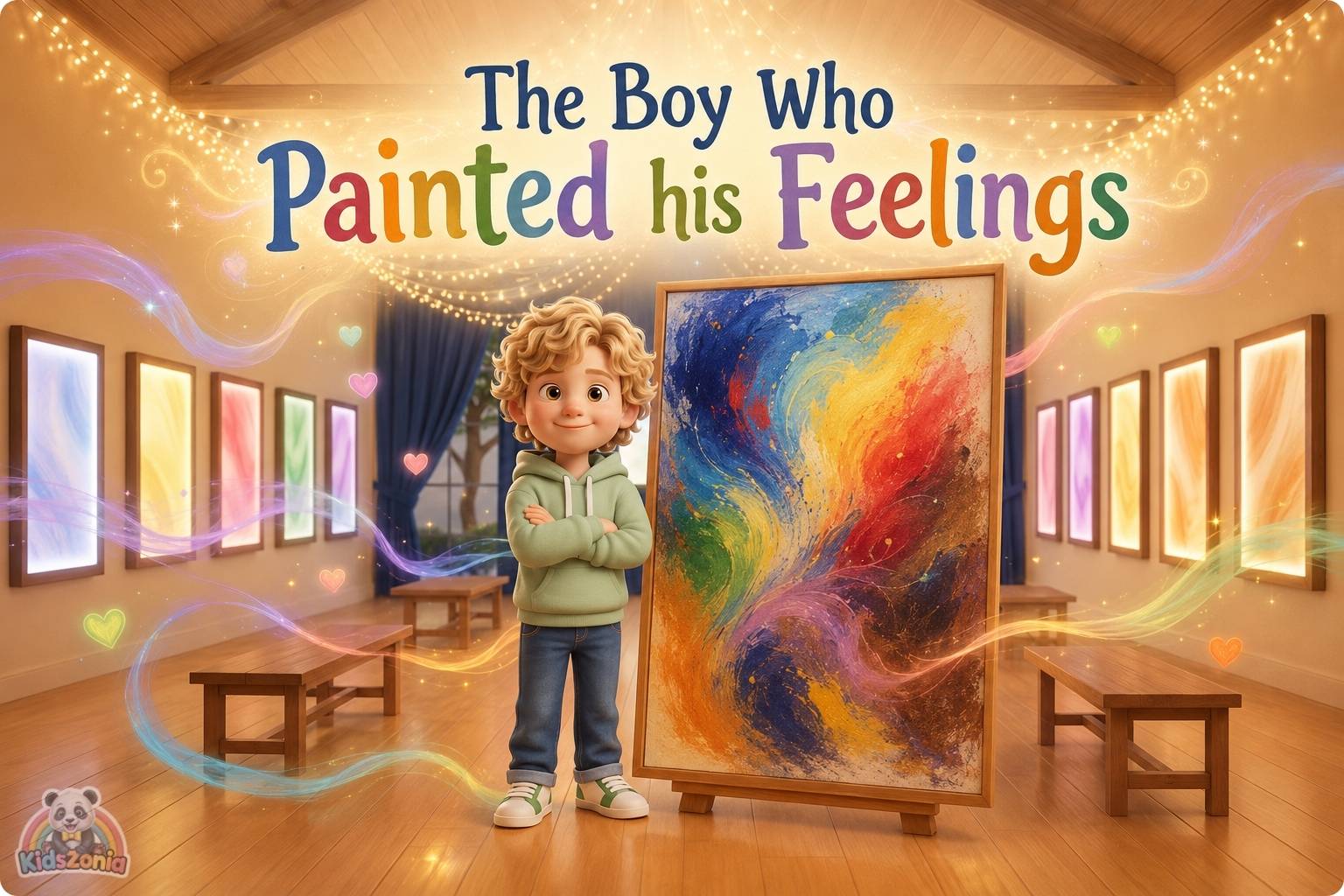
Leo standing beside his colorful feelings painting at a school art show, showing emotional expression, creativity, and courage.

Leo standing beside his colorful feelings painting at a school art show, showing emotional expression, creativity, and courage.

Theme:

Emotional expression, creativity, self-understanding, courage

Lesson Learned:

Feelings do not always need perfect words right away. Art, colors, and gentle sharing can help us understand and express what is inside.

Story Length:

(3–4 mins)

Leo standing beside his colorful feelings painting at a school art show, showing emotional expression, creativity, and courage.

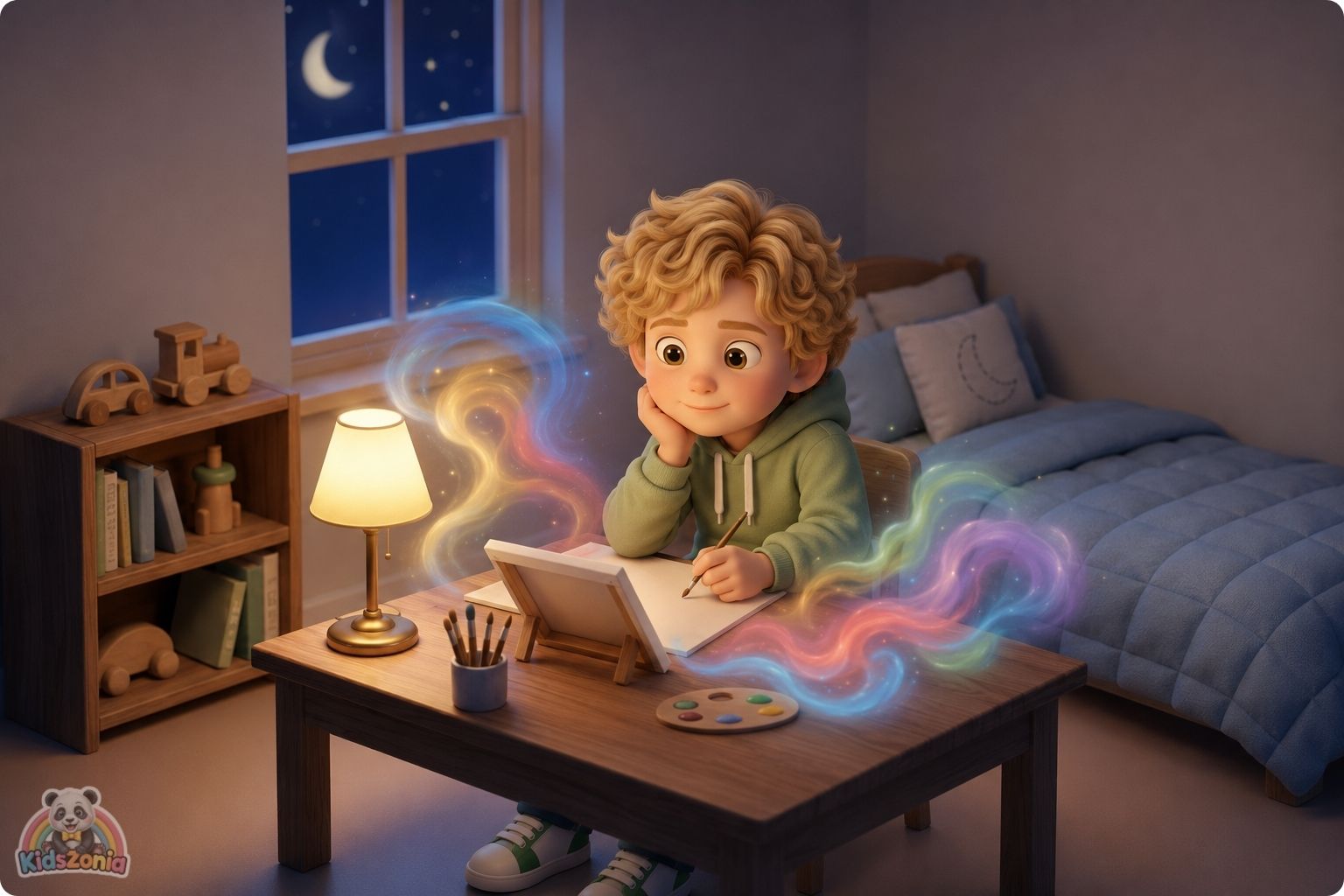
Leo was ten years old, and sometimes his feelings felt bigger than his words. He could see colors clearly — the blue sky, the yellow sunlight, the green leaves outside his window — but the colors inside his heart were harder to explain. So Leo did not talk about them. He painted them. At night, in his quiet room, he let soft lines, swirls, and shapes appear on paper, hoping the colors might say what his voice could not.

Leo standing beside his colorful feelings painting at a school art show, showing emotional expression, creativity, and courage.

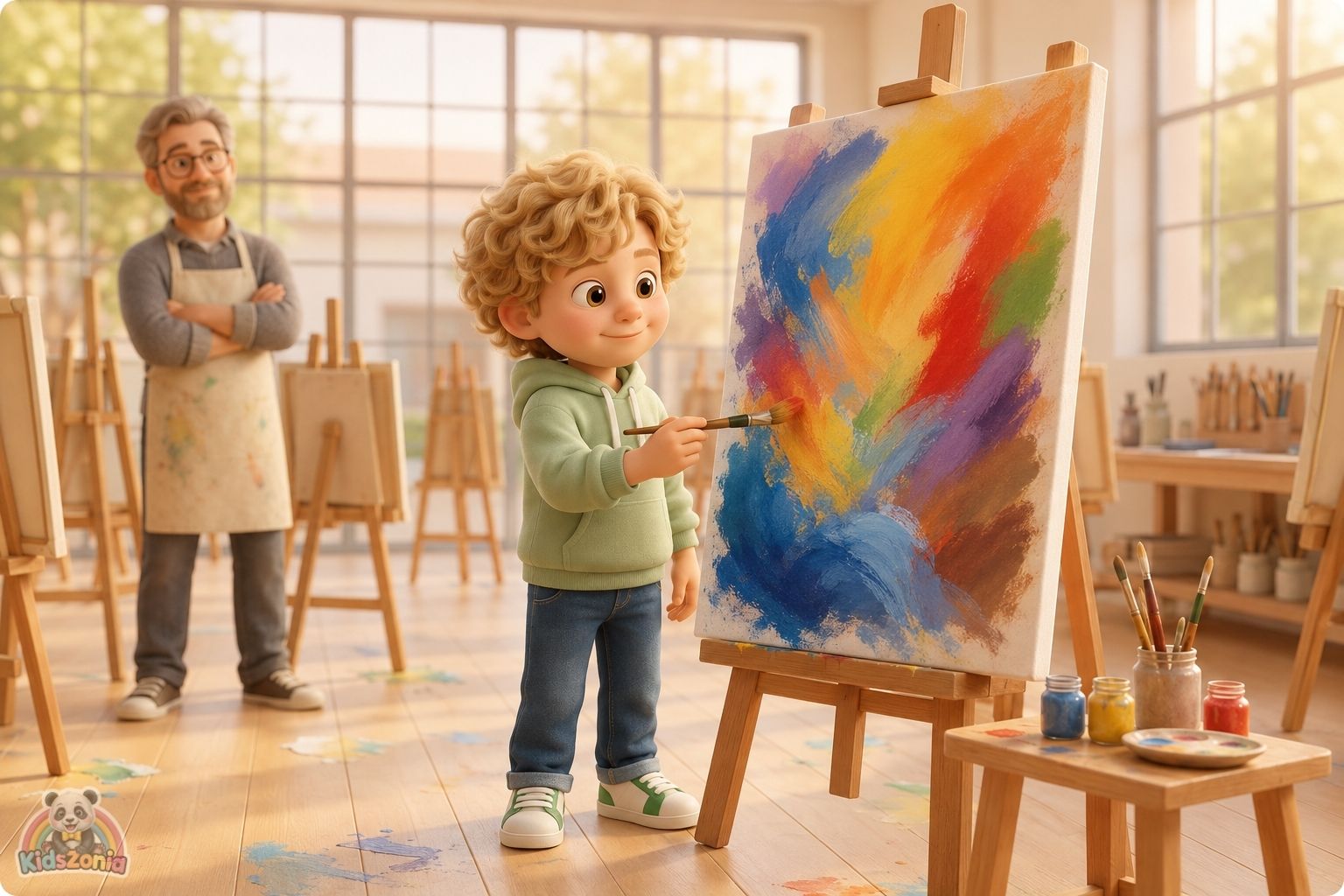
One morning, Mr. Finch smiled at the class and announced the school art show. “This time,” he said gently, “paint something that matters to you.” Leo froze. A dinosaur would be easy. A rocket would be simple. But the thing that mattered most was hidden inside him — a storm of colors he did not know how to name. For the first time, Leo wondered if his secret feelings could become real art.

Leo standing beside his colorful feelings painting at a school art show, showing emotional expression, creativity, and courage.

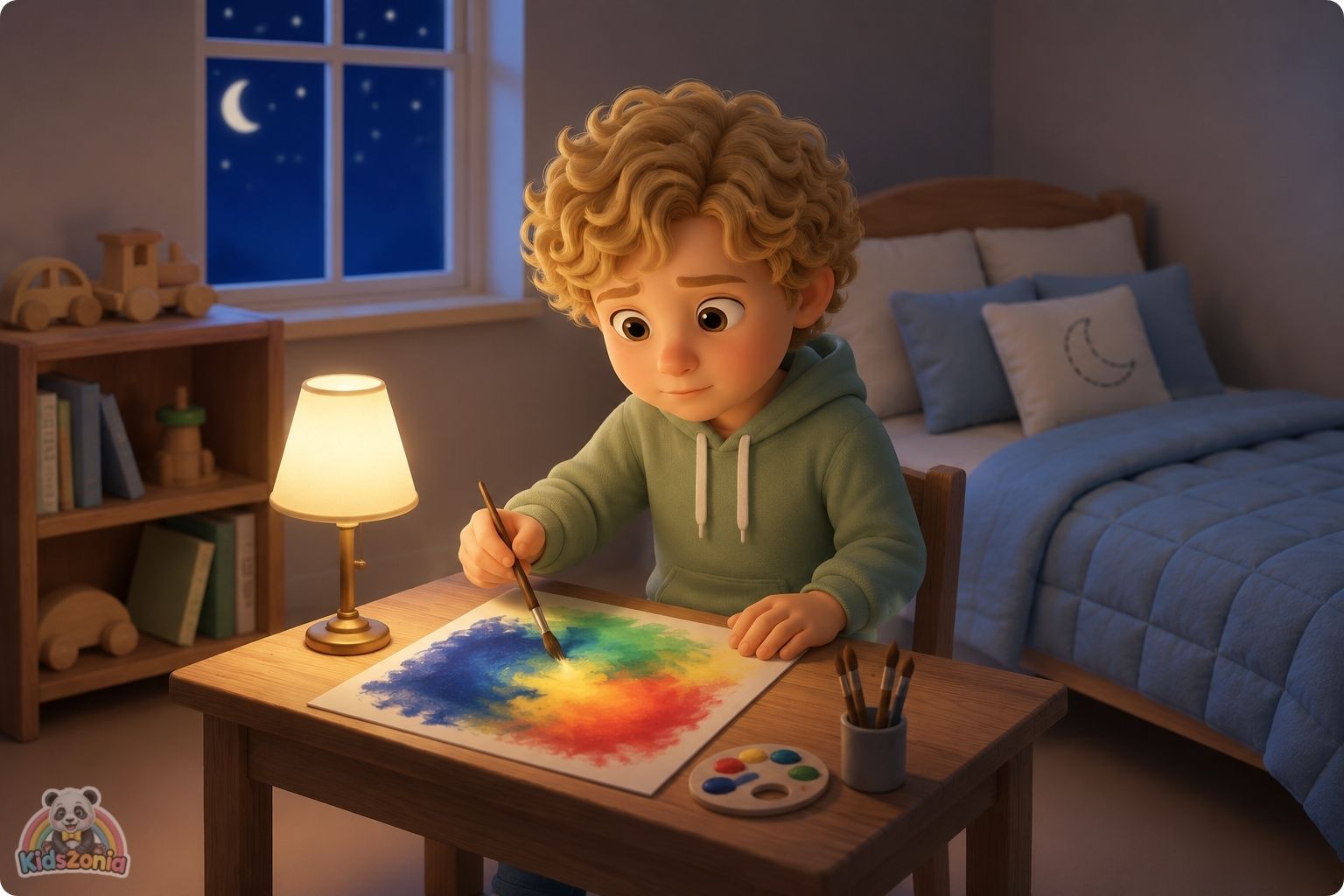
That night, Leo sat in his quiet room with a brush in his hand. He dipped it into blue first, and the blue felt lonely. Then came yellow, jumpy and loud, like worry before a test. Red followed with sharp edges, like words he wanted to say but kept inside. Finally, Leo added green — small, soft, and hopeful. The painting looked messy, but it felt true. For the first time, Leo had made something honest.

Leo standing beside his colorful feelings painting at a school art show, showing emotional expression, creativity, and courage.

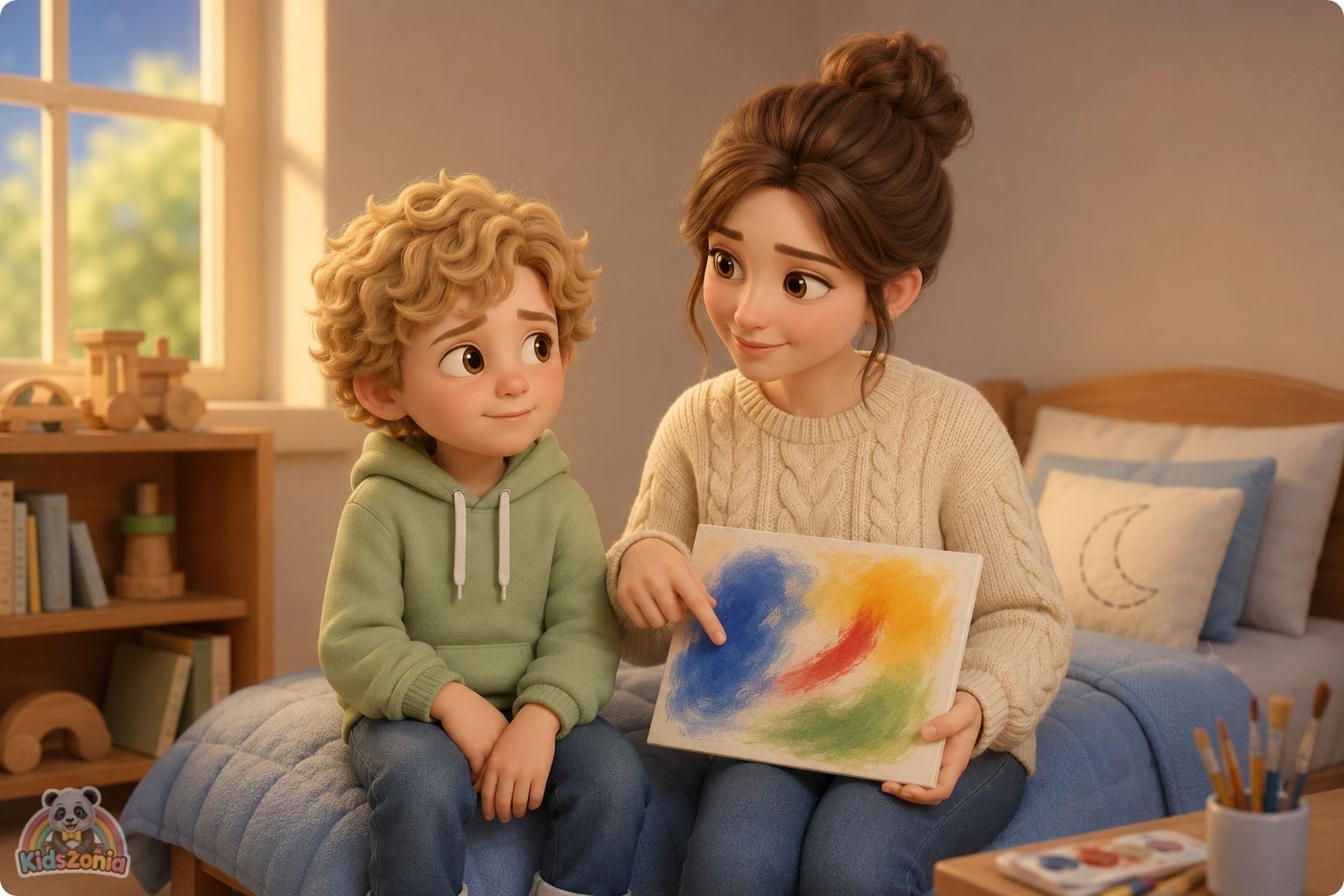
The next day, Leo’s mother found the painting tucked away like a secret. She did not laugh. She did not call it messy. She sat beside Leo and held the paper carefully, as if it mattered. “Tell me about the blue,” she said softly. Leo looked at the color and felt his words begin to open. The blue was not just blue anymore. It was a feeling waiting to be named.

Leo standing beside his colorful feelings painting at a school art show, showing emotional expression, creativity, and courage.

Leo looked at the blue part of his painting for a long time. “It feels like being underwater,” he whispered, “like I know I can breathe, but I forget how.” His mother did not rush to fix the feeling. She simply listened. Then Leo pointed to the yellow, the red, and the green. One by one, the colors began to turn into words.

Leo standing beside his colorful feelings painting at a school art show, showing emotional expression, creativity, and courage.

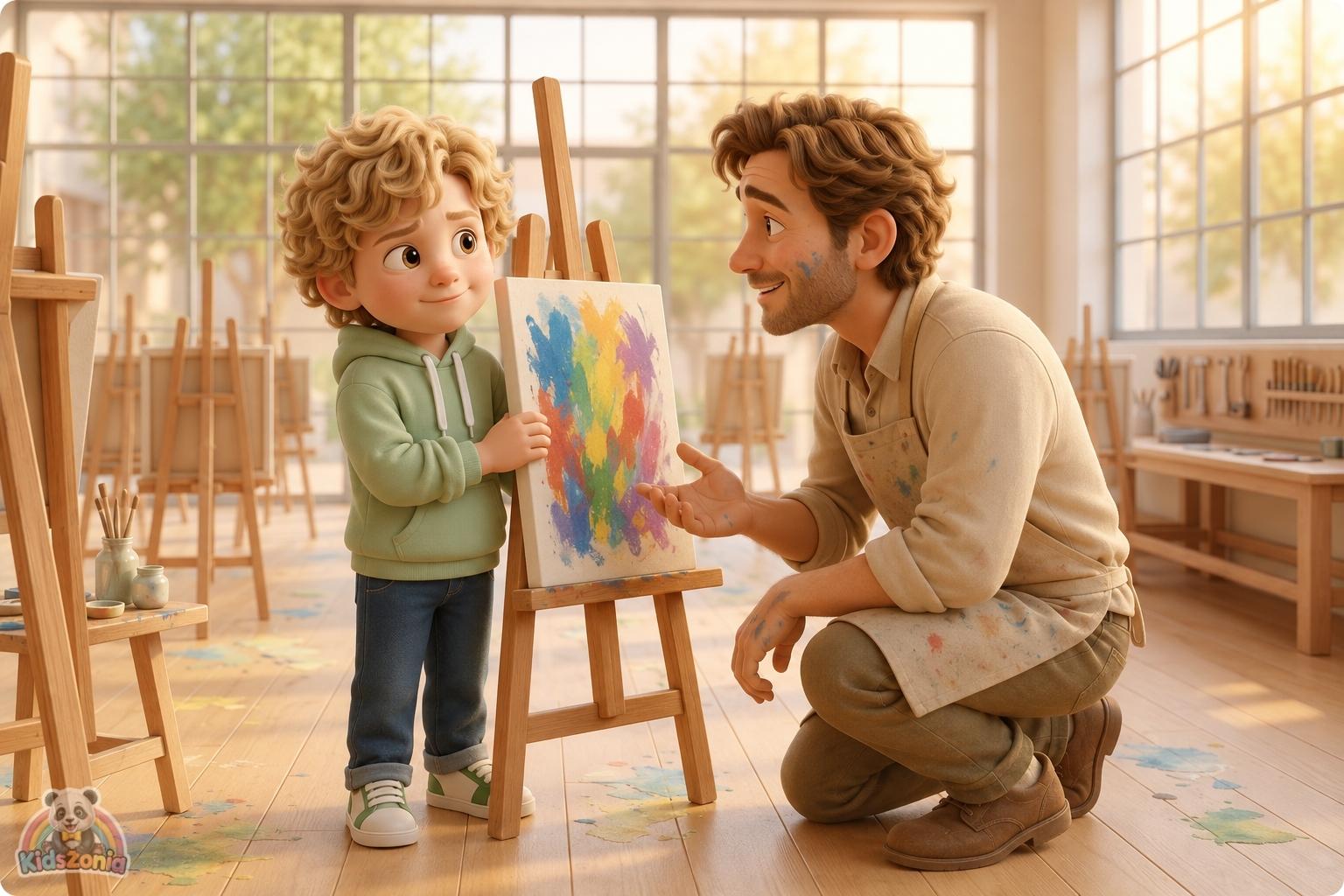
The next week, Mr. Finch saw something different in Leo’s painting. He did not call it messy. He called it honest. “Colors can help us name feelings,” he told Leo gently. “Some people may only see paint, but others may see their own hearts in your colors.” For the first time, Leo wondered if his private painting could help someone else feel less alone.

Leo standing beside his colorful feelings painting at a school art show, showing emotional expression, creativity, and courage.

Leo began again, this time on a bigger canvas. He painted the blue that felt heavy, the yellow that felt loud, the red that felt trapped, and the green that felt like maybe tomorrow could be better. Then new colors appeared too — purple for missing someone, orange for excitement, and brown for steady friendship. The more Leo painted, the more his feelings stopped feeling like strangers.


Leo standing beside his colorful feelings painting at a school art show, showing emotional expression, creativity, and courage.

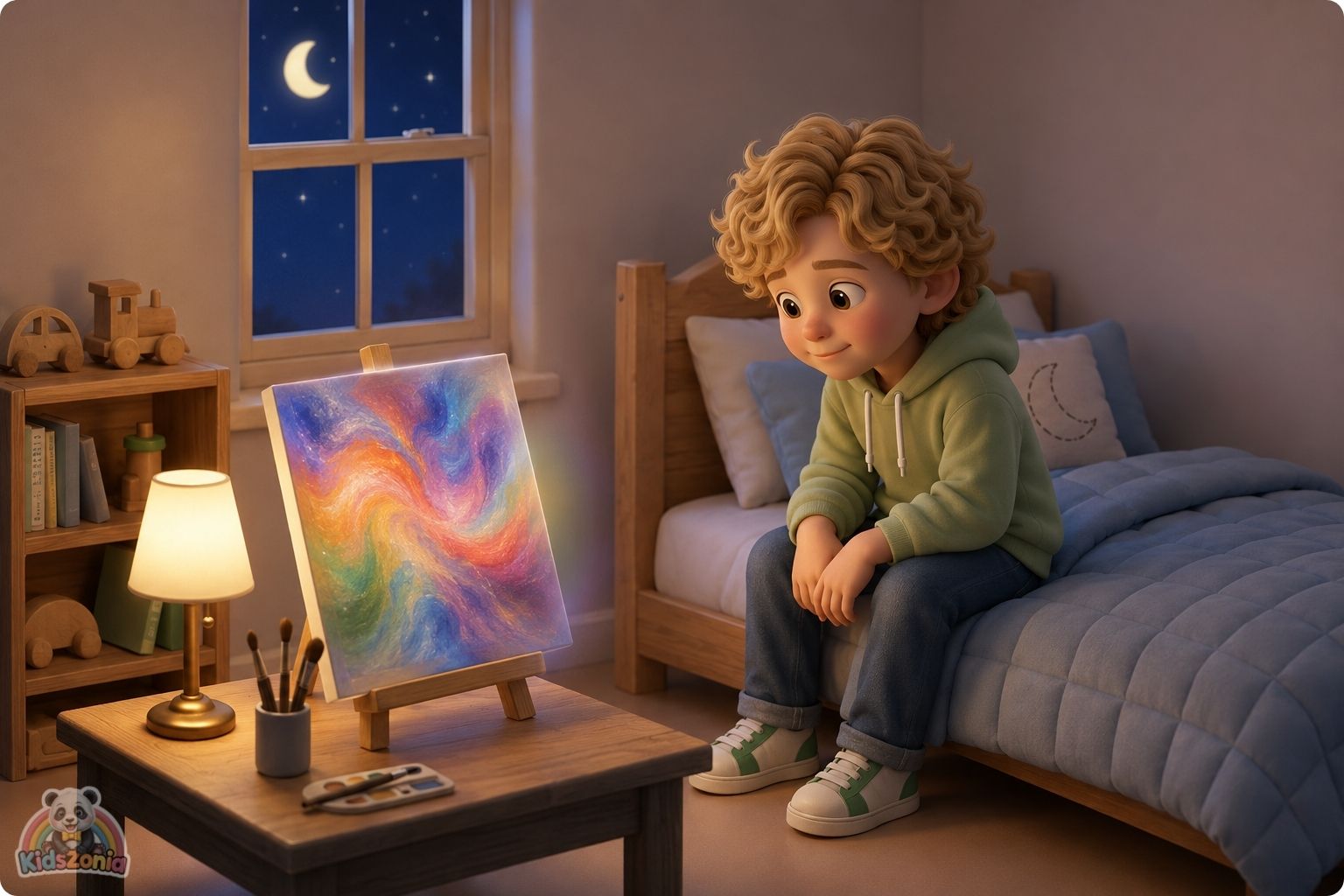
That night, Leo could not sleep. His painting waited quietly in the room, full of colors he had finally begun to understand. Tomorrow, other people would see it. Some might not understand. Some might walk past. But maybe someone would stop. Maybe someone would see a color from their own heart. For the first time, Leo felt nervous and brave at the same time.


Leo standing beside his colorful feelings painting at a school art show, showing emotional expression, creativity, and courage.

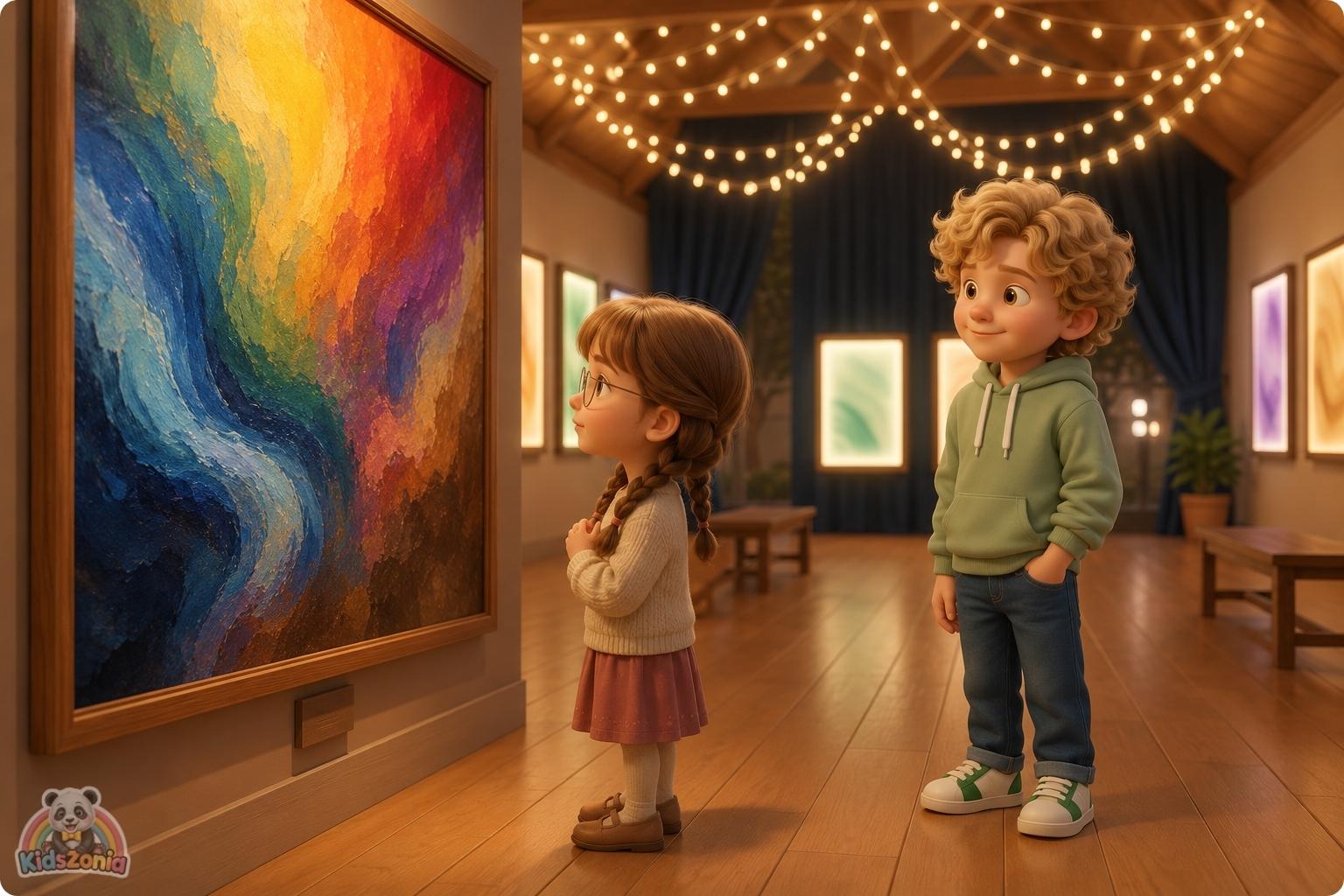
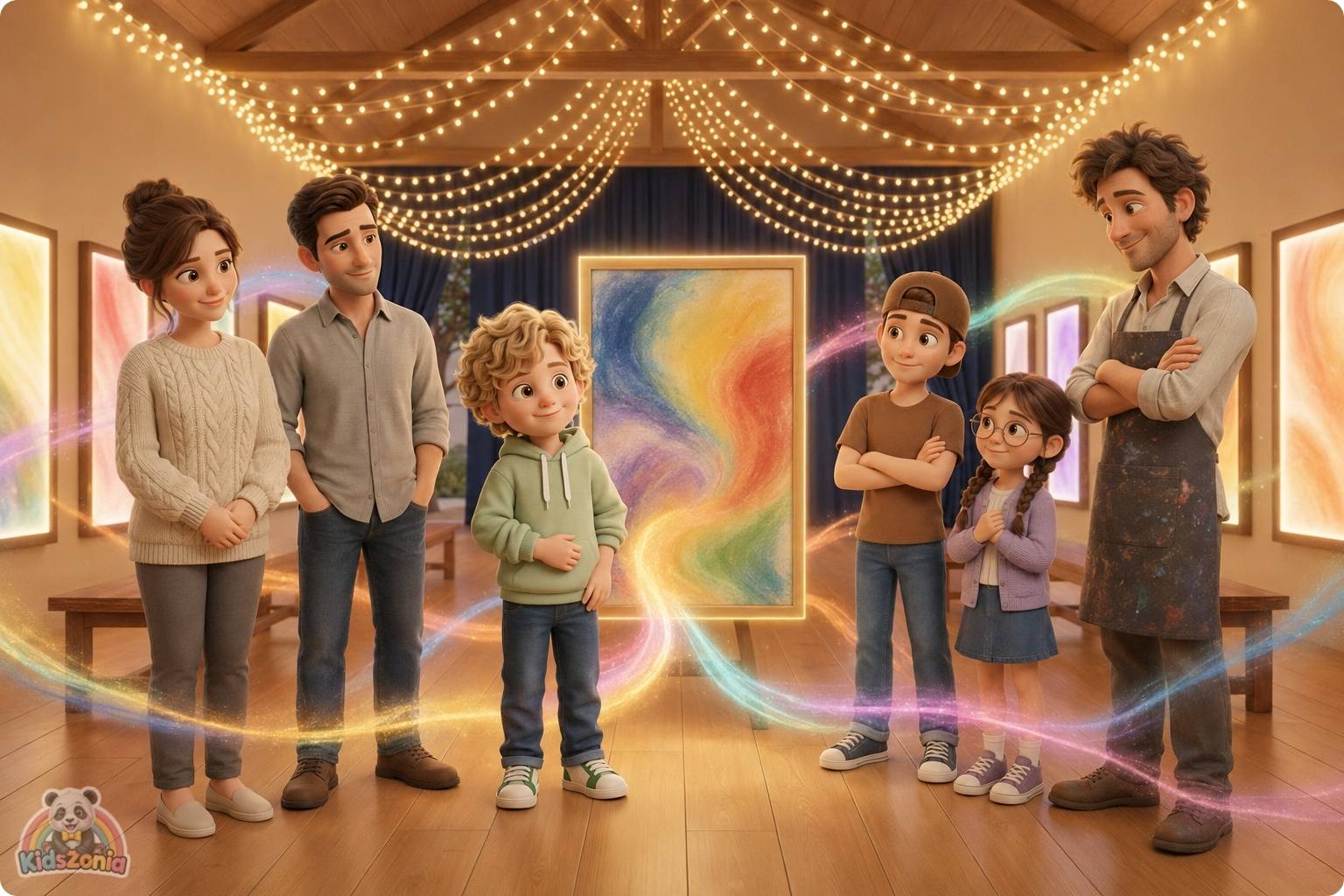
At the art show, many people walked past Leo’s painting. Some stopped for a moment, and some did not. Then a younger girl stood in front of it for a long time. “I know that blue,” she said softly. Leo looked at her and understood. His painting had not only shown his feelings — it had helped someone else find a color for her own.

Leo standing beside his colorful feelings painting at a school art show, showing emotional expression, creativity, and courage.

Later, Leo’s father stood in front of the painting for a long time. He did not understand every color, but he saw the blue. He saw the feeling Leo had carried quietly. “I’m sorry,” he said softly. Leo did not need a perfect answer. He stepped closer, and in that small moment, the blue felt a little less heavy.

Leo standing beside his colorful feelings painting at a school art show, showing emotional expression, creativity, and courage.

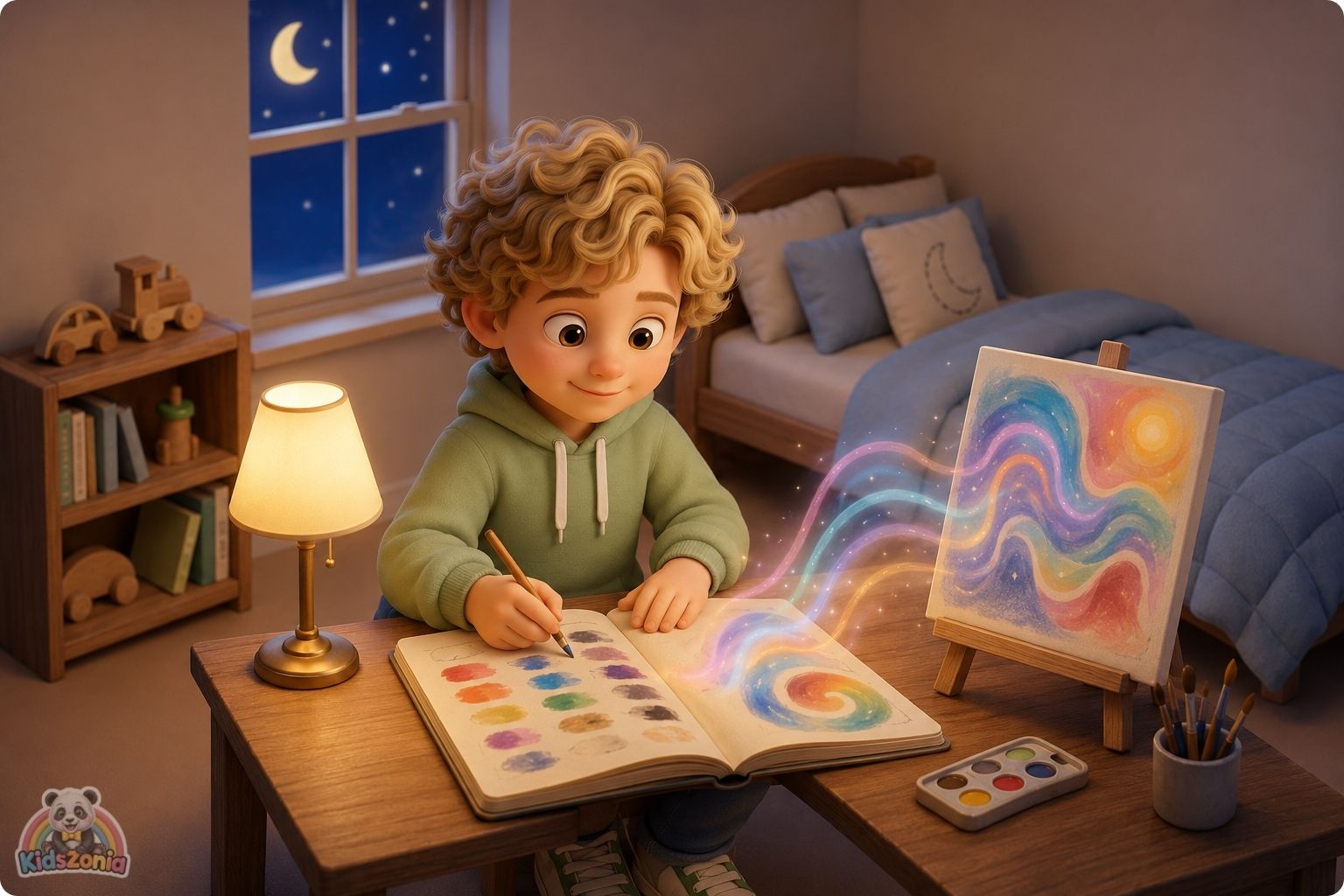
That night, Leo started a new notebook. It was not just for drawings — it was for feelings. He learned that some feelings were too big for simple words, but a color could help. Blue could mean heavy. Yellow could mean nervous. Red could mean something unsaid. Green could mean hope. Leo realized his heart was not a problem to hide. It was a painting still growing.

Leo standing beside his colorful feelings painting at a school art show, showing emotional expression, creativity, and courage.

Moral: You do not have to find the perfect word for every feeling right away. Sometimes a color, a shape, a sound, or a drawing can begin the conversation. When feelings stay hidden, they can grow heavy. But when we give them a name — even a small one — they become easier to understand, easier to share, and easier to carry. Every heart has colors inside, and every feeling deserves a safe place to be seen.

THE END

What is this story about?

This story is about Leo, a quiet and creative boy whose feelings often feel bigger than his words. When his teacher asks the class to paint something that matters, Leo creates an honest painting filled with colors that represent his emotions. Blue becomes loneliness, yellow becomes nervous energy, red becomes unsaid words, and green becomes hope. As Leo shares his painting with his family, teacher, and classmates, he discovers that expressing feelings through art can help both himself and others understand what is inside.

What children learn from this story

This story helps children understand that feelings can be expressed in many different ways, even when words feel difficult to find. Through Leo’s journey, young readers learn that emotions are not something to hide or be ashamed of, and that colors, shapes, drawings, and creative activities can help them name and understand what they feel. The story supports emotional awareness, self-expression, creativity, courage, and gentle communication. It also encourages children to share their feelings safely, listen to others with kindness, and recognize that every emotion deserves a caring place to be seen.

Tips for parents and teachers

Parents and teachers can use this story to help children talk about emotions in a calm, creative, and pressure-free way. After reading, ask children what each color in Leo’s painting might mean and invite them to choose colors for their own feelings. Encourage kids to draw, paint, or use shapes when they cannot find the right words. This story is useful for social-emotional learning lessons, art-based emotion activities, classroom discussions about feelings, and helping children understand that sharing emotions does not have to be perfect — it only has to begin safely and gently.

Story FAQs

The Boy Who Painted His Feelings is a children’s story about Leo, a ten-year-old boy who finds it difficult to explain his emotions with words. Through painting, colors, and gentle support, Leo learns how to understand and share what he feels inside.

The story teaches children that feelings do not always need perfect words right away. Art, colors, shapes, and gentle sharing can help kids understand their emotions and express them in a safe way.

Leo uses colors because his feelings feel bigger than his words. Painting helps him show emotions like loneliness, worry, sadness, excitement, and hope before he is ready to explain them out loud.

Leo’s mother helps him by listening gently and asking about the colors in his painting. She does not laugh, rush, or try to fix his feelings. Her calm support helps Leo begin to turn his colors into words.

Children can learn from Leo that it is okay to have big feelings and not know how to explain them right away. His character shows that creativity, courage, and gentle sharing can help emotions feel easier to understand.

Art helps Leo express feelings that are hard to say with words. His painting becomes a safe place for his emotions, and it also helps others recognize their own feelings through his colors.

Yes, The Boy Who Painted His Feelings is a helpful social-emotional learning story. It supports lessons about emotional expression, creativity, self-understanding, courage, emotional awareness, and safe communication.

The Boy Who Painted His Feelings is suitable for preschool, kindergarten, and elementary-aged children. It is especially helpful for children learning how to understand emotions, express feelings, and use creativity as a calm emotional outlet.