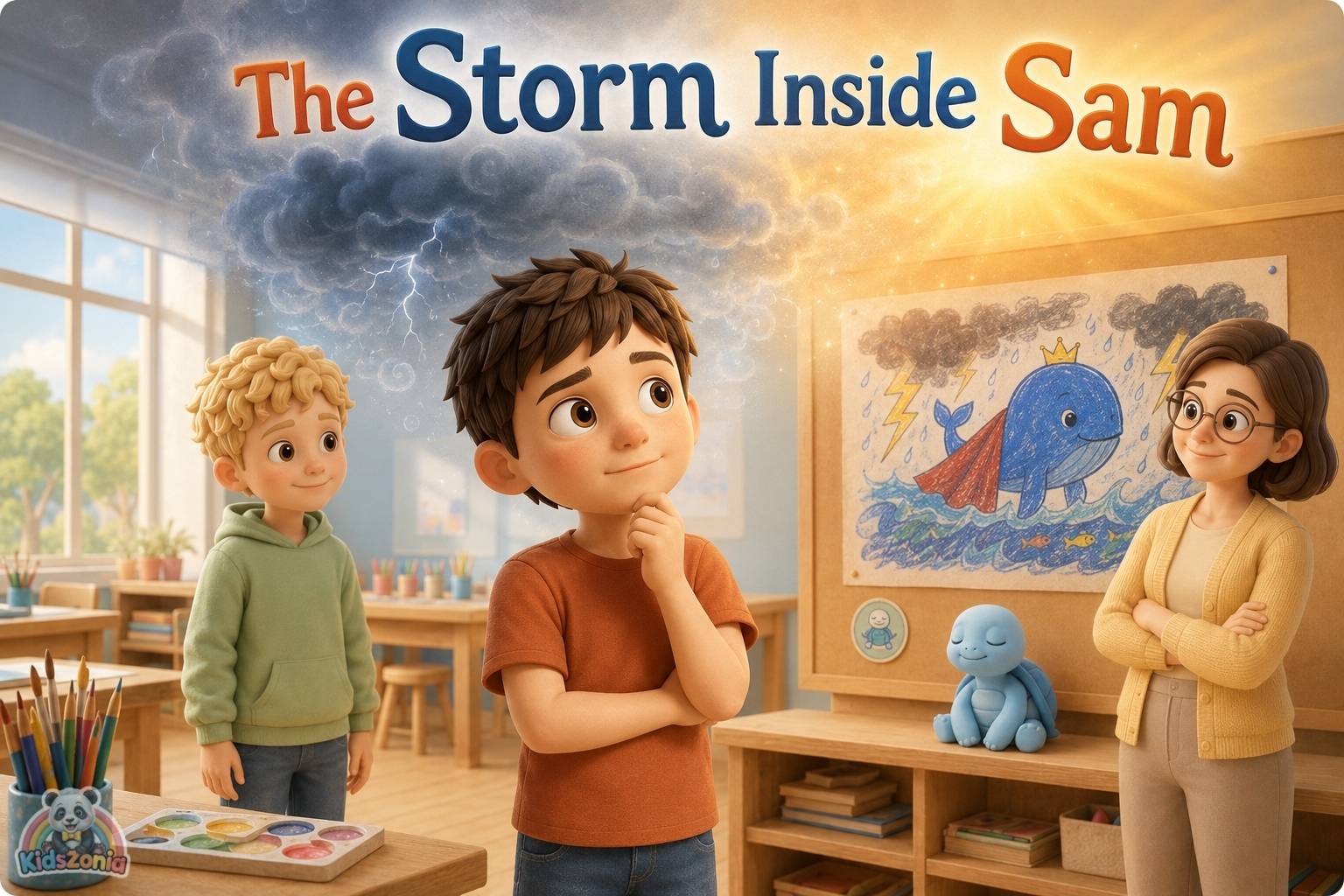
The Storm Inside Sam – A Story About Big Feelings, Anger, and Self-Control

All Ages

Sam learns how to handle big angry feelings after a ruined art project makes him feel like a storm is building inside.

anger management emotional regulation big feelings calming down
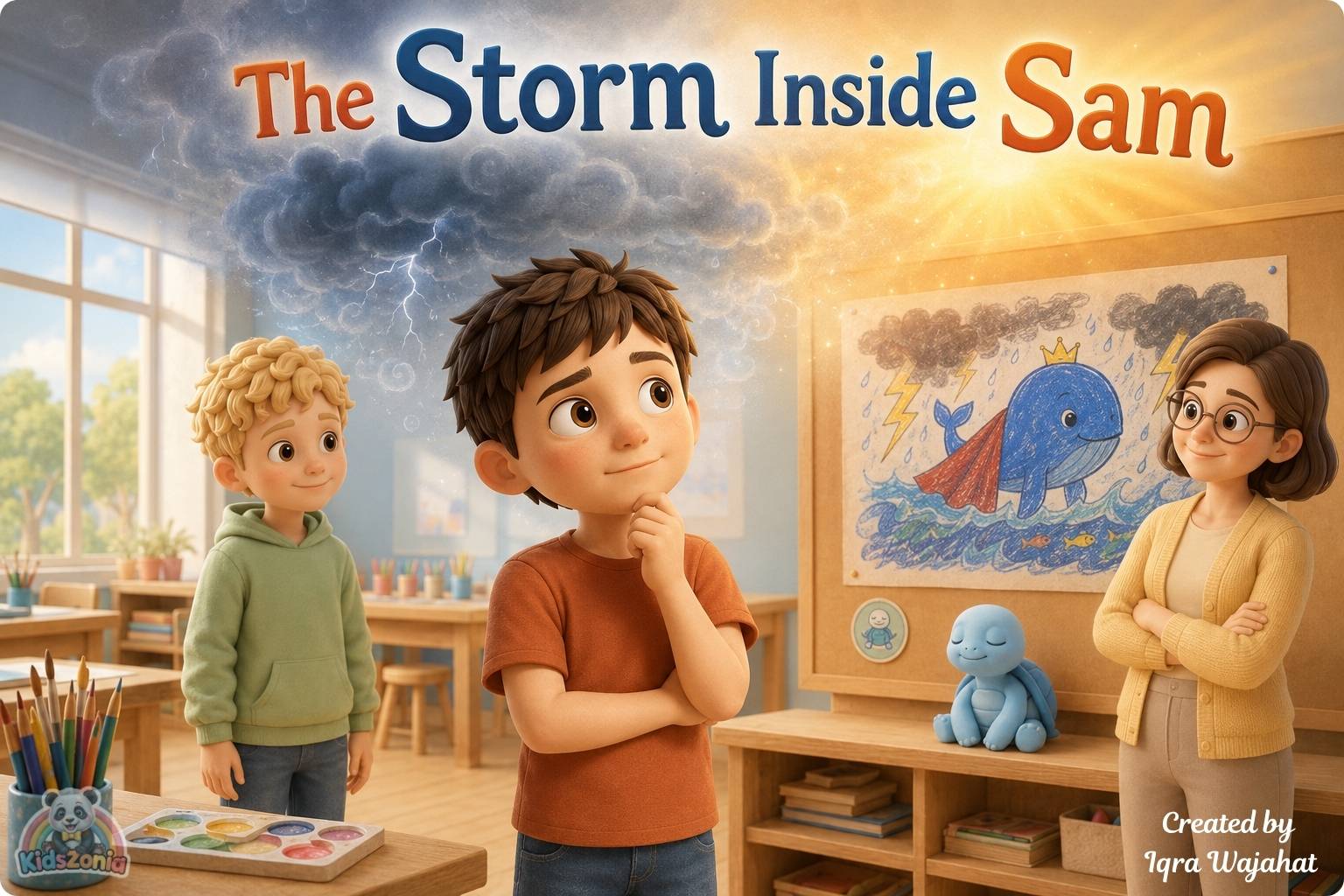
Sam calming down in a classroom Calm Corner, showing emotional regulation, anger management, and safe big feelings.

Sam calming down in a classroom Calm Corner, showing emotional regulation, anger management, and safe big feelings.

Theme:

Emotional regulation, anger management, self-control, problem-solving

Lesson Learned:

Big feelings are not bad, but we must keep our body safe, breathe slowly, name our feelings, use words, and ask for help.

Story Length:

(3–4 mins)

Sam calming down in a classroom Calm Corner, showing emotional regulation, anger management, and safe big feelings.

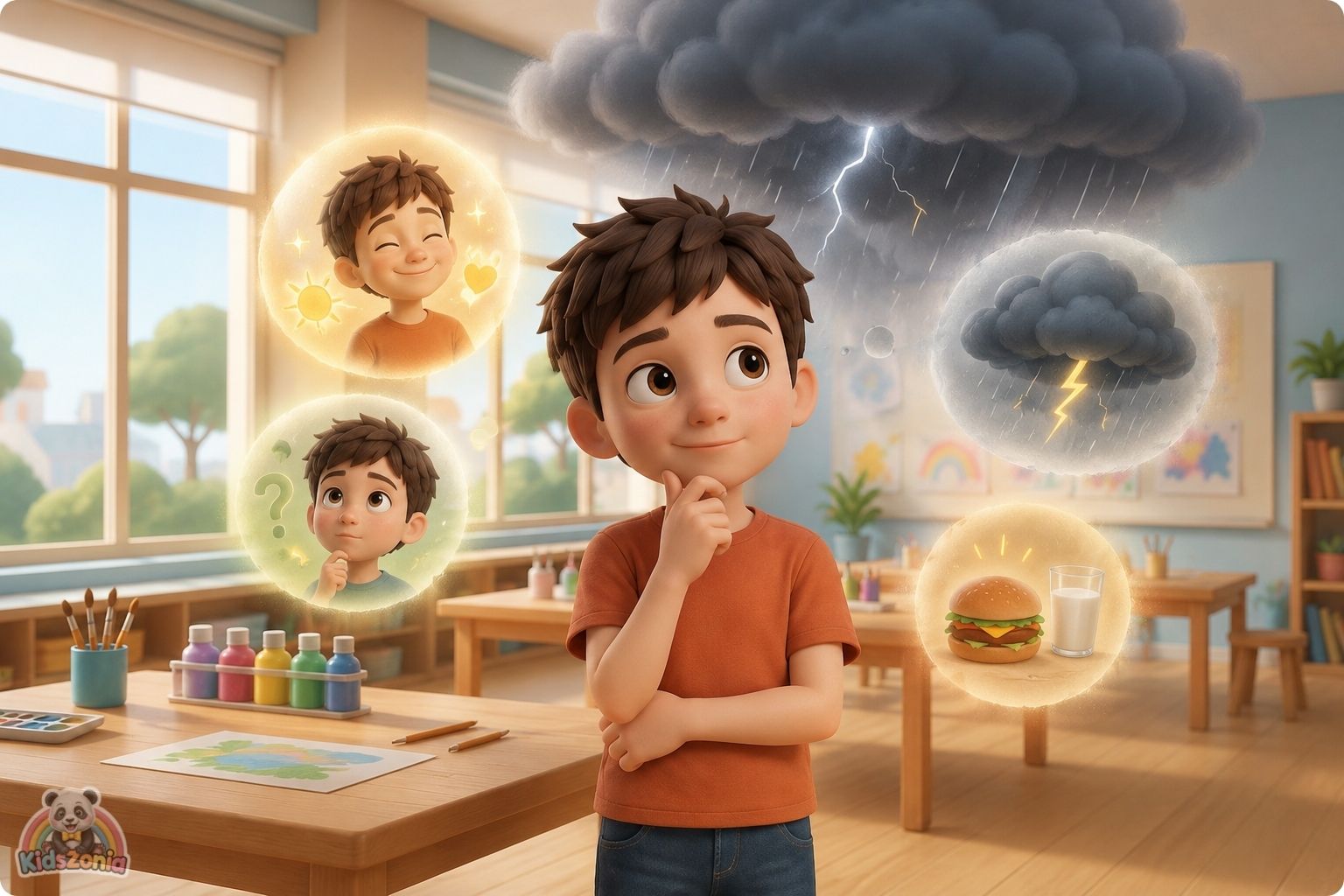
Sam was eight years old, and most days his feelings fit neatly inside him.
Happy lived in his smile. Curious lived in his eyebrows. Hungry showed up around four o’clock.

But anger felt different.

When Sam got really upset, it did not feel small or neat at all. It felt like a storm building inside him — loud, heavy, and hard to ignore.

Sam calming down in a classroom Calm Corner, showing emotional regulation, anger management, and safe big feelings.

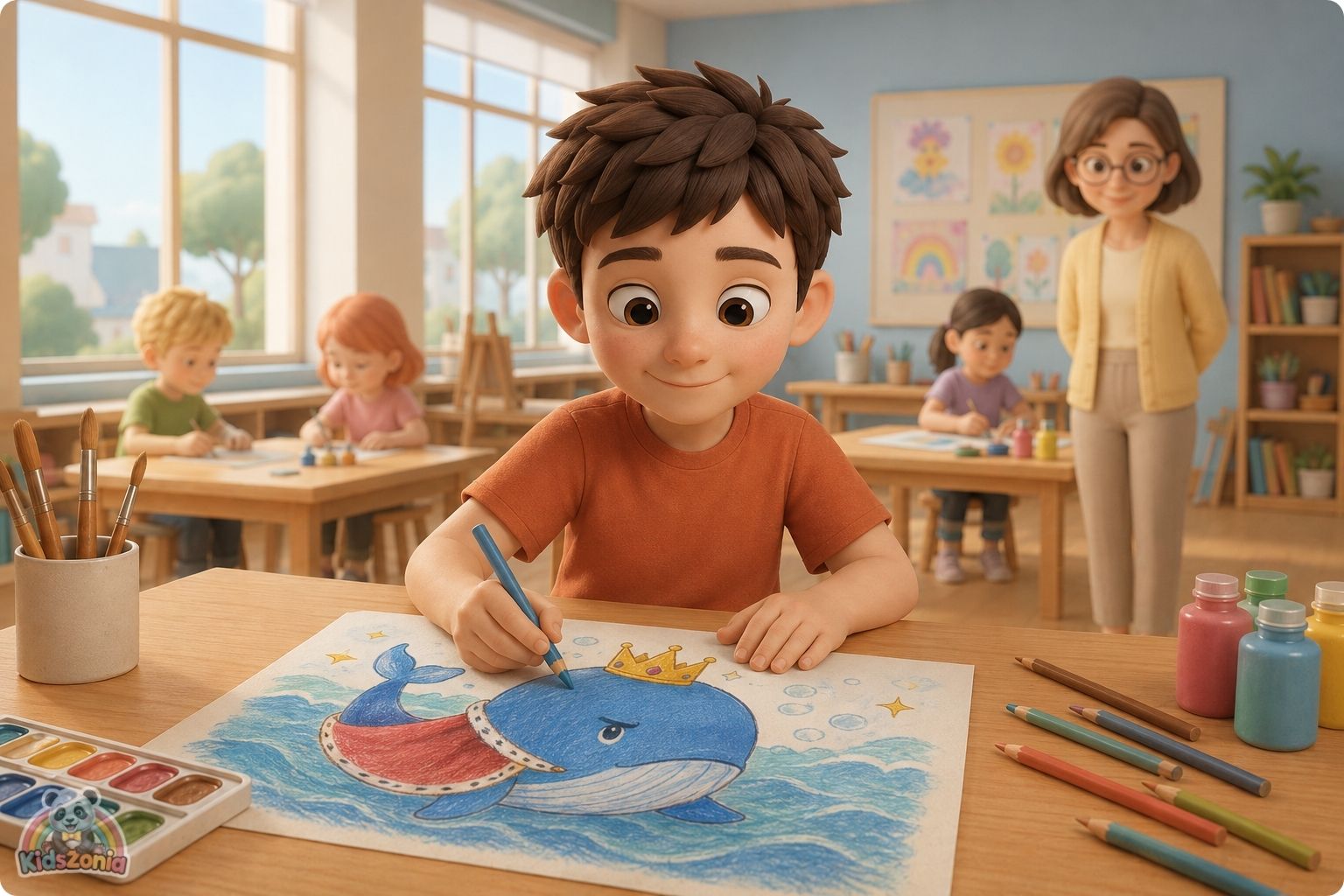
That Tuesday, Sam was working on a drawing he loved.

He was making a magnificent blue whale — not just any whale, but a royal whale with a crown, a cape, and a very serious face, as if it had important ocean business to do.

Sam felt proud of his picture. It was turning out exactly the way he wanted.

Sam calming down in a classroom Calm Corner, showing emotional regulation, anger management, and safe big feelings.

Then, all at once, the ordinary day changed.

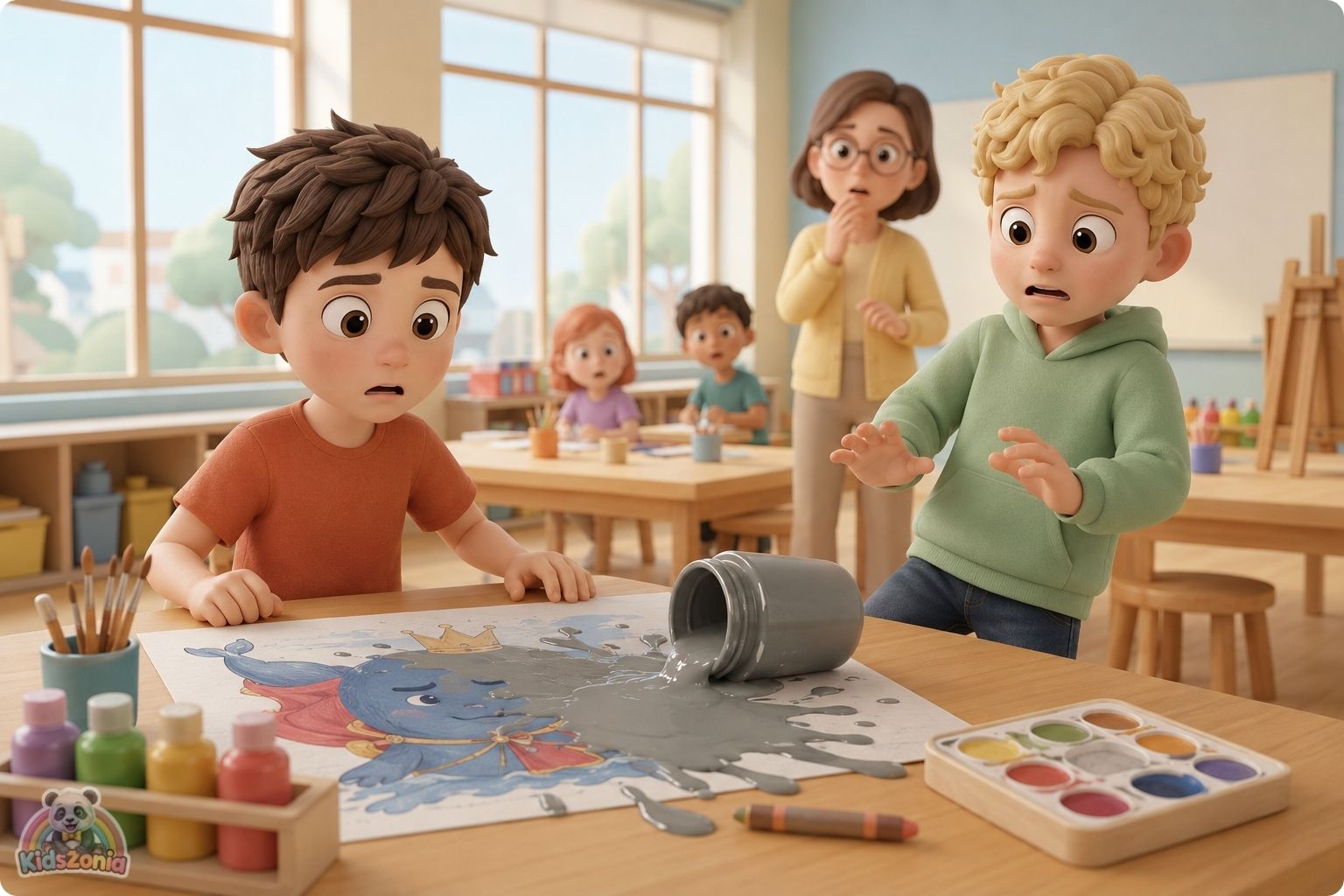
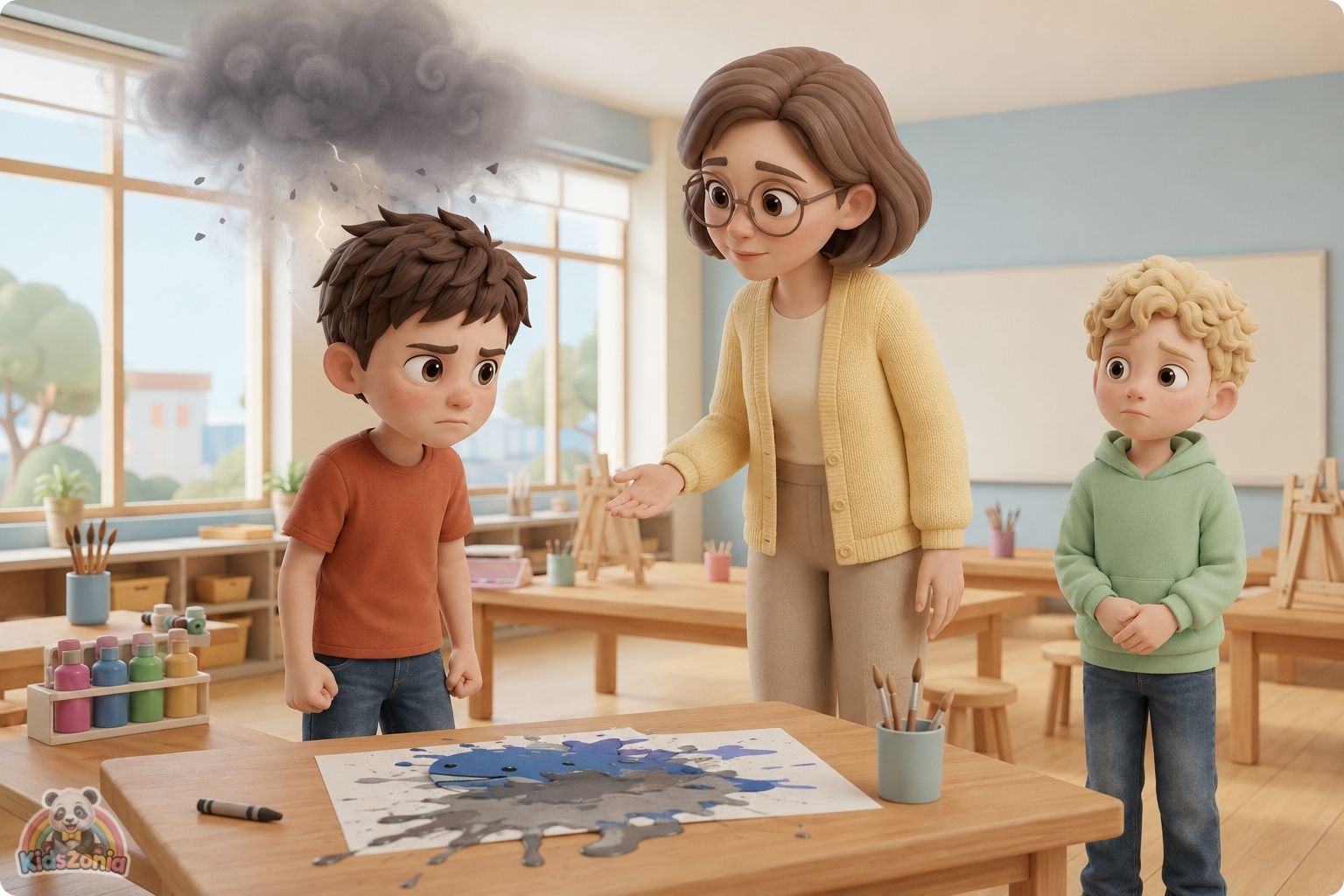
Leo bumped the table by accident, and a cup of gray paint tipped over. It slid right across Sam’s paper and covered the whale in one soggy sweep.

For one whole second, everyone froze.

Sam calming down in a classroom Calm Corner, showing emotional regulation, anger management, and safe big feelings.

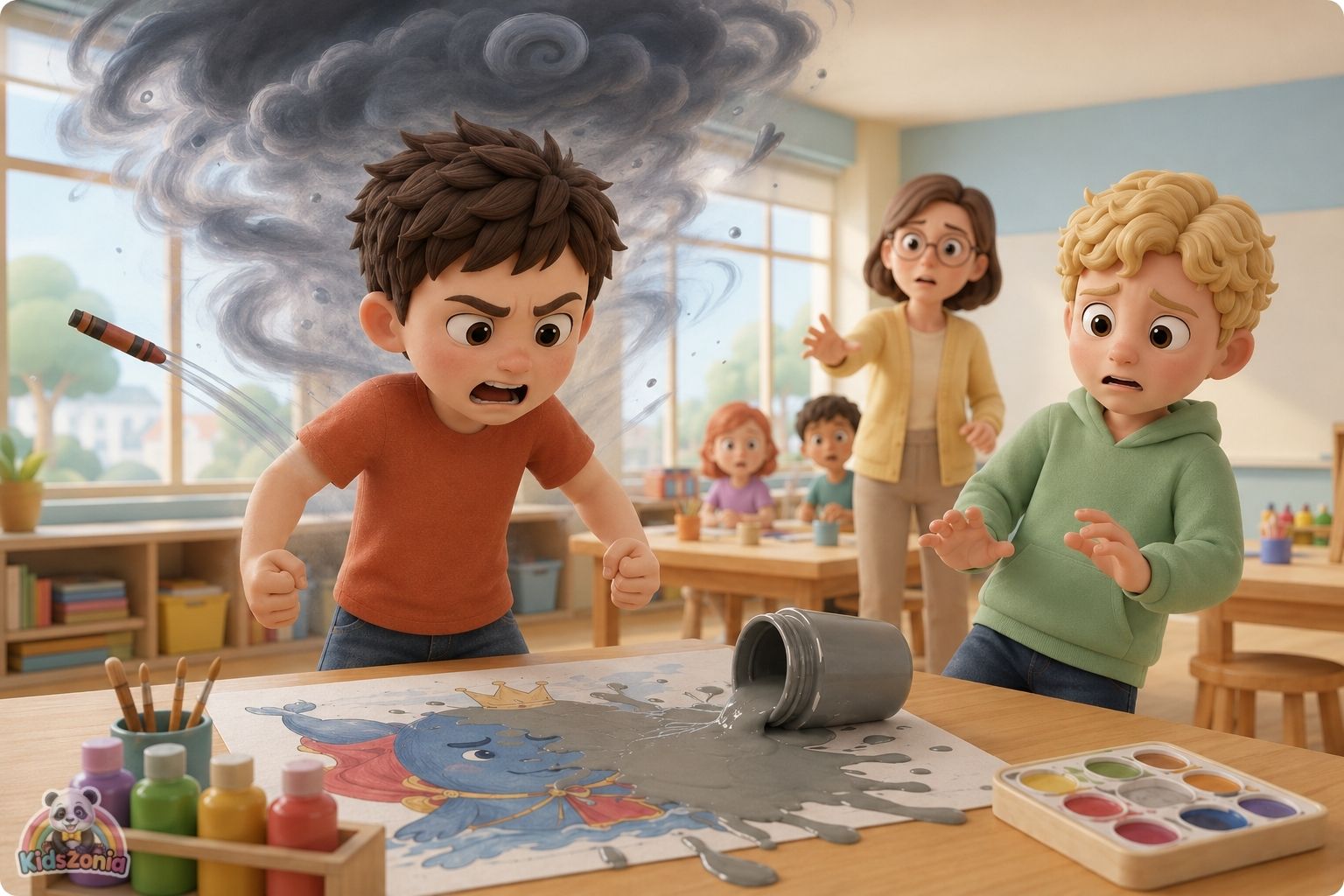
Then Sam felt the storm arrive.

His hands curled into fists. His cheeks felt hot. Angry words rushed into his throat, and before he could stop himself, he shouted, “You ruined it!”

Sam was so upset that he grabbed a crayon and threw it. The storm inside him felt loud, fast, and hard to control.

Sam calming down in a classroom Calm Corner, showing emotional regulation, anger management, and safe big feelings.

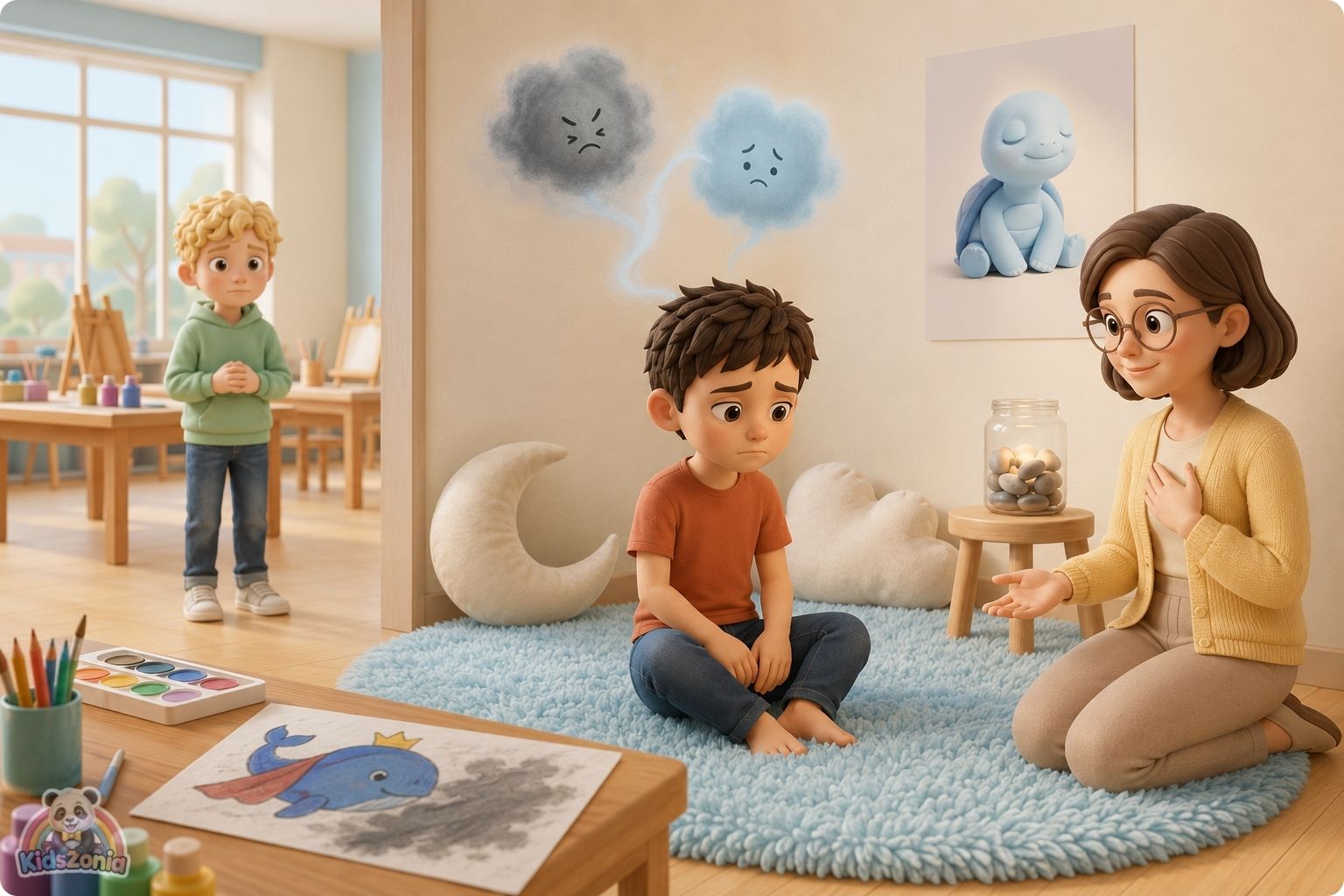
Ms. Rivera walked over slowly.

She did not shout. She did not look angry. She looked calm, even though Sam’s storm felt very loud.

“Sam,” she said softly, “your storm is very big right now. I will help you, but first we need to make your body safe.”

Sam still wanted his whale back. He still felt hurt and angry.
But maybe safe had to come first.

Sam calming down in a classroom Calm Corner, showing emotional regulation, anger management, and safe big feelings.

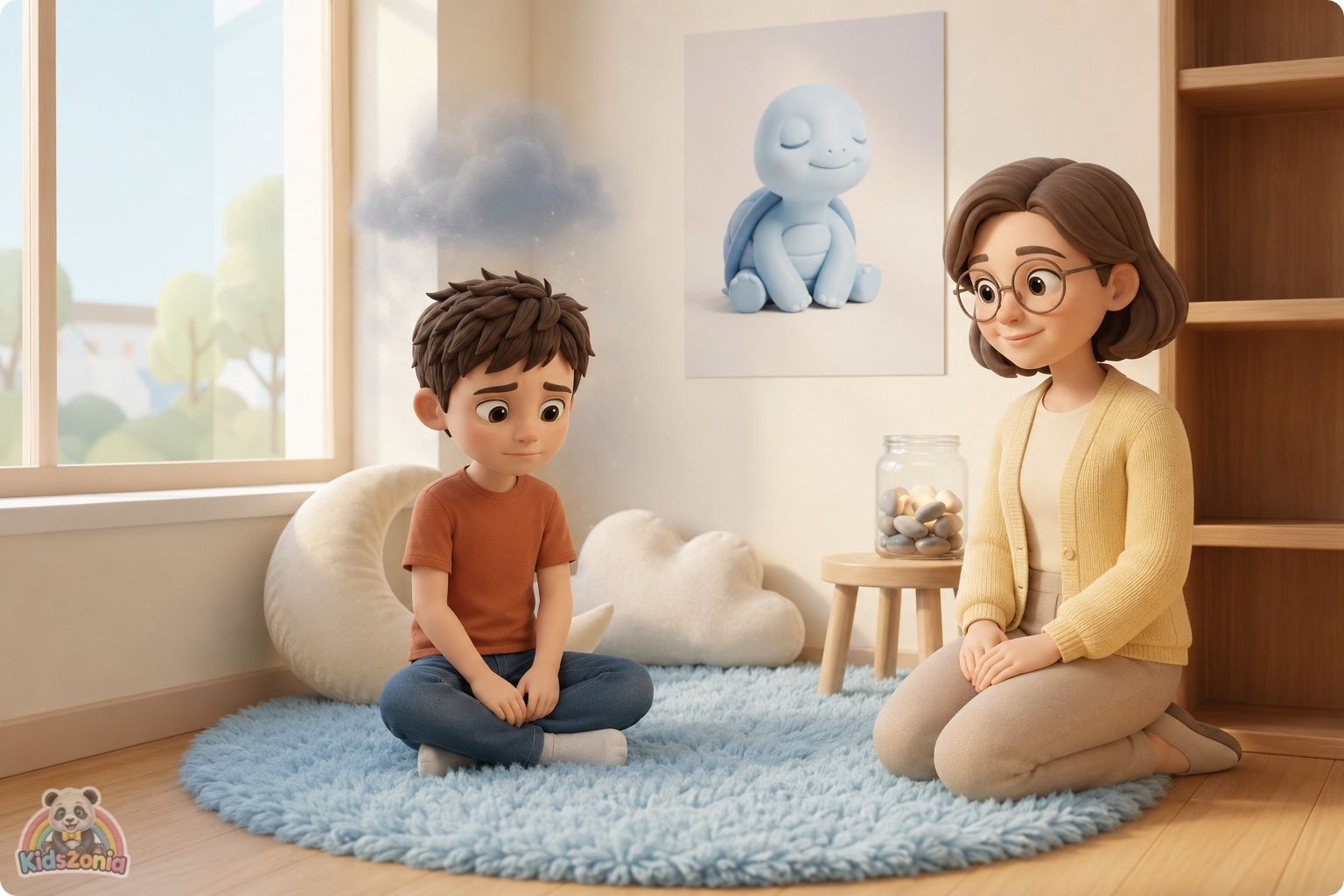
Ms. Rivera guided Sam to the Calm Corner by the window.

It was not a punishment corner. It had a soft blue rug, a moon pillow, a jar of smooth stones, and a peaceful turtle poster on the wall.

“I’m not a baby,” Sam muttered.

“No,” Ms. Rivera said gently. “You’re a person having a hard moment. Those are different things.”

Sam calming down in a classroom Calm Corner, showing emotional regulation, anger management, and safe big feelings.

Ms. Rivera sat nearby, not too close and not too far.

“Put both feet on the floor,” she said. “Press your toes down like you are telling the floor, I am here.”

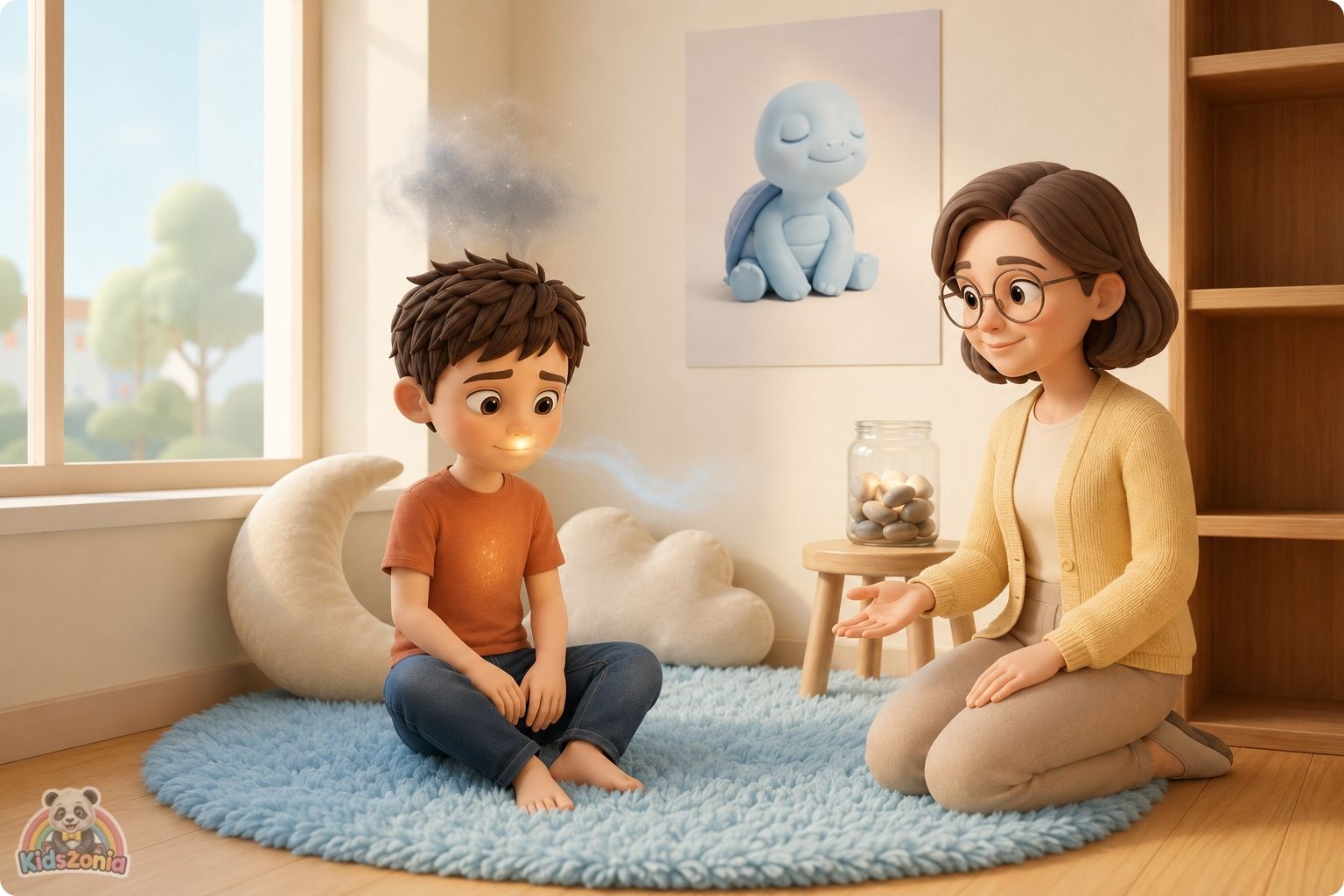
Sam pressed his toes into the rug.

Then Ms. Rivera said, “Breathe in like you are smelling hot cocoa. Breathe out like you are cooling it down.”

Sam tried it once.
The storm did not disappear — but it moved back one step.


Sam calming down in a classroom Calm Corner, showing emotional regulation, anger management, and safe big feelings.

“Name the feeling,” Ms. Rivera said.

“Mad,” Sam whispered.

“Mad is a good start,” she said. “What else?”

Sam looked toward his ruined whale. The crown was covered. The cape was messy. The picture he loved had changed.

His voice got smaller.
“Sad.”

Ms. Rivera nodded. “Mad and sad often travel together.”

Sam had never thought of that before. Maybe anger was not the only feeling in the storm.


Sam calming down in a classroom Calm Corner, showing emotional regulation, anger management, and safe big feelings.

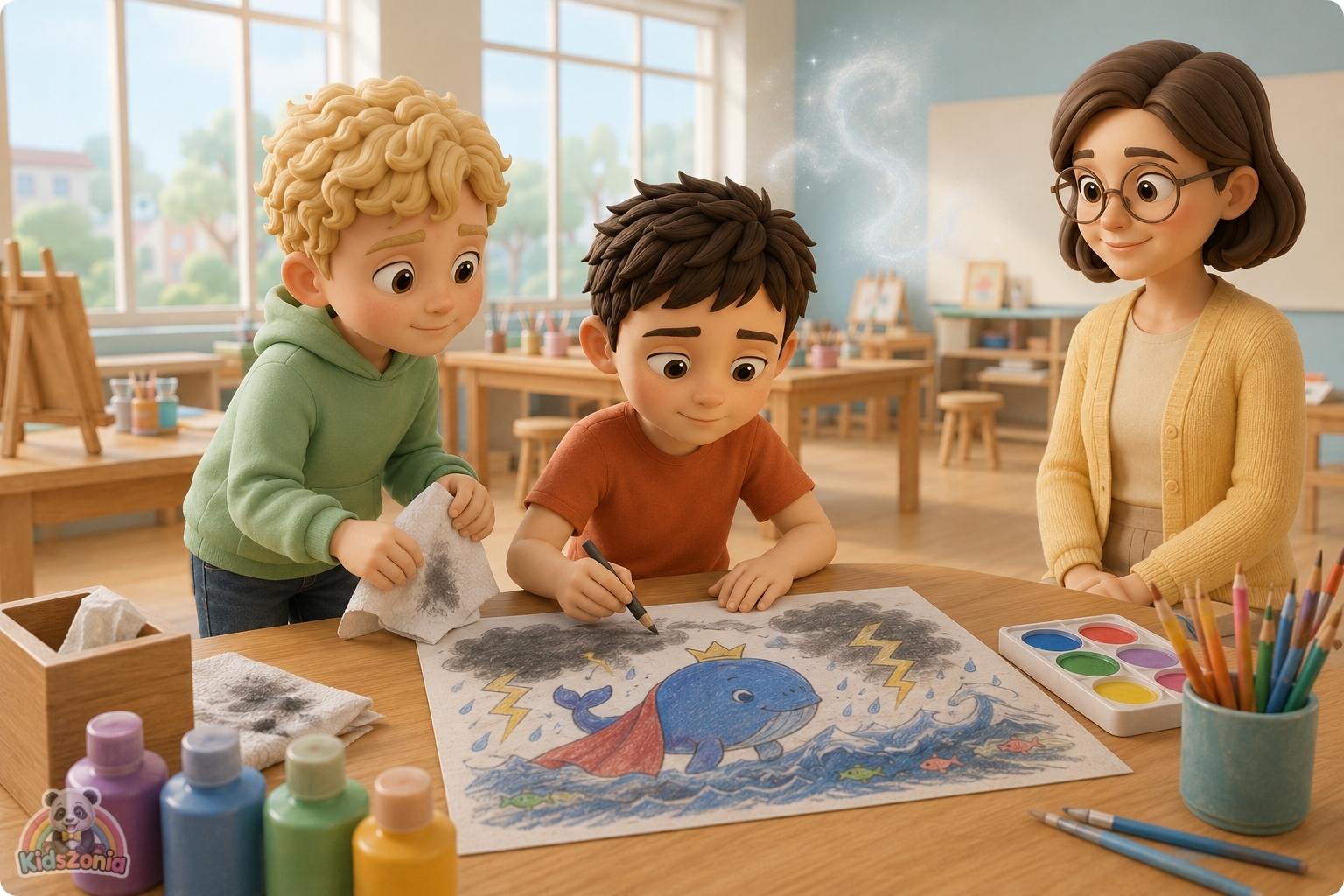
Leo looked at the messy paper and said softly, “I’m sorry, Sam.”

Sam still felt upset. Forgiveness did not happen all at once. But his storm was quieter now.

He looked again at the gray paint. It did not only look like a mess anymore. It looked like clouds, rain, and waves.

“A storm whale,” Sam thought.

So Sam and Leo began to help the picture become something new.

Sam calming down in a classroom Calm Corner, showing emotional regulation, anger management, and safe big feelings.

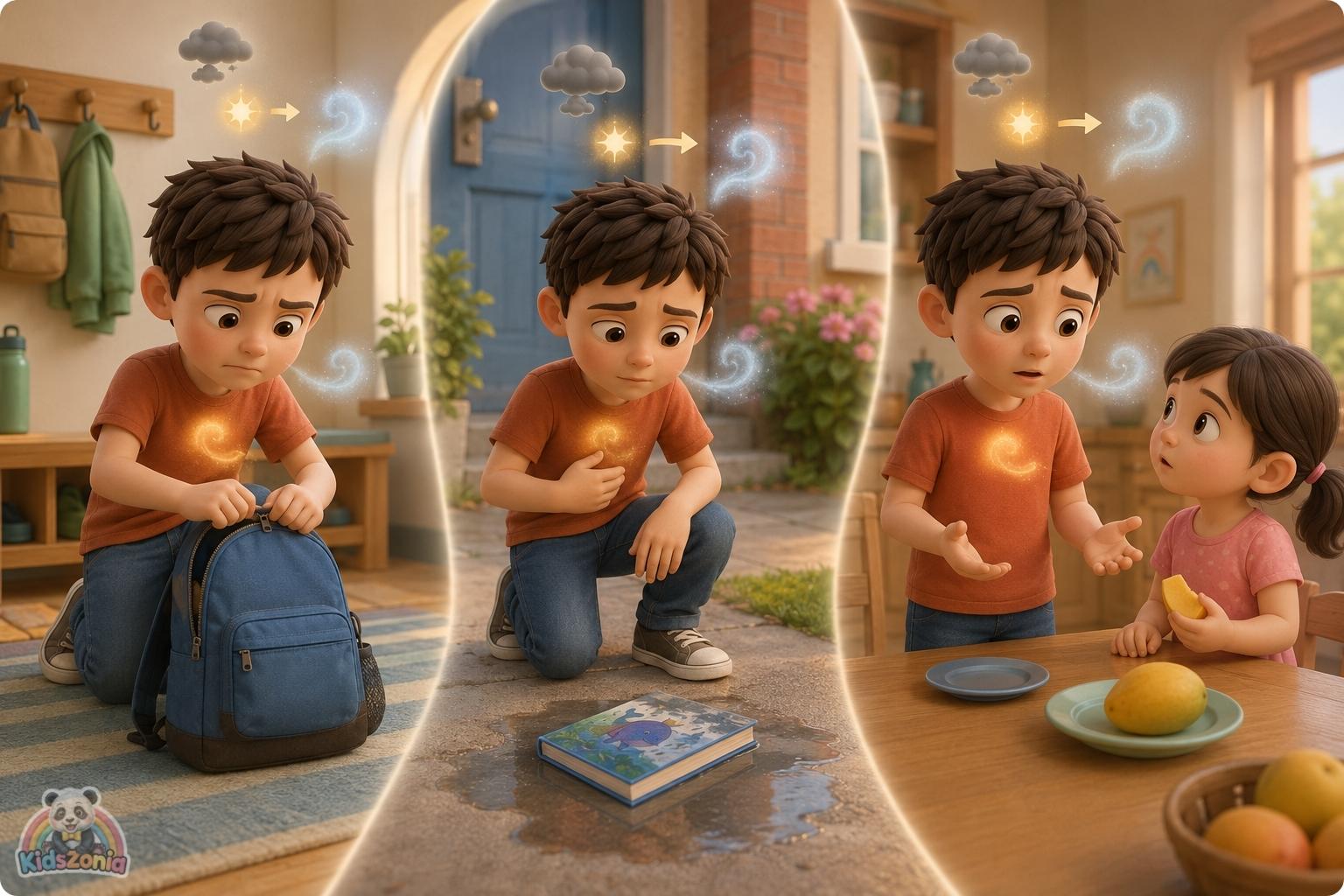
Later that day, Sam’s storm knocked again.

His backpack zipper got stuck. A library book slipped near a puddle. His little sister ate the last mango slice.

Each time, Sam felt the storm say, “Not fair!”

But this time, Sam tried one small thing first.

Feet on the floor.
Slow breath in.
Slow breath out.
Name the feeling.
Use words.

He did not become calm forever — nobody does. But he was learning how to choose.

Sam calming down in a classroom Calm Corner, showing emotional regulation, anger management, and safe big feelings.

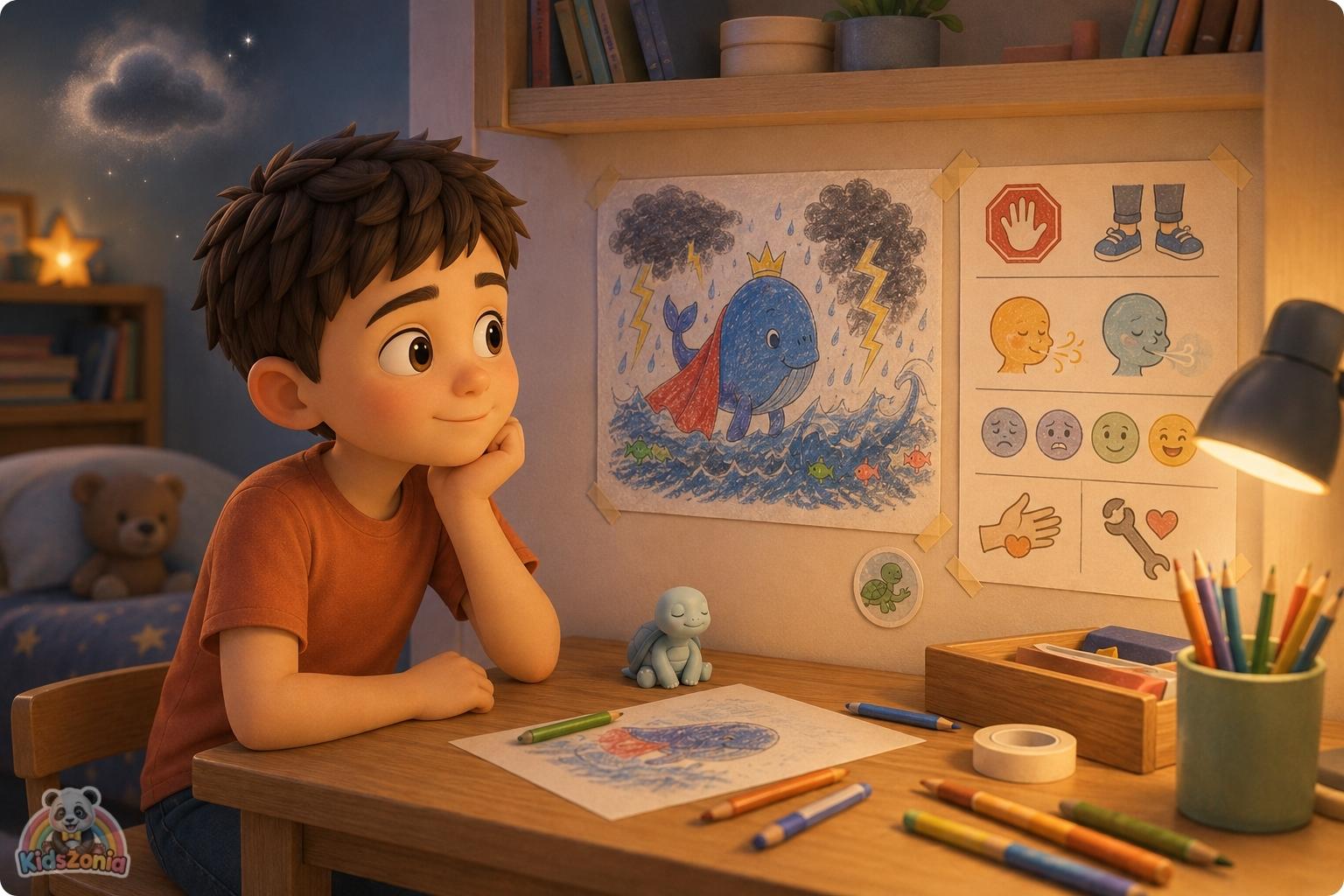
That night, Sam drew the Storm Whale again.

Then he made a calm-down plan and taped it above his desk.

First, stop my hands.
Safe body first.

Put my feet on the floor.
I am here.

Breathe in like hot cocoa.
Breathe out to cool it down.

Name the feeling.
Use words.
Ask for help.
Fix what I can.

Sam knew he would still have big feelings sometimes.
But now he had a plan for his storm

Sam calming down in a classroom Calm Corner, showing emotional regulation, anger management, and safe big feelings.

Big feelings are not bad feelings.

Anger, sadness, frustration, and hurt can feel very big — but they do not have to be in charge.

When you stop your body, breathe slowly, name what you feel, and ask for help, you can choose your next safe and kind step.

A storm can be loud without breaking everything.
And you can feel upset, breathe anyway, and choose what to do next.

THE END

What is this story about?

This story is about Sam, a creative boy who feels very angry when his special whale drawing is covered with spilled paint. At first, Sam shouts and throws a crayon because his feelings feel too big to control. Ms. Rivera gently helps him move to the Calm Corner, breathe slowly, press his feet to the floor, and name what he feels. Sam realizes that underneath his anger, he also feels sad. With time, support, and problem-solving, Sam turns his ruined picture into a new “Storm Whale” and learns a calm-down plan for future hard moments.

What children learn from this story

This story helps children understand that big feelings like anger, sadness, frustration, and hurt are normal, but they need safe and healthy ways to express them. Through Sam’s experience, young readers learn that anger does not make them bad and that calm choices can grow with practice. The story introduces simple emotional regulation strategies such as stopping the body, breathing slowly, grounding through the feet, naming feelings, using words, asking for help, and fixing what can be fixed. It also supports social-emotional learning by teaching self-control, problem-solving, empathy, forgiveness, and the idea that children can feel upset while still choosing a safe and kind next step.

Tips for parents and teachers

Parents and teachers can use this story to talk with children about anger, frustration, and safe ways to calm down. After reading, ask children what happened to Sam’s drawing, how his body felt when the “storm” arrived, and what helped him feel calmer. Encourage children to create their own calm-down plan using simple steps like stopping hands, taking slow breaths, naming the feeling, using words, and asking an adult for help. This story is useful for classroom discussions, calm corner routines, emotional regulation lessons, anger management activities, and helping children understand that mistakes, accidents, and big feelings can be handled with support and practice.

Story FAQs

The Storm Inside Sam is a children’s story about an eight-year-old boy who feels very angry after his favorite drawing is ruined by accident. With help from his teacher, Sam learns how to calm his body, name his feelings, use words, and solve problems safely.

The story teaches children that big feelings are not bad, but they must keep their body safe when they feel upset. It shows kids how breathing slowly, naming feelings, using words, and asking for help can support calm and kind choices.

Sam gets angry because Leo accidentally bumps the table and spills gray paint across Sam’s special whale drawing. Sam feels hurt, sad, and frustrated because the picture he loved has changed.

Ms. Rivera helps Sam by guiding him to the Calm Corner, reminding him to keep his body safe, helping him press his feet to the floor, breathe slowly, and name his feelings. She stays calm and supportive while Sam learns what to do next.

Sam learns to stop his hands, keep his body safe, put his feet on the floor, breathe in slowly, breathe out slowly, name the feeling, use words, ask for help, and fix what he can.

Children can learn from Sam that everyone has big feelings sometimes. His character shows that anger can feel strong, but kids can practice calming their bodies, using words, and making safe choices.

Yes, The Storm Inside Sam is a helpful social-emotional learning story. It supports lessons about emotional regulation, anger management, self-control, problem-solving, empathy, forgiveness, and asking for help.

The Storm Inside Sam is suitable for preschool, kindergarten, and elementary-aged children. It is especially helpful for children learning how to manage anger, understand big feelings, and use calm-down strategies.