The Kindness Garden – A Story About Kindness, Empathy, Healing, and Community

All Ages

Maya learns that kindness is not a weakness but a quiet strength that can help people heal, connect, and grow together.

kindness empathy emotional growth community garden
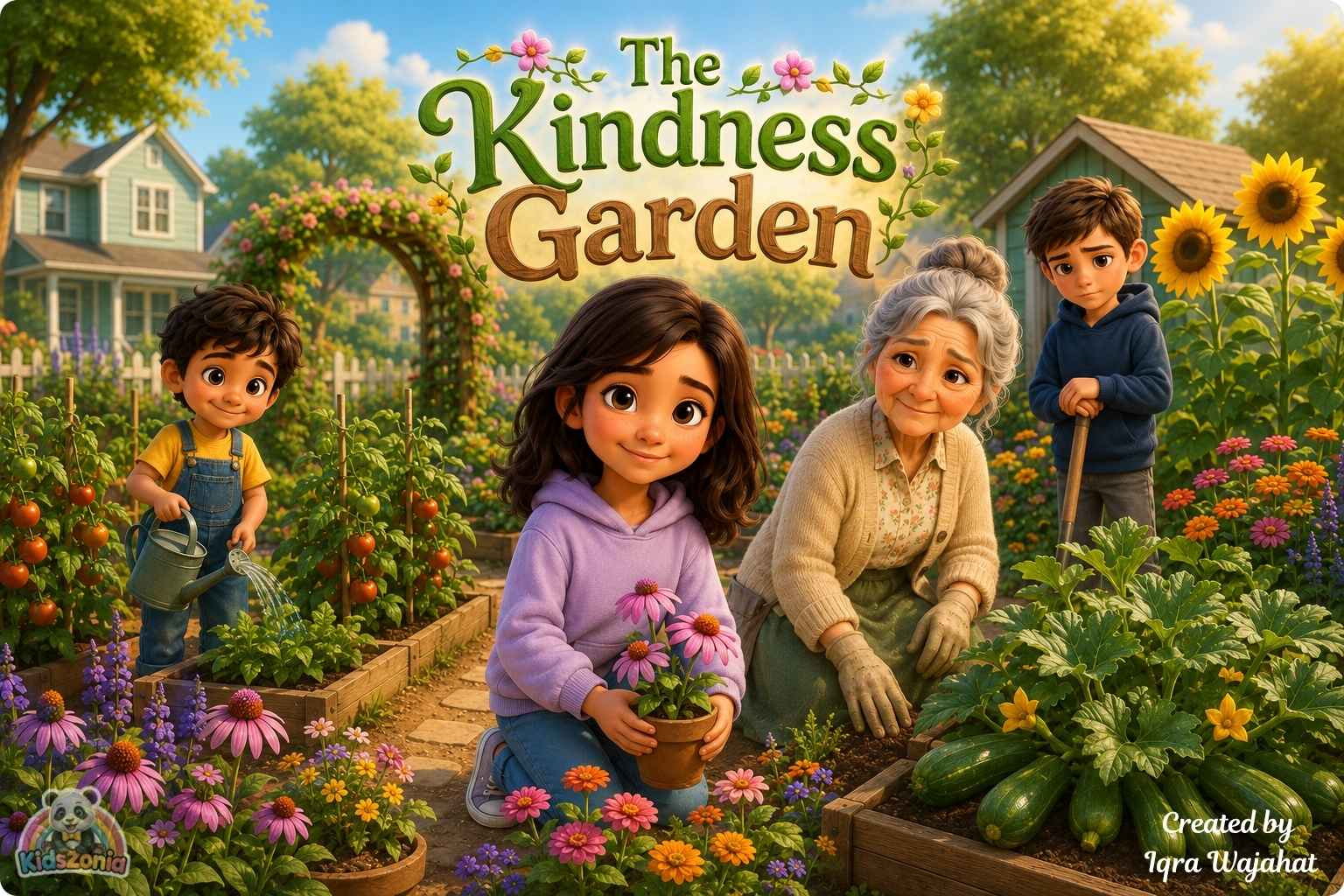
Maya helping friends in a blooming community garden, showing kindness, empathy, healing, and community care.

Maya helping friends in a blooming community garden, showing kindness, empathy, healing, and community care.

Theme:

Kindness, empathy, healing, community

Lesson Learned:

Small acts of kindness can grow into something powerful, helping both others and ourselves feel less alone.

Story Length:

(3–4 mins)

Maya helping friends in a blooming community garden, showing kindness, empathy, healing, and community care.

Maya was ten years old, and she had a quiet kind of heart. She noticed when someone looked sad, when someone felt left out, or when someone needed help.

But sometimes people told her she cared too much. So Maya began to wonder if her kindness was something she should hide. On her walk home from school, she tried not to notice too much, feel too much, or care too much.

That was the day she passed the old community garden beside the library — and something inside her quietly began to change.

Maya helping friends in a blooming community garden, showing kindness, empathy, healing, and community care.

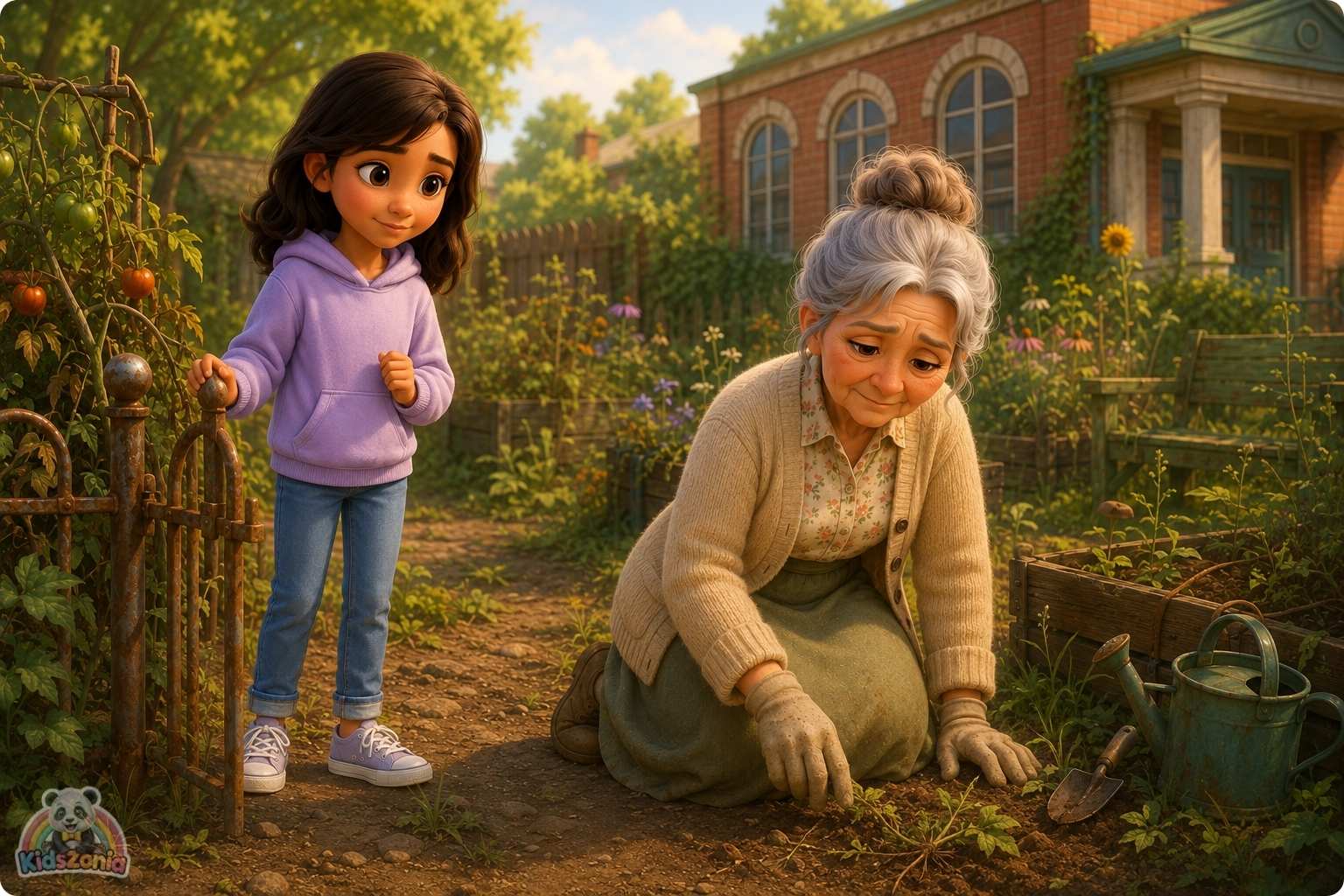
As Maya walked past the rusty garden fence, she noticed an elderly woman kneeling in the dirt. The garden was messy and overgrown, but the woman kept pulling weeds as if she was trying to save something precious.

Then the woman slipped back onto the ground and sat very still.

Maya’s mind told her to keep walking. But her heart would not let her. She stepped closer and softly asked, “Are you okay?”

That small question became the first seed of kindness.

Maya helping friends in a blooming community garden, showing kindness, empathy, healing, and community care.

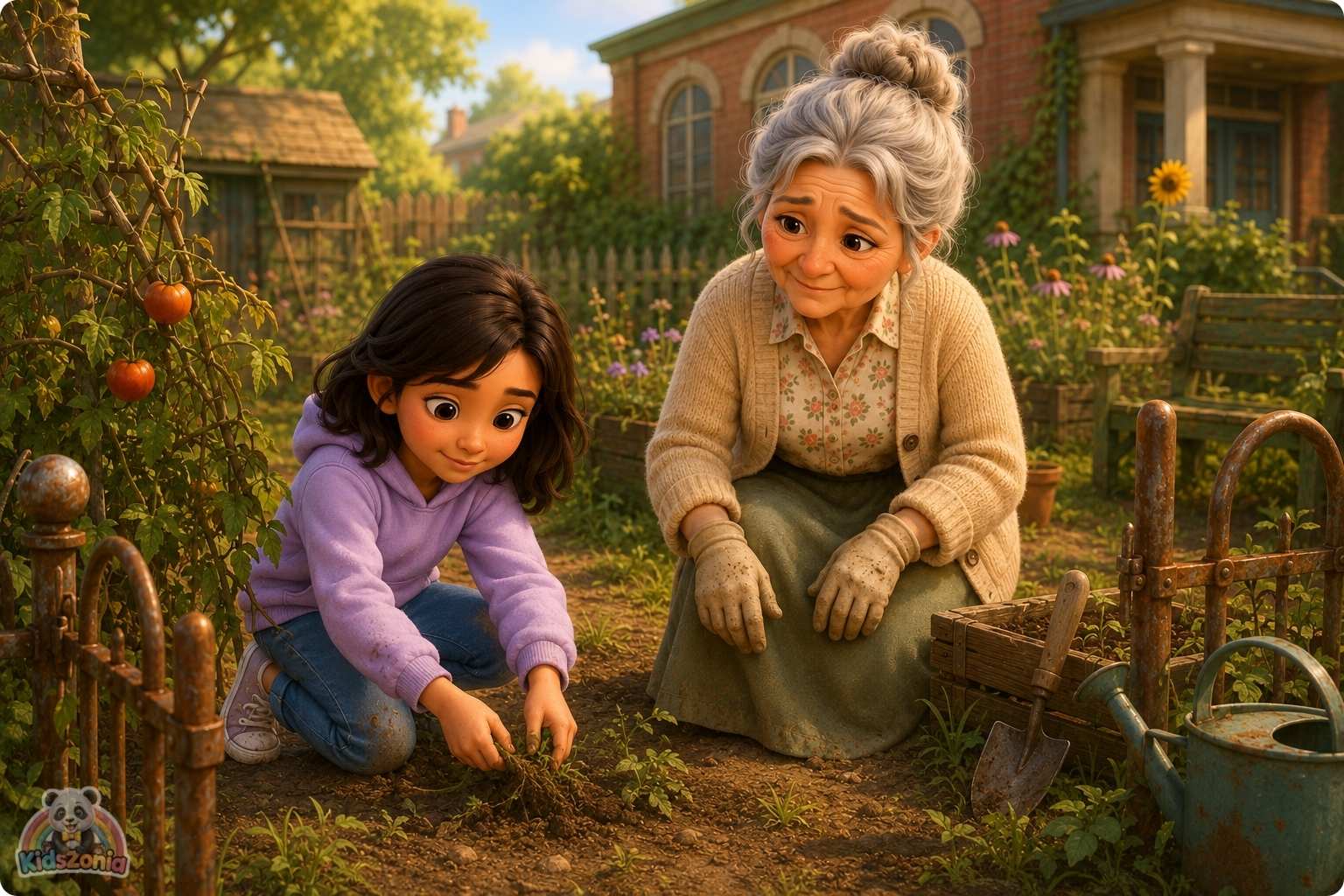
Maya did not walk away. She knelt beside Mrs. Patterson and began to help.

The weeds were stubborn, the dirt was rough, and Maya’s knees started to ache. But as she worked, something inside her felt lighter. Her own worries did not disappear, but they became smaller.

Mrs. Patterson watched Maya carefully untangle a tomato plant and said, “You have gentle hands.”

Maya smiled shyly. Maybe caring too much was not a weakness after all.

Maya helping friends in a blooming community garden, showing kindness, empathy, healing, and community care.

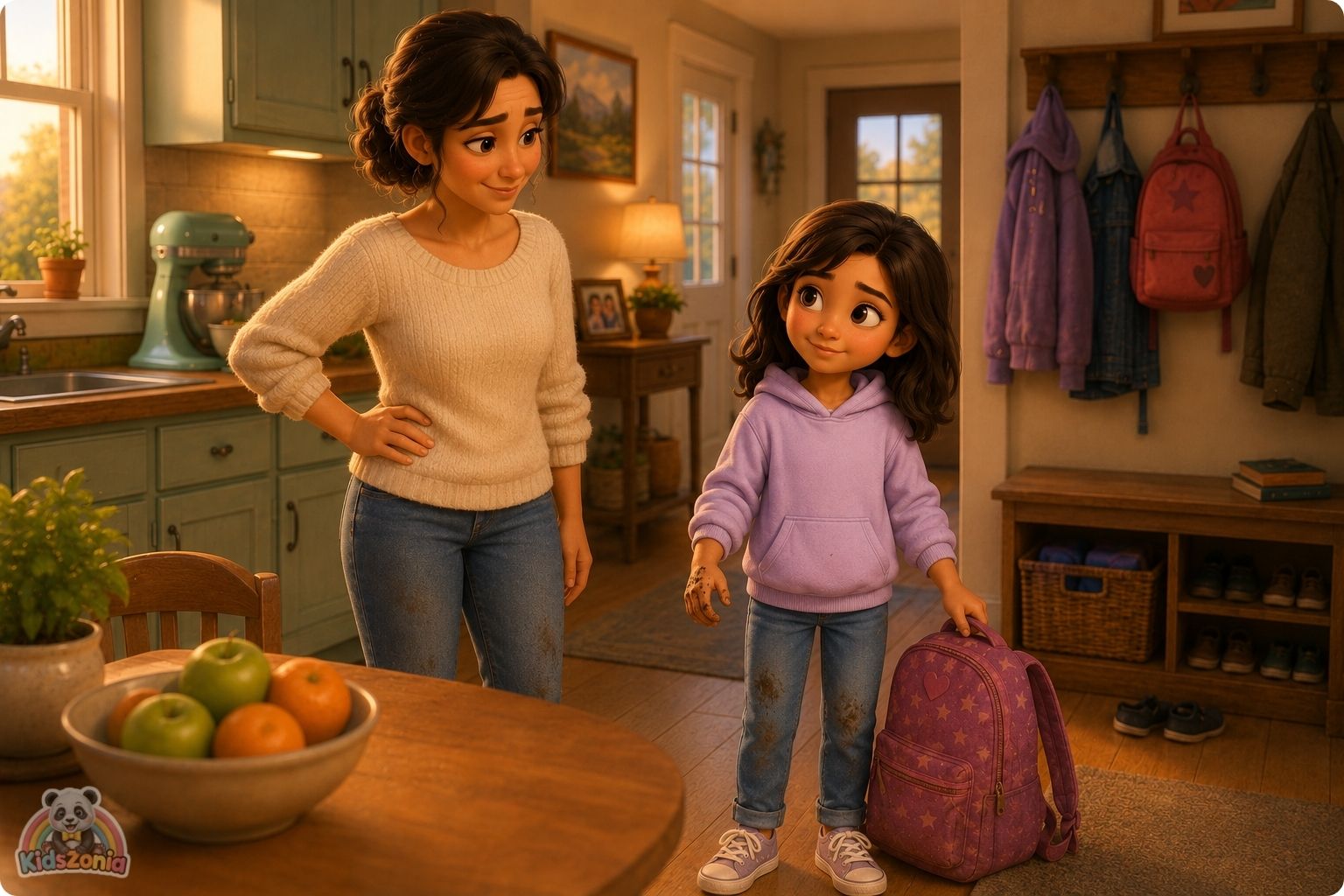
When Maya finally came home, her mother noticed the dirt on her jeans and the smile on her face.

“Where have you been?” her mother asked gently.

Maya looked down at her muddy shoes, then back up with a small, glowing smile.

“I found a garden,” she said. “And I think… it found me too.”

That evening, Maya felt different. She had stopped to help someone else, and somehow, her own heart felt stronger.

Maya helping friends in a blooming community garden, showing kindness, empathy, healing, and community care.

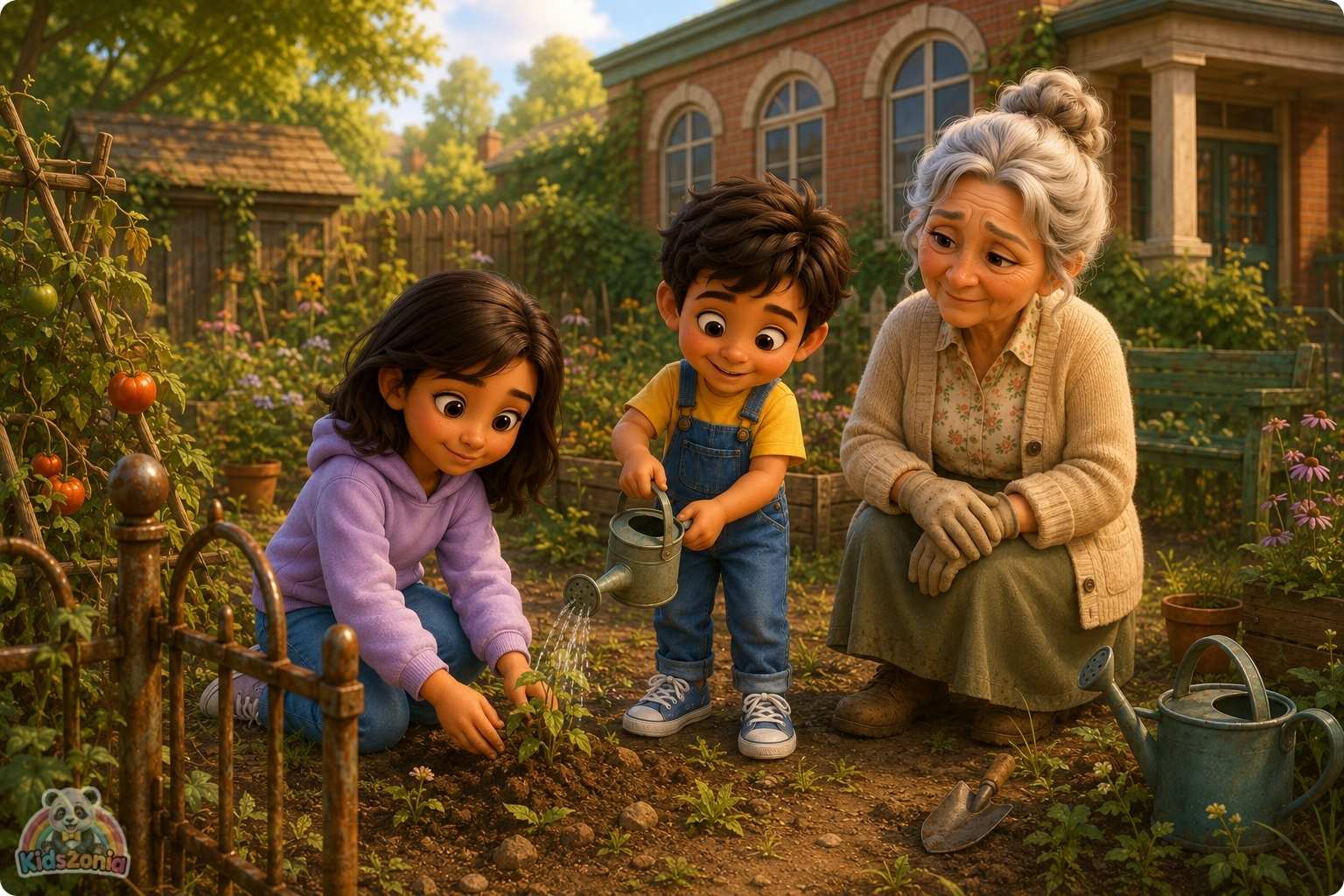
The next day, Maya went back to the garden.

This time, Leo came too. He was only five, but he loved worms, watering cans, and anything messy enough to make his shoes dirty.

Mrs. Patterson smiled when she saw him. It was the kind of smile that looked as if it had been waiting a long time to come back.

While Maya pulled weeds and carefully straightened the tired plants, Leo watered everything — even the spots that probably did not need water at all.

For the first time, the old garden did not feel so lonely.

Maya helping friends in a blooming community garden, showing kindness, empathy, healing, and community care.

At school the next day, Maya kept thinking about the garden.

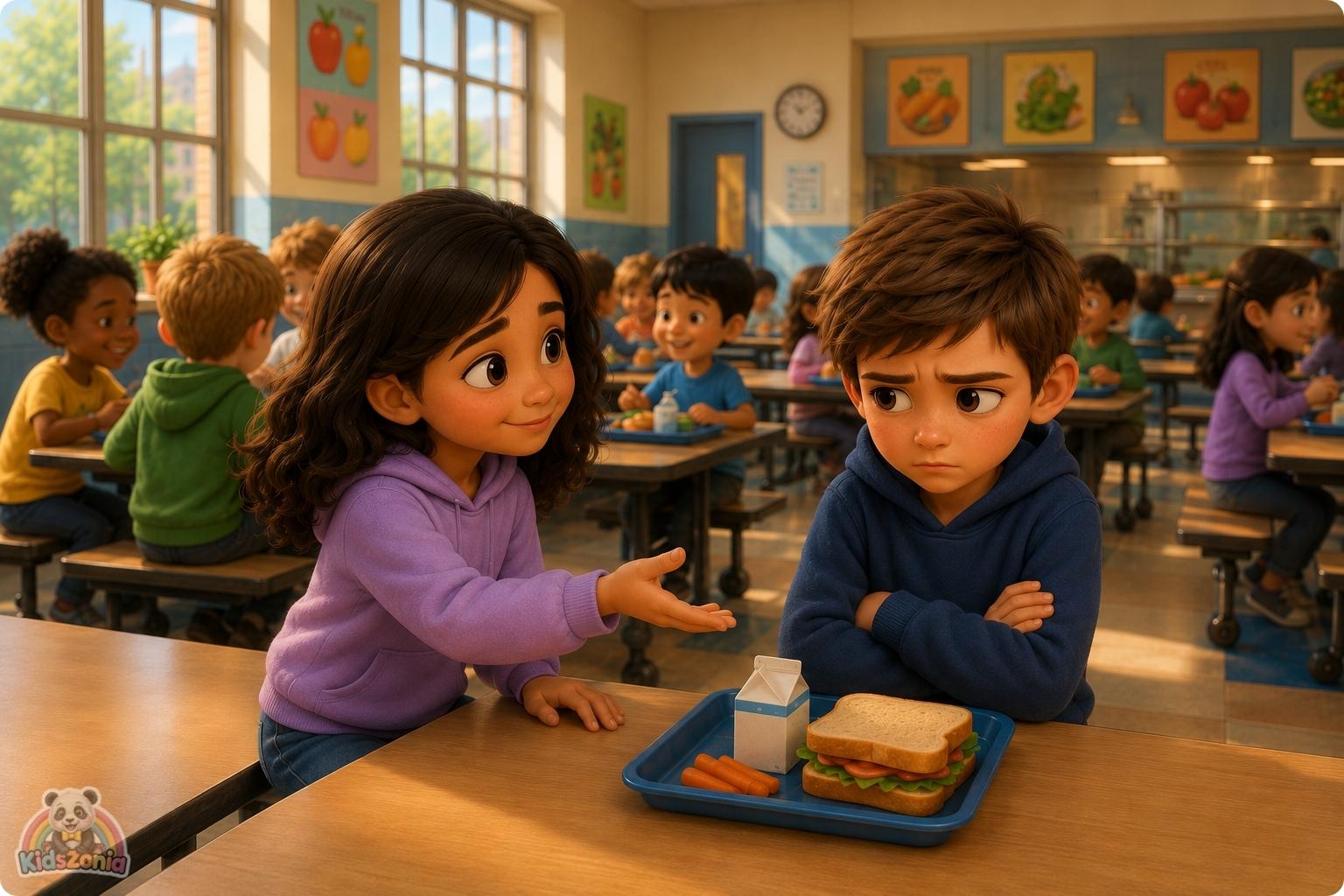
In the cafeteria, she noticed Aiden sitting by himself. Most children thought he was just rude or unfriendly. But Maya had begun to look more carefully at people. And when she looked at Aiden, she saw something else — someone carrying a hurt he did not know how to show.

So Maya walked over and asked, “Would you like to help in the garden after school?”

Aiden looked up with a frown. “Why would I want to do that?”

Maya felt shy for a second, but she did not back away.

“Because,” she said softly, “sometimes helping something grow helps people feel better too.”

Maya helping friends in a blooming community garden, showing kindness, empathy, healing, and community care.

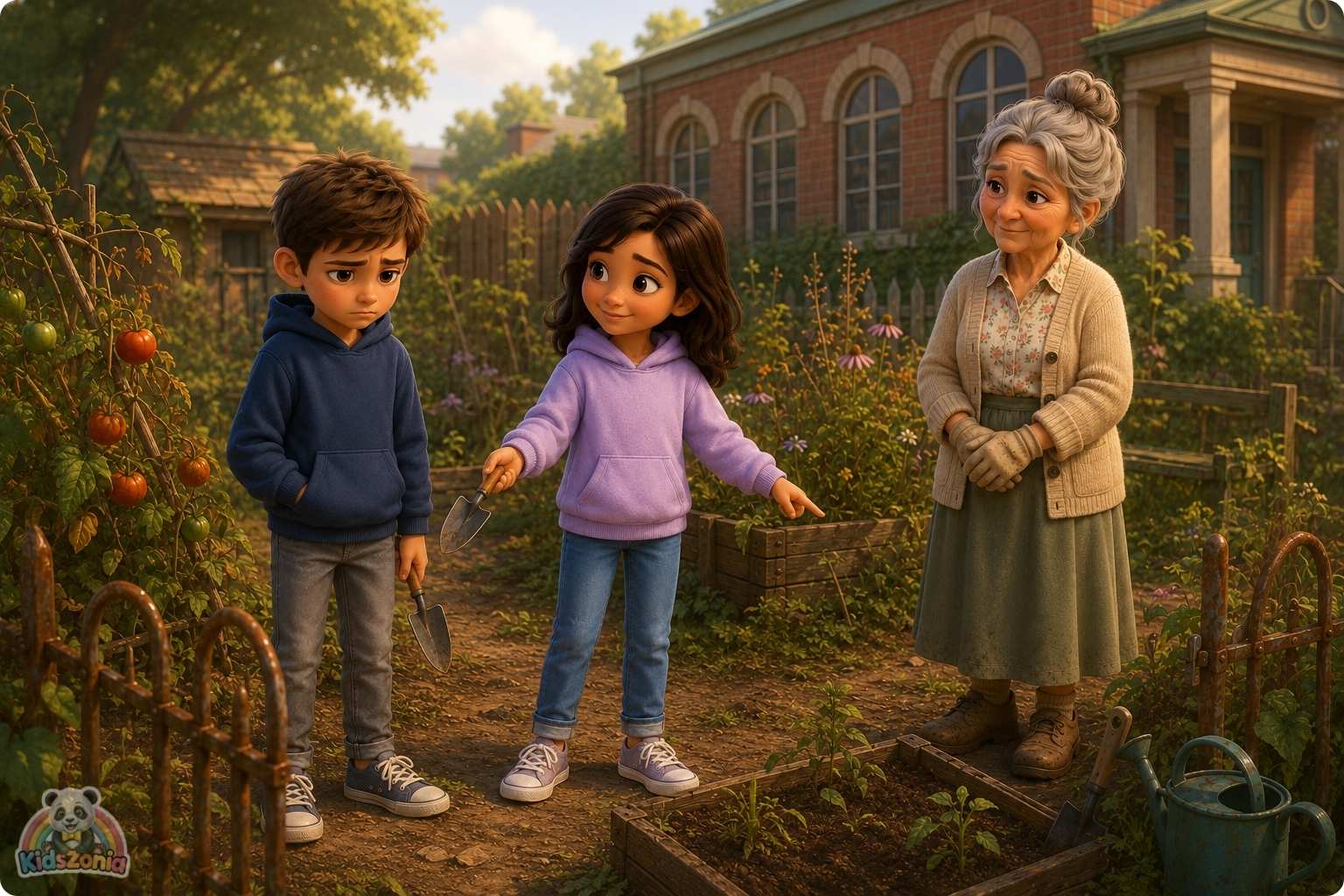
After school, Aiden came to the garden.

At first, he stood near the gate with his hands in his pockets and his eyes on the ground. He did not smile. He did not say much.

Maya could have remembered the unkind things he had said before. She could have turned away. But instead, she handed him a trowel.

“The tomatoes need help,” she said. “They fall over if nobody holds them up.”

Aiden looked at the plants, then at Maya. Slowly, he took the trowel.

It was not a big moment. But sometimes, kindness begins quietly.


Maya helping friends in a blooming community garden, showing kindness, empathy, healing, and community care.

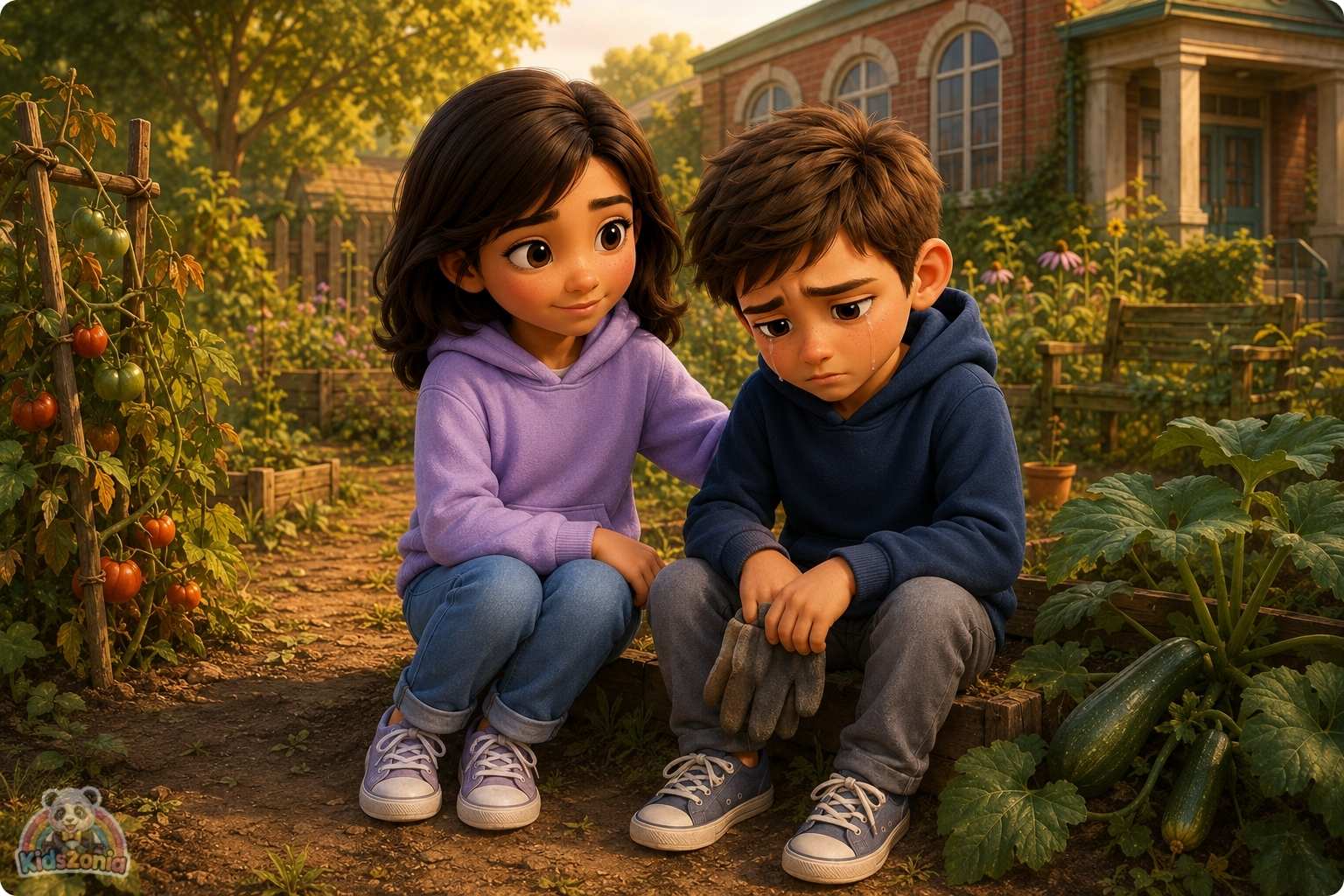
A few days later, Maya found Aiden sitting alone by the zucchini plants.

His shoulders were small and heavy. His eyes were wet.

“My parents are getting divorced,” he said quietly. “I didn’t want anyone to know.”

Maya did not tell him to stop crying. She did not say everything would be perfect. She simply sat beside him in the dirt and stayed.

For the first time, Aiden did not look tough. He looked like someone who had been hurting for a long time.

And Maya understood something important: sometimes meanness is just sadness wearing armor.


Maya helping friends in a blooming community garden, showing kindness, empathy, healing, and community care.

Soon, kindness began to spread in small ways.

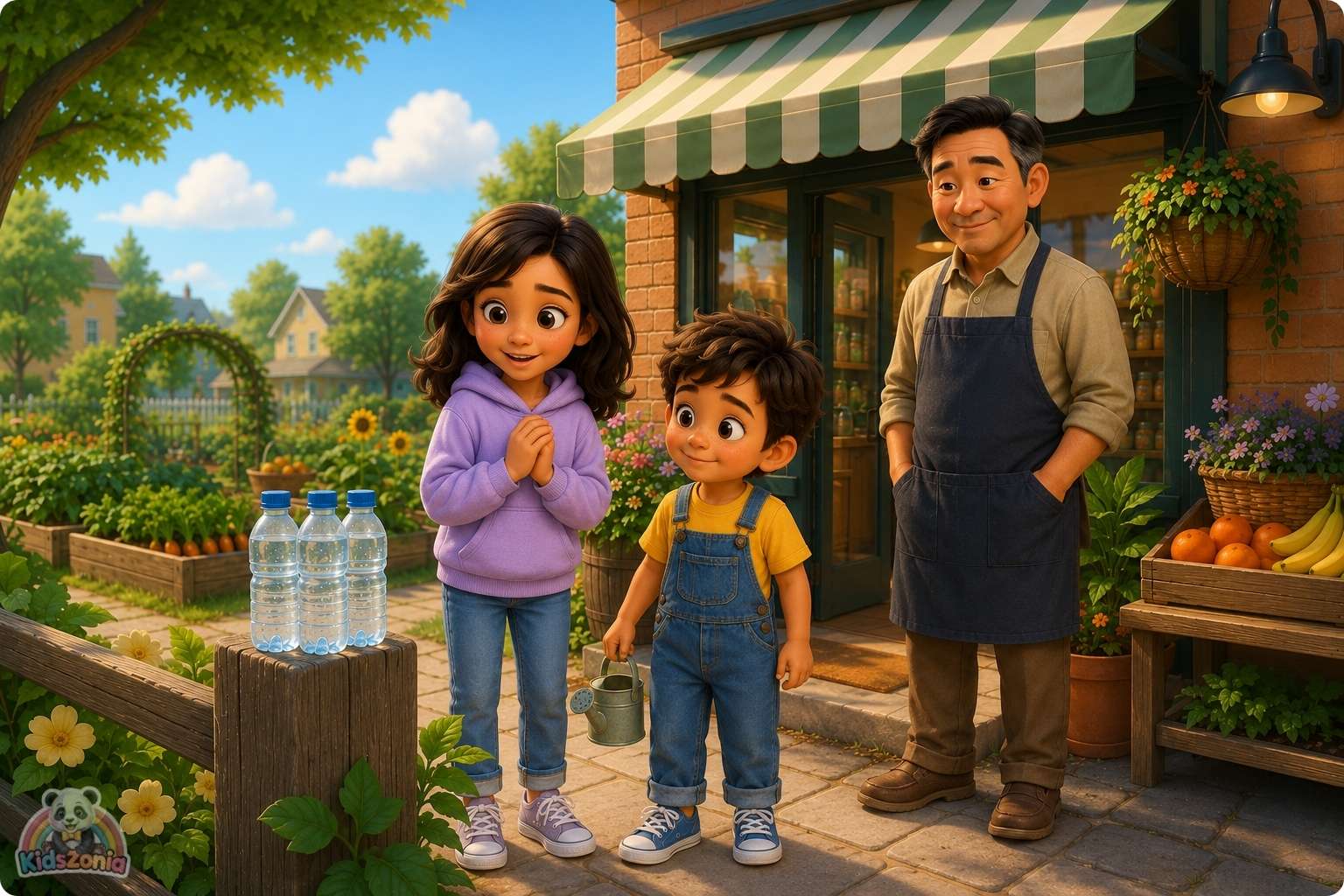
Mr. Chen, who owned the corner store, noticed Maya and Leo walking past with muddy shoes and tired hands. He did not make a big announcement. He did not ask for praise.

He simply placed cold bottles of water on the fencepost near the garden.

“For the gardeners,” he said with a smile.

Maya realized that kindness did not always have to be loud. Sometimes it was a quiet bottle of water left exactly where someone needed it.

Maya helping friends in a blooming community garden, showing kindness, empathy, healing, and community care.

As the garden grew, more people began to need it.

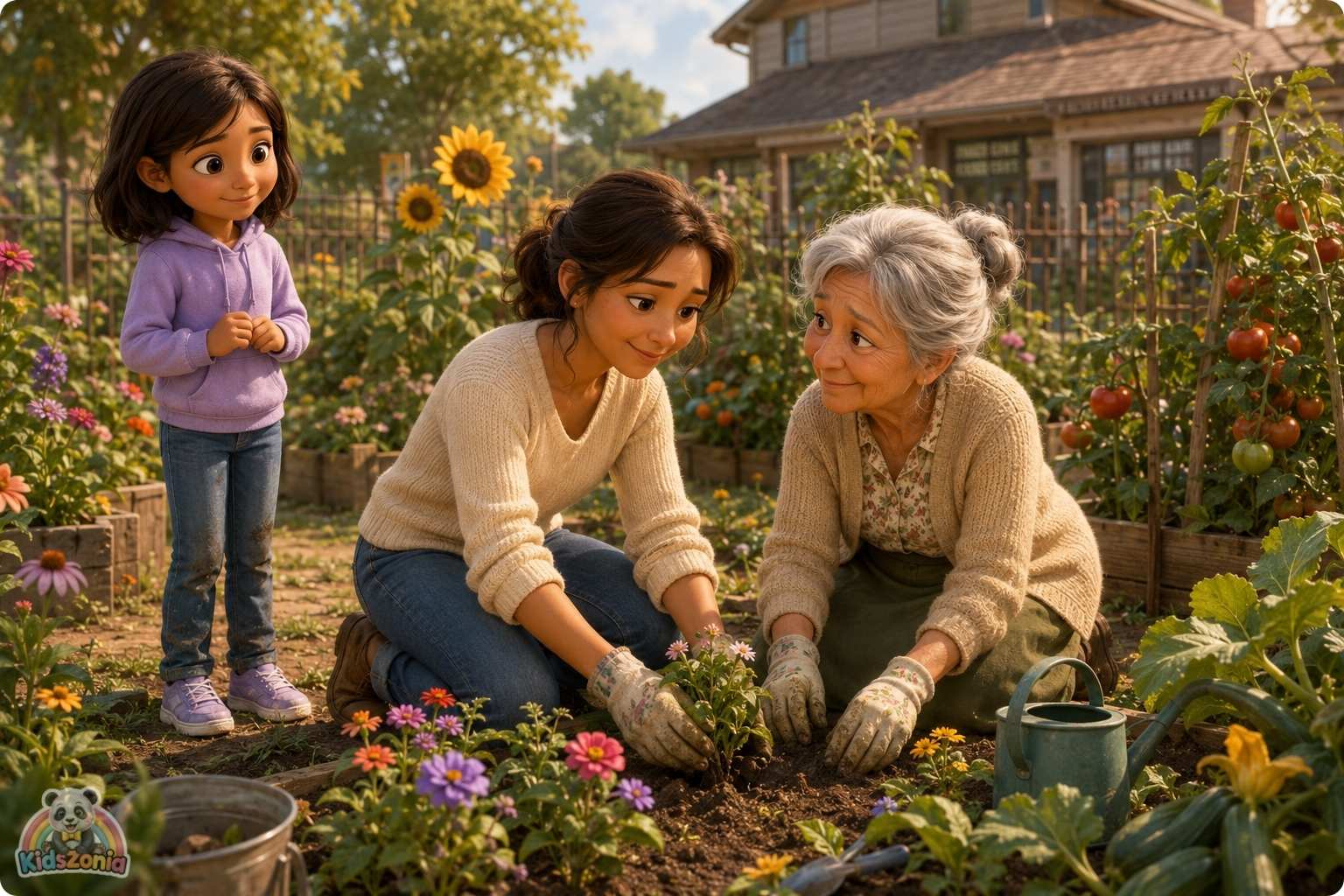
One weekend, Maya’s mother came too. She had been quiet for a long time, especially since Maya’s grandmother had passed away.

At first, she only watched. Then she knelt beside Mrs. Patterson and placed her hands in the soil.

They worked together softly, talking about memories, love, and the people they missed.

Maya watched from nearby and understood that the garden was not only growing plants. It was helping hearts grow strong again.

Maya helping friends in a blooming community garden, showing kindness, empathy, healing, and community care.

By the end of summer, the garden had changed completely.

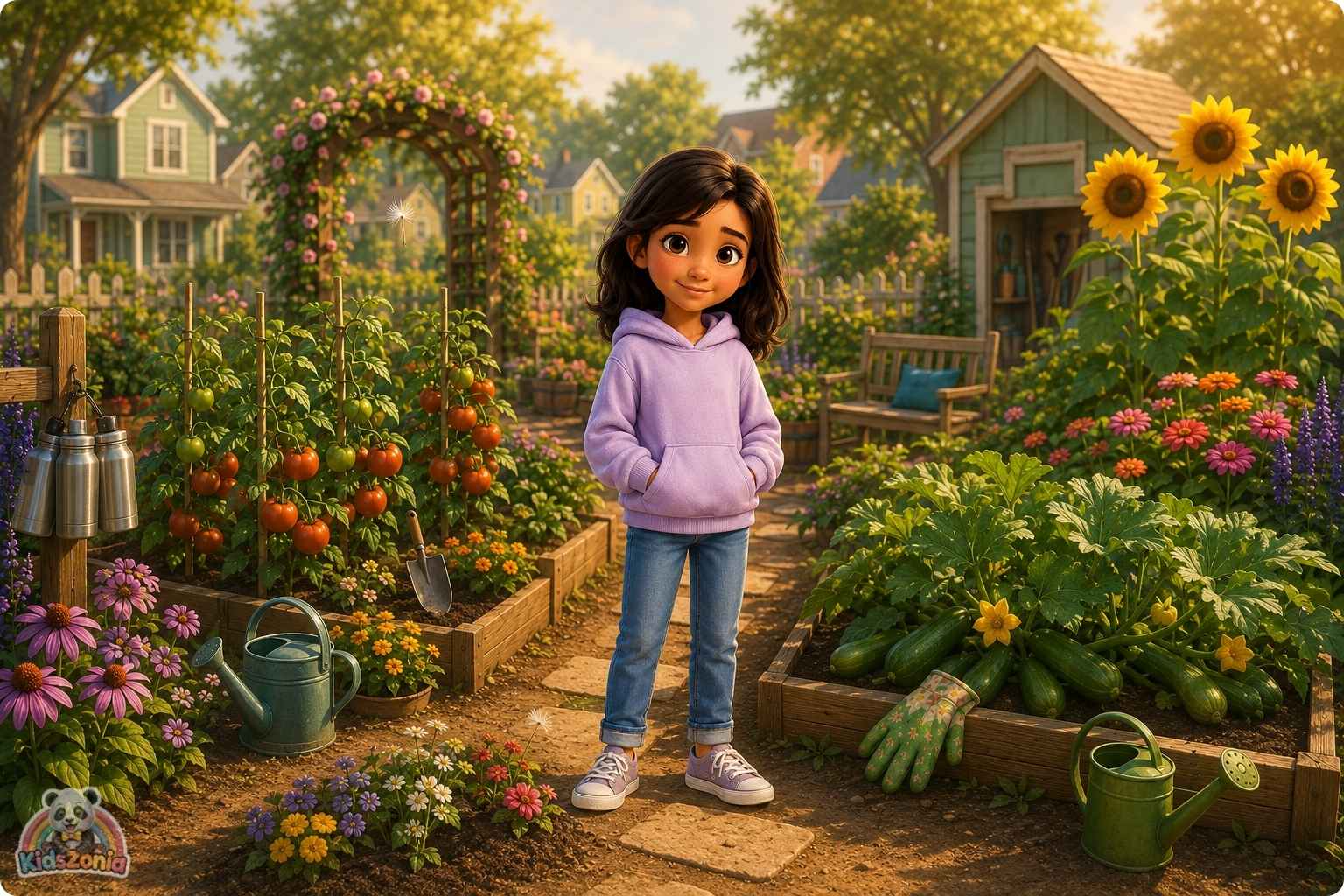
Tomatoes glowed red on the vines. Sunflowers stood tall in the sunlight. Zucchini grew so big that Leo called them “zucchinisaurus rexes.”

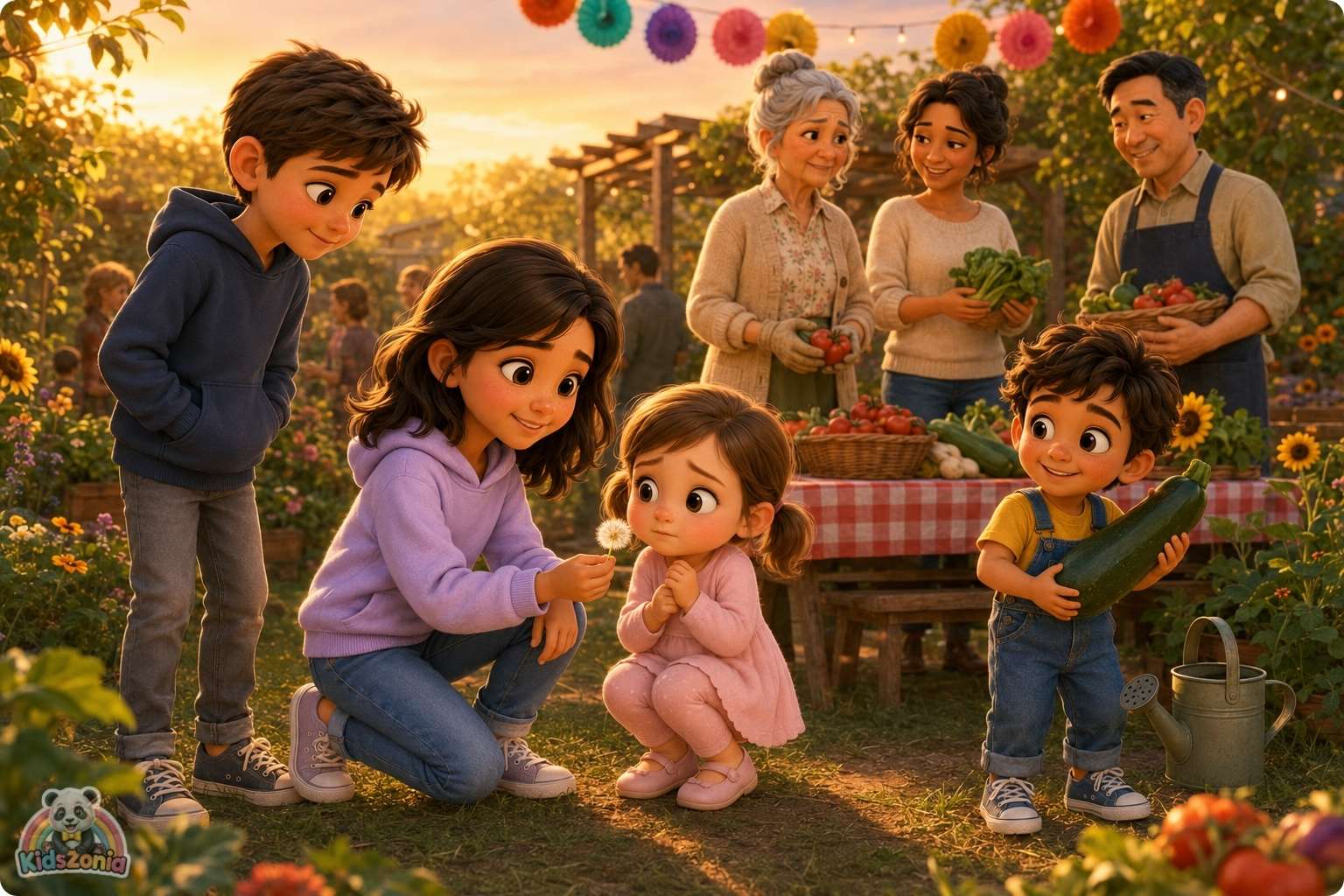
On the last day of summer, everyone gathered for a harvest party. Mrs. Patterson smiled more than she had in a long time. Mr. Chen came from his store. Maya’s mother helped set the table. Aiden brought his little sister, who stayed close to him at first.

Maya knelt beside her and showed her how to make a wish on a dandelion.

As the tiny seeds floated into the warm evening air, Maya looked around at the people laughing together.

The garden had grown vegetables, flowers, and something even more important — kindness.

Maya helping friends in a blooming community garden, showing kindness, empathy, healing, and community care.

Maya finally understood her superpower.

It was not flying. It was not invisibility. It was not something loud or shiny.

Her superpower was noticing when someone was hurting — and choosing not to look away.

Kindness was not weakness. Empathy was not “too much.” They were seeds. And when Maya planted one small act of care, it grew into something bigger than she ever expected.

The best things we plant do not always grow in soil.

They grow between people.

And the harvest is a world where no one has to feel invisible, no one has to feel alone, and no one has to believe that caring too much is anything less than brave.

THE END

What is this story about?

This story is about Maya, a kind and observant girl who sometimes wonders if she cares too much. One day, she notices an elderly woman struggling in an overgrown community garden and chooses to help instead of walking away. That simple act becomes the beginning of a beautiful change. Soon, Maya’s brother Leo, Aiden, Mr. Chen, Maya’s mother, and others become part of the garden too. As plants begin to grow, so do trust, friendship, empathy, and healing. The story teaches children that small acts of kindness can spread through a community and create a place where no one feels invisible or alone.

What children learn from this story

This story helps children understand the importance of kindness, empathy, emotional awareness, and community care. Through Maya’s journey, young readers learn that noticing when someone is sad, lonely, or hurting can be the first step toward helping them feel supported. The story also teaches that kindness does not have to be loud or grand; it can be a small question, a helping hand, a shared task, or simply sitting beside someone who needs comfort. Children can learn that empathy is a strength, not a weakness, and that caring for others can also help their own hearts feel lighter. The story supports social-emotional learning by encouraging compassion, patience, inclusion, friendship, healing, and the courage to choose kindness even when it feels small.

Tips for parents and teachers

Parents and teachers can use this story to start meaningful conversations about kindness, empathy, grief, friendship, and helping others in everyday life. After reading, ask children why Maya chose to stop and help Mrs. Patterson, how Aiden’s sadness was hidden behind his behavior, and why the garden became important to so many people. Encourage children to think of small ways they can show kindness at home, in school, or in their community, such as checking on someone, sharing, listening, helping with a task, or inviting someone to join in. This story is also useful for classroom discussions about emotional intelligence, community service, compassion, and understanding that people may be carrying feelings we cannot always see.

Story FAQs

The Kindness Garden is a children’s story about Maya, a kind ten-year-old girl who helps an elderly woman in an old community garden. Her small act of kindness grows into something powerful, bringing people together through empathy, healing, friendship, and community care.

The story teaches children that small acts of kindness can make a big difference. It shows that empathy, caring, and noticing when someone is hurting can help both others and ourselves feel less alone.

Maya’s kindness is important because she chooses not to ignore someone who needs help. Her decision to stop and care for Mrs. Patterson becomes the first step in bringing healing, friendship, and hope to many people in the community.

The main characters are Maya, Mrs. Patterson, Leo, Aiden, Mr. Chen, and Maya’s mother. Each character shows how kindness can help people feel supported, understood, and connected.

The garden gives the characters a place to work together, share feelings, heal from sadness, and feel less alone. As the plants grow, the people in the story also grow in kindness, trust, and friendship.

Children can learn from Maya that caring deeply is not a weakness. Her character shows that noticing others, offering help, and choosing kindness are brave and meaningful actions.

Yes, The Kindness Garden is a helpful social-emotional learning story for children. It supports lessons about empathy, compassion, emotional awareness, friendship, healing, inclusion, and community kindness.

The Kindness Garden is suitable for preschool, kindergarten, and elementary-aged children. It is especially helpful for stories, classroom discussions, and lessons about kindness, empathy, helping others, and community care.